
Article: Minimalist Engagement Rings: How to Choose a Simple, Personal Design
Minimalist Engagement Rings: How to Choose a Simple, Personal Design
A minimalist engagement ring gives one or two details room to stand out: the outline of a stone, the curve of polished gold, or a small accent that means something to you. It does not have to be tiny, colorless or completely plain.
The most useful way to choose is to compare the whole ring rather than chase the thinnest band or smallest diamond. Here is how to find a simple design that feels personal and makes sense for the way you plan to wear it.

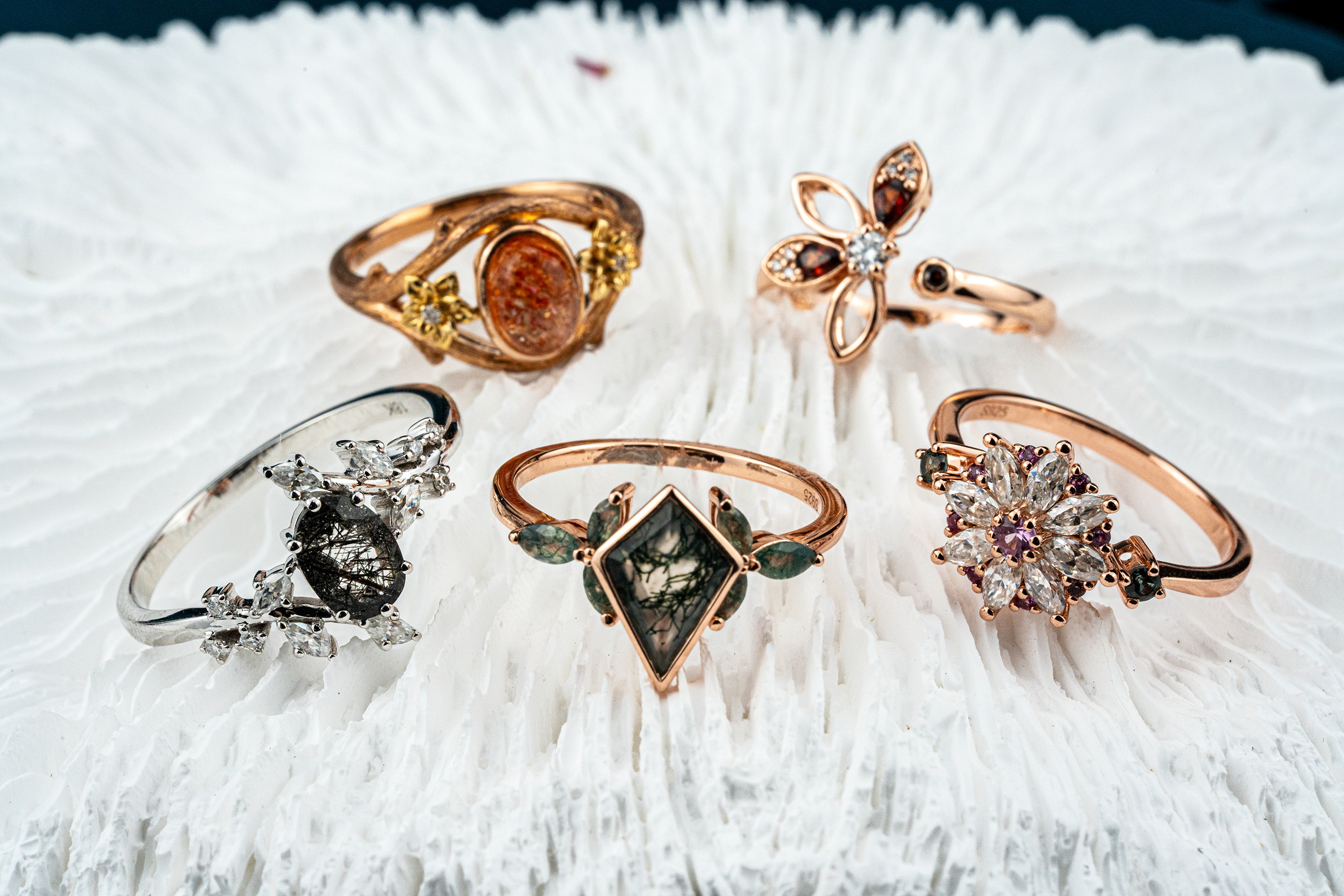
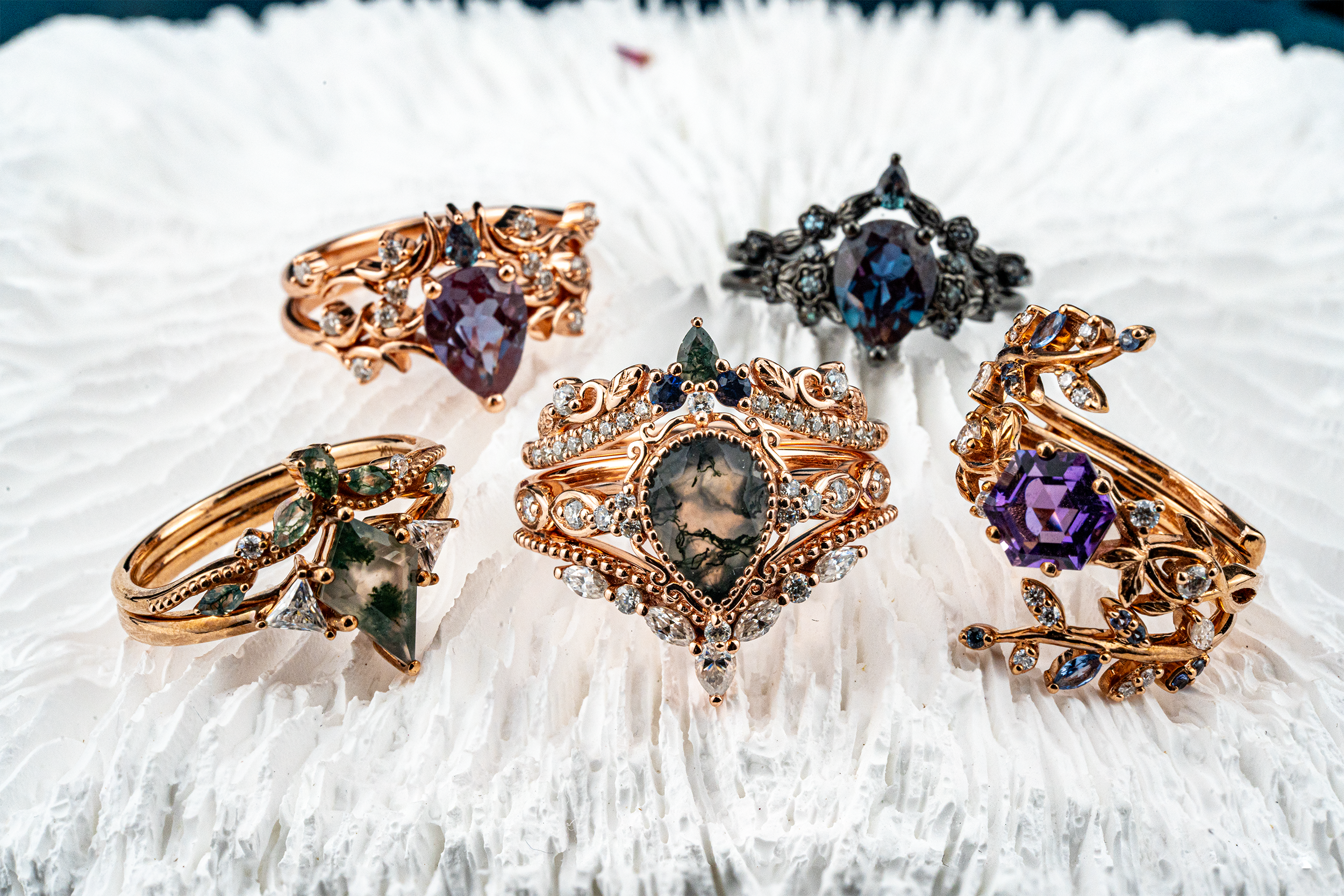
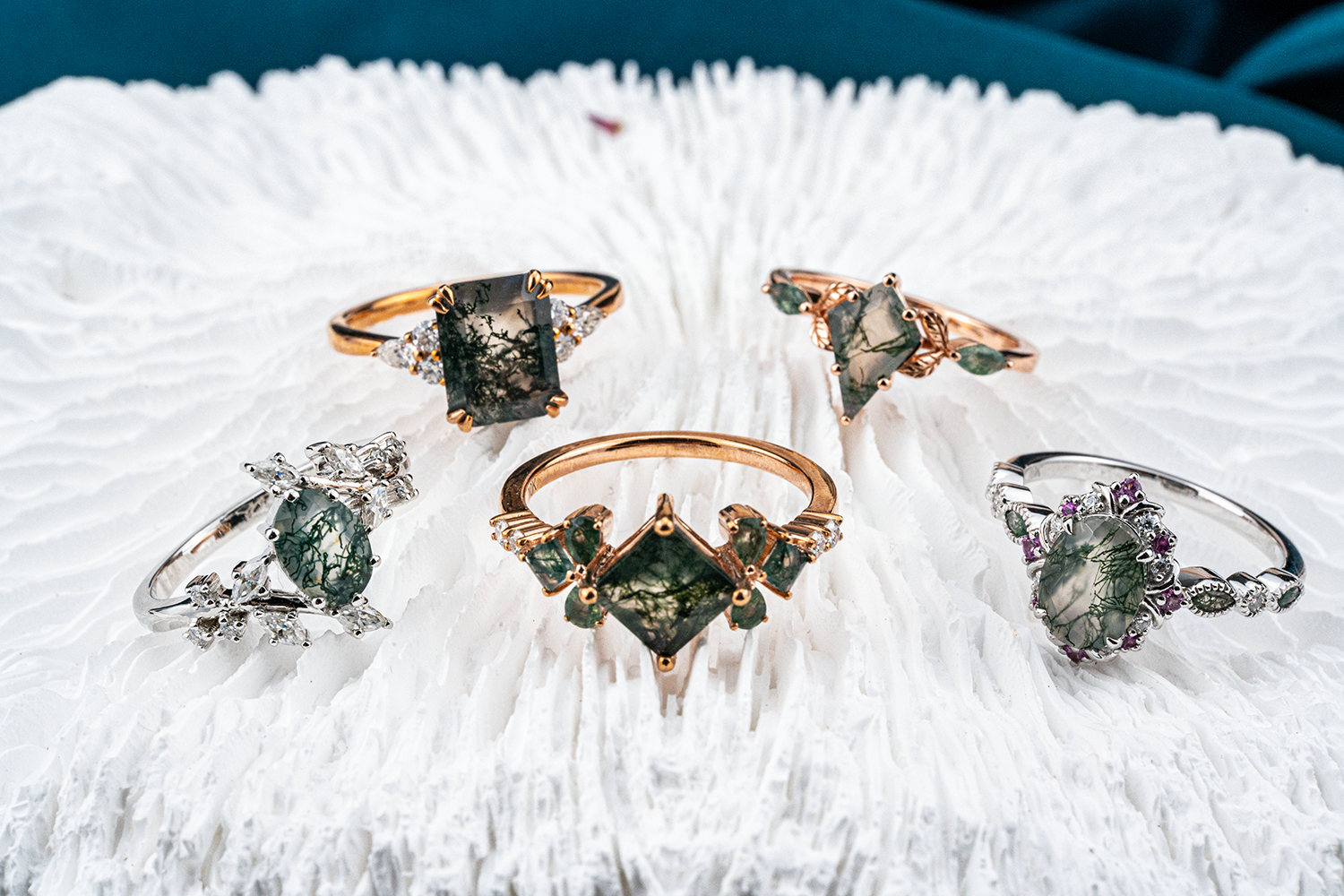
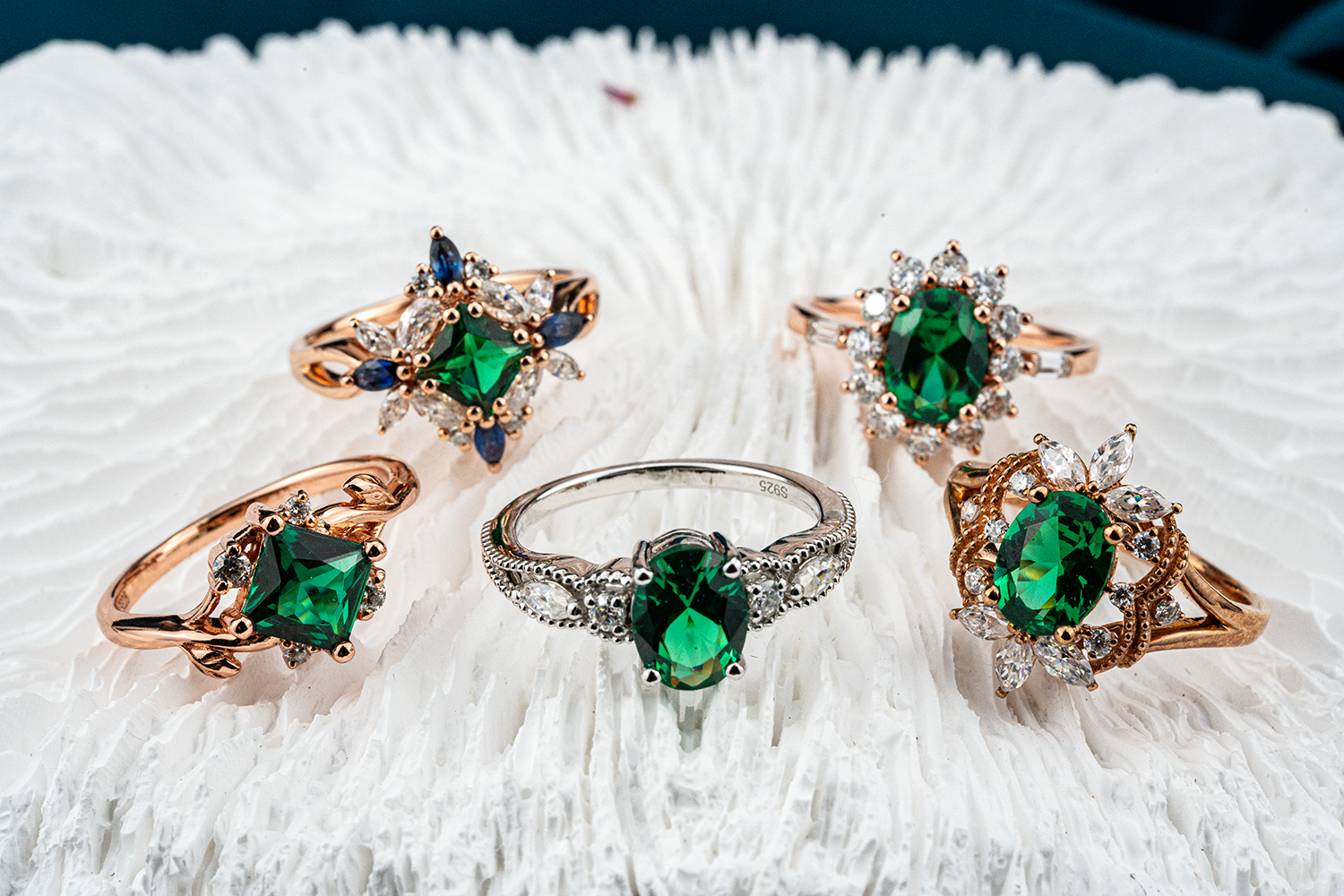
Images in this guide are AI-generated style illustrations, not photographs of specific GemifySpace products. Refer to individual product listings for the actual design and specifications.
What makes an engagement ring minimalist?
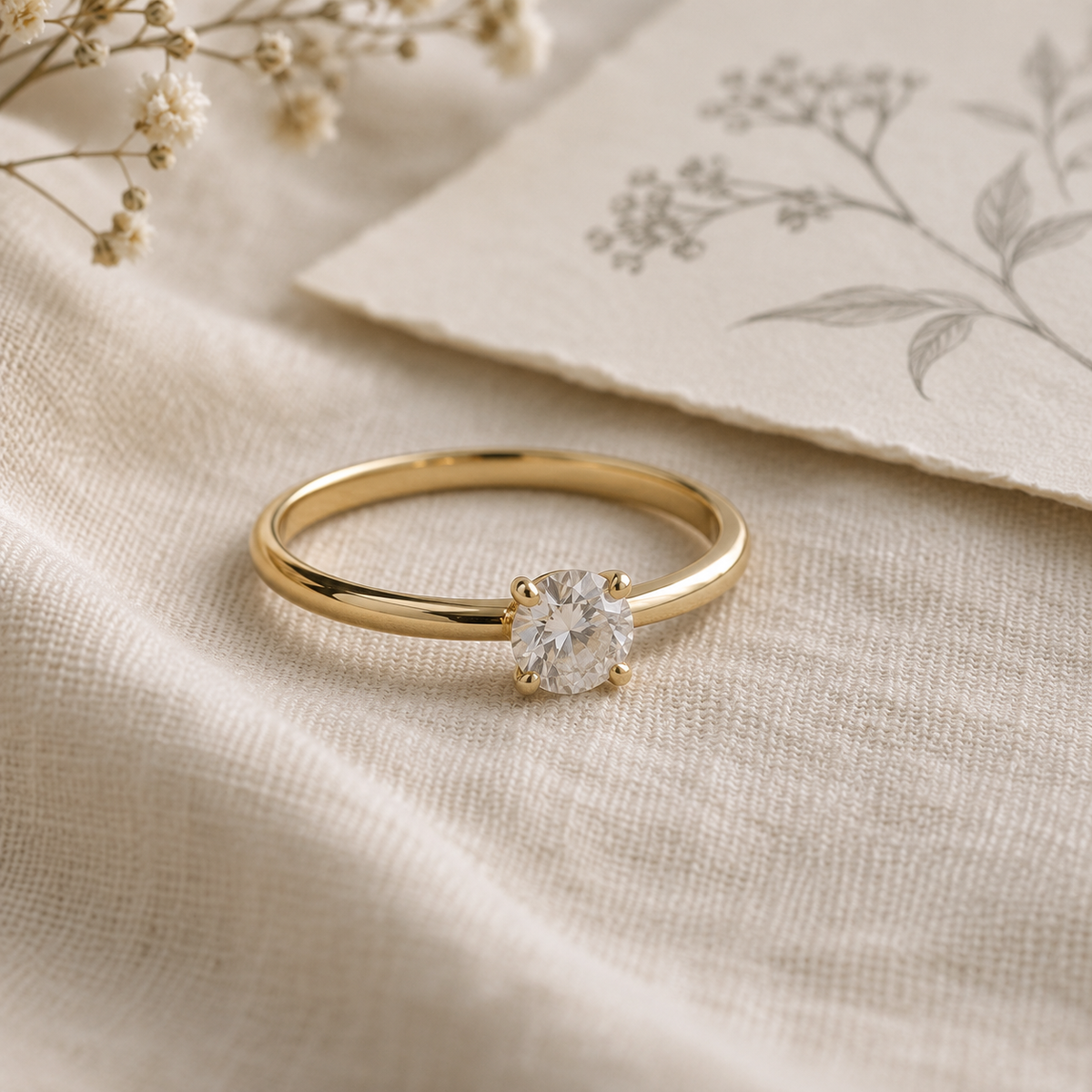
Minimalist engagement rings have a clear visual focus and restrained surrounding detail. A solitaire is one example, but a compact three-stone arrangement, a smooth bezel or a gemstone with two small accents can have the same uncluttered effect. Conversely, even a small ring can look intricate if its halo, shoulders and band all compete for attention.
If you have been searching for “simplistic engagement rings,” start by identifying what you want to simplify. Is it the amount of sparkle, the number of stones, the profile above your finger, or the daily task of coordinating jewelry? Those are different preferences and lead to different rings.
Choose the feature you want to notice first
Look at a ring from arm’s length before studying a macro photograph. At that distance, you mostly see its outline, color and overall width. Pick one of those as your priority.
| Your priority | A useful starting point | What to check |
|---|---|---|
| A classic, centered look | Round solitaire on a plain band | Stone diameter and setting height |
| A longer, softer outline | Oval or pear center with restrained accents | Length, width and protection around any pointed tip |
| A clean metal frame | Bezel-set center stone | Rim thickness and the actual side profile |
| A personal touch of color | One colored gemstone on a simple band | Stone identity, origin and care requirements |
| A subtle botanical reference | Small leaf shoulders or light engraving | Smooth edges and room beside the setting |
There is no obligation to make every element delicate. A slightly broader polished band can be just as minimal as a narrow one, particularly when its surface is free of extra ornament.
Simple does not mean as thin as possible
Product photographs can make a narrow band look almost weightless. Before choosing it, ask for both band width and thickness, including the dimensions near the base of the ring. Width describes how much of the finger the band covers; thickness describes its depth. One measurement cannot stand in for the other.
There is no single minimum dimension that guarantees every ring will perform well. Metal alloy, ring size, stone size, construction and wear habits all matter. Ask the jeweler whether the proposed proportions suit your chosen center and finger size. A design that looks balanced with a modest stone may need a different structure to support a larger one.
Also request a side view. A clean top view can hide a tall basket. Think about sleeves, gloves and the tasks you do each day, and discuss those practical details before ordering.
Prongs or a bezel: two different kinds of simplicity
A prong setting uses individual metal supports to hold the stone, while a bezel surrounds its edge with a metal rim. Prongs can give a visually open outline; a bezel gives the center a continuous border. Neither name alone tells you the finished height of the ring.

GIA explains that a bezel can offer protection around a diamond’s edge, while pointed corners require particular attention in setting design. That does not make any setting damage-proof. The quality and condition of the finished mount still matter. For a fuller comparison, read our bezel versus prong engagement ring guide.
Can a minimalist ring have a colored gemstone?
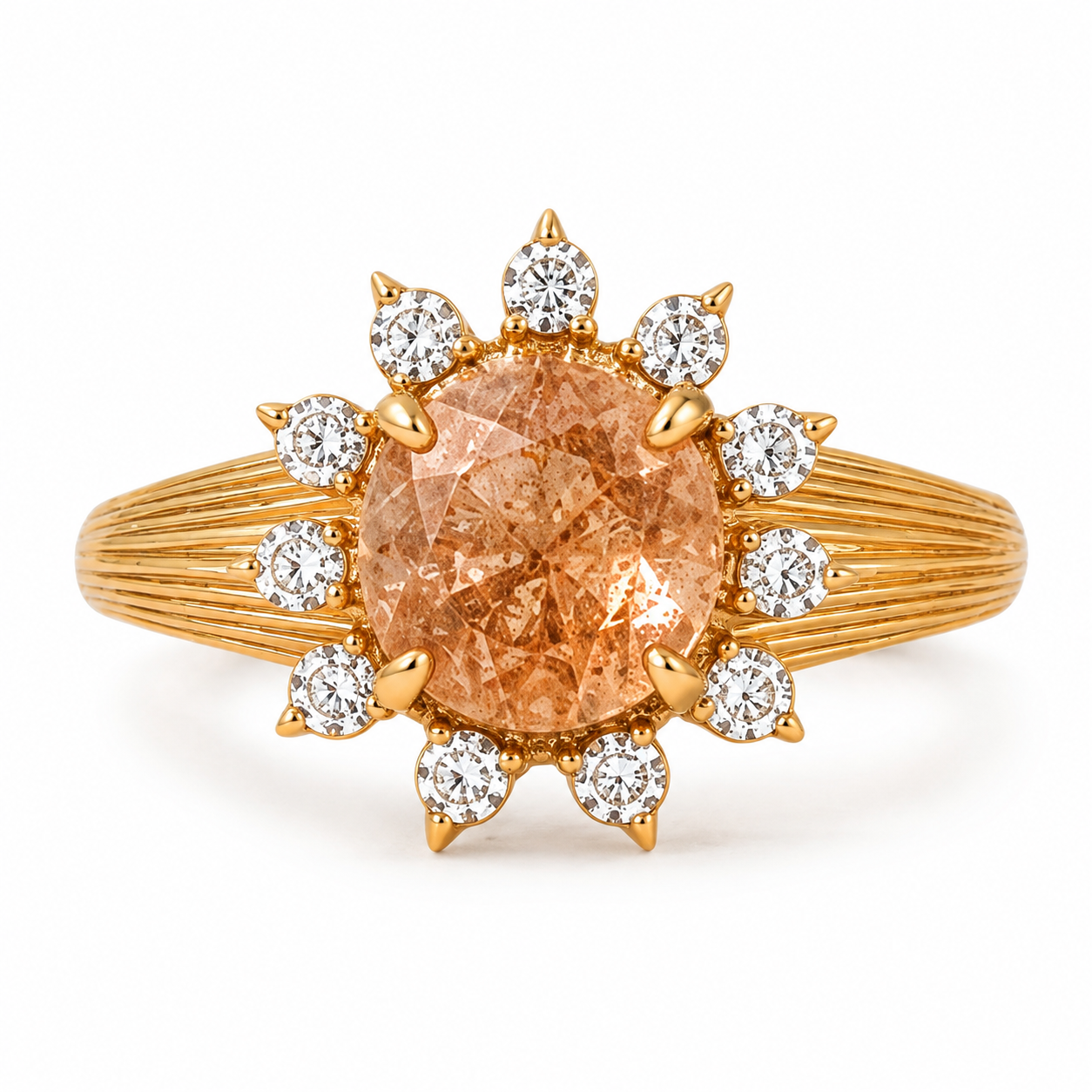
Yes. A colored center can provide all the individuality a simple ring needs. Pale pink creates a soft focal point, green inclusions create internal pattern, and a darker stone creates a stronger outline against gold. Keeping the surrounding metalwork quiet lets that one feature carry the design.

Appearance is only the first filter. Confirm the gemstone’s name, whether it is natural or laboratory-grown, any disclosed treatment, and the care advice for that material. Do not assume two similar-looking stones have the same maintenance needs. A restrained setting does not change the physical properties of the gem inside it.
For a clear center, distinguish diamond, lab-grown diamond and moissanite in the product specifications rather than relying on a photograph. For a patterned gemstone, ask how much the supplied stone may differ from the sample. The point of a minimal engagement ring is to notice its central detail, so that detail deserves careful checking.
Use gold color to connect the ring to your wardrobe
Start with the jewelry you already reach for. Yellow gold introduces a warm outline; white gold provides a cooler one; rose gold adds a pink-toned frame. There is no universal rule that one skin tone must wear one metal color. Compare the combination in ordinary daylight and choose the one you enjoy.
Keep color and karat separate in your decision. A request for rose gold does not specify whether you want 10K, 14K or 18K. Confirm both choices, along with any surface finish and maintenance guidance, on the exact product you order.
Plan the wedding band before finalizing the engagement ring
A plain band often makes a quiet partner, but simple styling does not guarantee a flush fit. A low basket may occupy the space where a straight wedding band would sit. A small intentional gap is one option; a curved band is another.

Ask to see the proposed pairing from above and from the side. The rings should sit comfortably without forcing an accent stone or edge against the other ring’s setting. Judge the combined width on your finger, too: a stack can feel different from either ring worn alone. Our curved wedding band guide explains the fit questions to ask when a straight band leaves a gap.
A short checklist before you order
- Save the exact design, stone shape and metal combination you want.
- Confirm the center stone’s dimensions, identity and origin.
- Request band width, thickness and a side-view image.
- Confirm your ring size rather than estimating from a hand photograph.
- Discuss wedding-band clearance if you plan to wear a stack.
- Check resizing terms, care requirements and the current production and delivery estimates.
When comparing prices, keep those specifications consistent. Two rings described as “simple gold solitaires” may differ substantially in stone, metal content and construction. Fewer decorative details do not automatically mean a lower price.
Frequently asked questions
Does a minimalist engagement ring have to be a solitaire?
No. A small cluster, a restrained three-stone design or subtle leaf accents can still look minimal when there is a clear focal point and space around it.
Can a larger stone still look minimalist?
Yes. Minimalism describes the composition, not a carat limit. A larger center on a plain band may look clean and bold, although its dimensions and setting height will affect how it feels on the hand.
Is a minimalist engagement ring easier to maintain?
Not automatically. Fewer details may make some areas easier to reach, but the gemstone, setting and finish determine the appropriate care. A simple design still needs inspection and sensible wear habits.
How do I keep a simple ring from feeling generic?
Choose one meaningful detail: a stone color, a particular shape, a subtle engraved pattern or a metal tone you already love. You do not need to add several features at once to make the ring personal.
To compare actual designs, explore the GemifySpace minimalist ring collection. Start with the outline that appeals to you, then use the product specifications and the questions above to narrow your choice.
Further reading: GIA: How to Protect Your Diamond Engagement Ring.

