
Article: Sapphire Rings: Color, Natural and Lab-Grown Origins, and Meaning

Sapphire Rings: Color, Natural and Lab-Grown Origins, and Meaning
A sapphire ring starts with color, but color alone does not tell you what you are buying. A deep blue center stone, a pale peach sapphire and a vivid pink sapphire can belong to the same mineral family while creating very different rings. Origin, treatment, cut and setting deserve attention alongside the shade that first catches your eye.

What is a sapphire?
Sapphire is corundum; ruby is the red variety of that mineral. Blue is the best-known sapphire color, but sapphire also occurs in other hues. If you are comparing peach sapphire engagement rings with blue designs, ask about the exact stone rather than assuming that a color name establishes its origin or quality.
Natural sapphire forms in the earth. Lab-grown sapphire is produced in a laboratory and is a separate purchasing choice, even when its appearance is similar. A listing should clearly identify which one it contains. The same distinction applies to center stones and accents.

Read the color in ordinary light
Look at the stone in daylight and indoor lighting. A sapphire that looks rich in a close-up may look much darker once it is set. Notice whether the color is even, whether the center looks transparent or dark, and whether you still enjoy the shade at normal viewing distance.
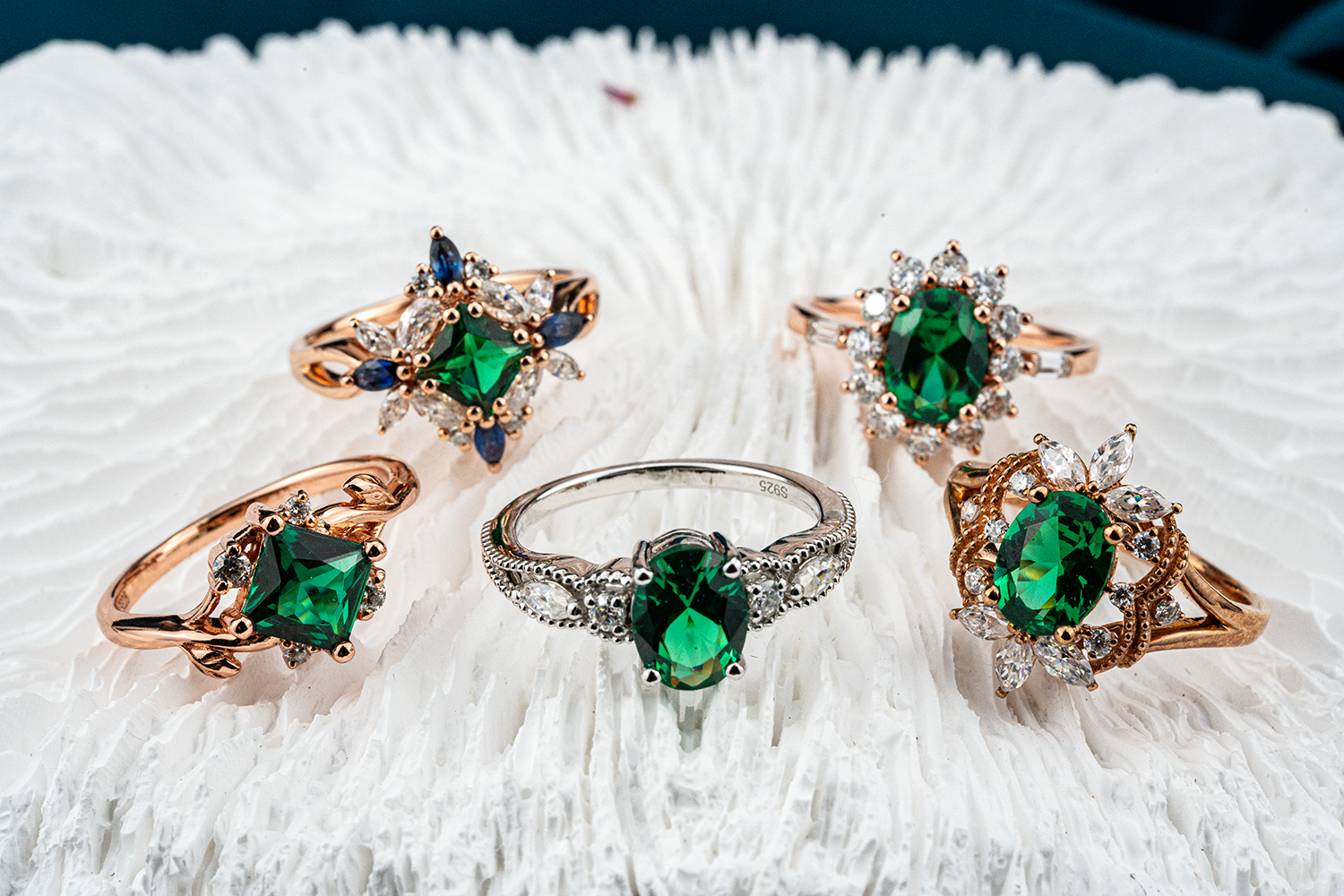
Gemstone shapes affect the design as well as the face-up appearance. An oval can create an elongated outline; a round stone gives a balanced silhouette; an emerald-cut sapphire emphasizes broad, orderly facets. Compare dimensions in millimeters instead of relying on carat weight alone.

Natural does not mean untreated
Ask whether a natural sapphire has been treated and whether a laboratory report is available for the particular stone. Heat treatment is common, but treatment information should still be disclosed. A report describes the submitted stone; it is not a blanket guarantee for every ring in a collection.

Sapphire meaning and a personal choice
Sapphire is often associated with loyalty and is a traditional September birthstone. Those associations can give a September birthstone engagement ring personal meaning, but they do not determine which color or style you should choose. The recipient's taste and daily routine are more useful guides.
Setting and care
Corundum resists scratching well, yet a sapphire ring can still suffer impact damage or develop loose settings. Protect exposed tips, remove the ring for heavy work and have loose stones checked before wearing it again. Cleaning advice should account for treatments, accent stones and any surface finish on the metal.
For gemstone identification and treatment guidance, see GIA's sapphire buyer's guide. When choosing a GemifySpace ring, use the individual listing to confirm the sapphire's origin, gold options and available documentation.
Continue from gemstone identity to ring design
This overview establishes the color and origin questions. For a proposal ring, the longer sapphire engagement ring buying guide covers setting, dimensions and band pairing. Compare the actual options in sapphire rings after deciding which origin and color you want, and keep any treatment disclosure with the order information.

