Article: Opal vs. Tourmaline for October Birthstone Rings: Which Should You Choose?
Opal vs. Tourmaline for October Birthstone Rings: Which Should You Choose?
An October birthstone ring can feel deeply personal, but there is a choice to make before you fall in love with a design: opal or tourmaline? Both are recognized October birthstones. Opal offers shifting flashes of color; tourmaline offers an extraordinary range of distinct hues. They also ask different things of the person who wears them. This guide helps you choose by beauty, lifestyle, setting and care—not just by birth month.
The Short Answer
Choose opal if the recipient loves an iridescent, softer-looking stone and is comfortable wearing a ring thoughtfully and taking it off for hands-on activities. Choose tourmaline if they want a faceted, more consistently colored gem and a ring better suited to regular wear. Tourmaline is more scratch-resistant, but neither gemstone is impact-proof. For a hard-wearing, nearly always-on engagement ring, consider whether a sapphire ring better matches their routine, then return to an opal or tourmaline design for a birthday or special-occasion piece.
Why Does October Have Two Birthstones?
Opal is the traditional October birthstone; tourmaline is the newer alternative. You do not have to choose the “official” stone—both belong to October. What matters more is whether the wearer prefers opal’s play-of-color or tourmaline’s particular shade, and how much wear the ring will see. If you are comparing other months as well, GemifySpace’s birthstone ring guide provides the wider calendar.

How Their Color Looks in Real Life
Opal: Light That Changes as You Move
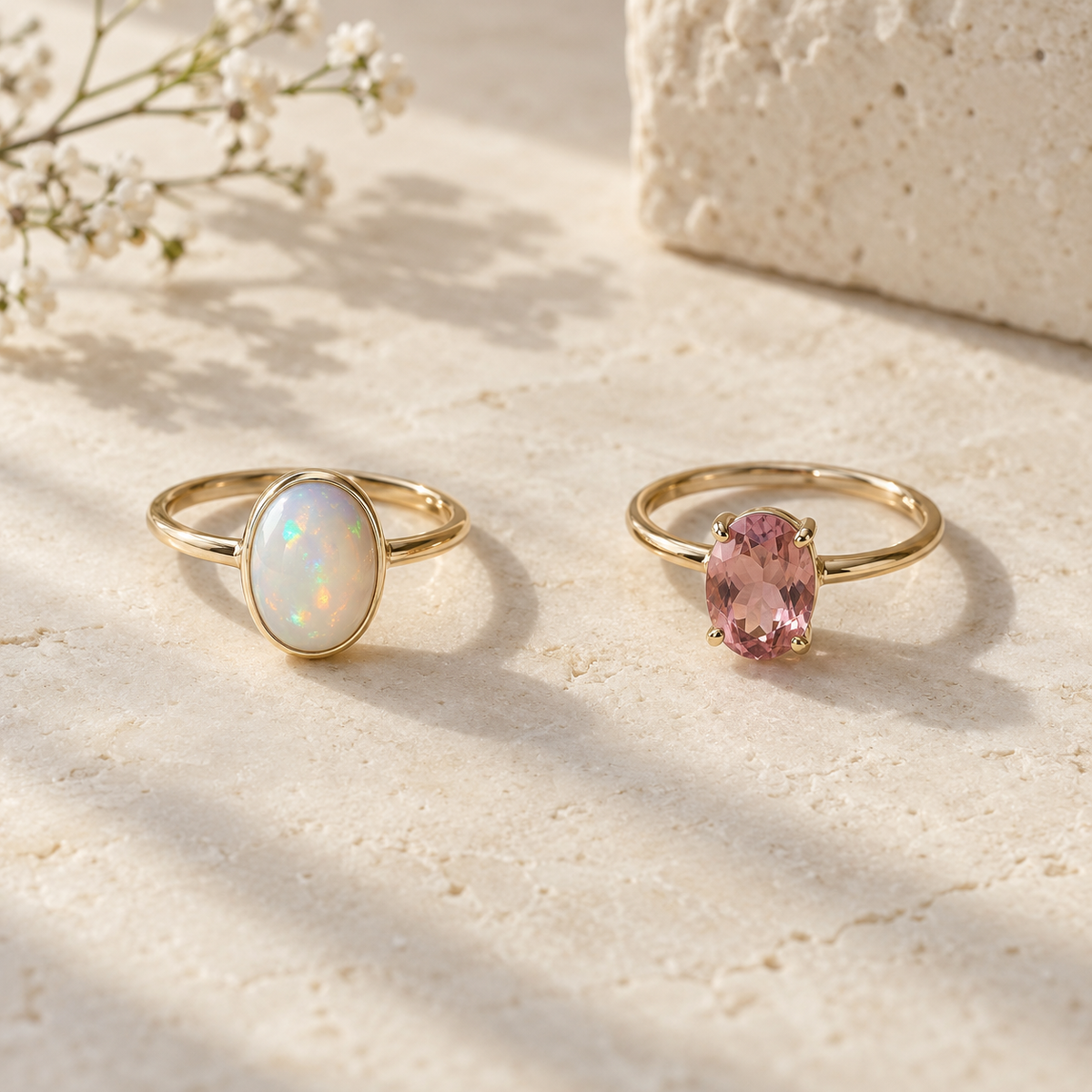
Precious opal’s play-of-color means flashes of different hues become visible as the stone or your viewing angle moves. A pale opal can look quiet in one light and reveal tiny green, blue or orange flashes in another. Not every opal shows the same pattern or intensity, and a photo lit for maximum sparkle is no substitute for seeing several angles. If the wearer loves a gentle, painterly gemstone, start with GemifySpace’s opal ring collection.
Tourmaline: A Color You Can Choose More Precisely
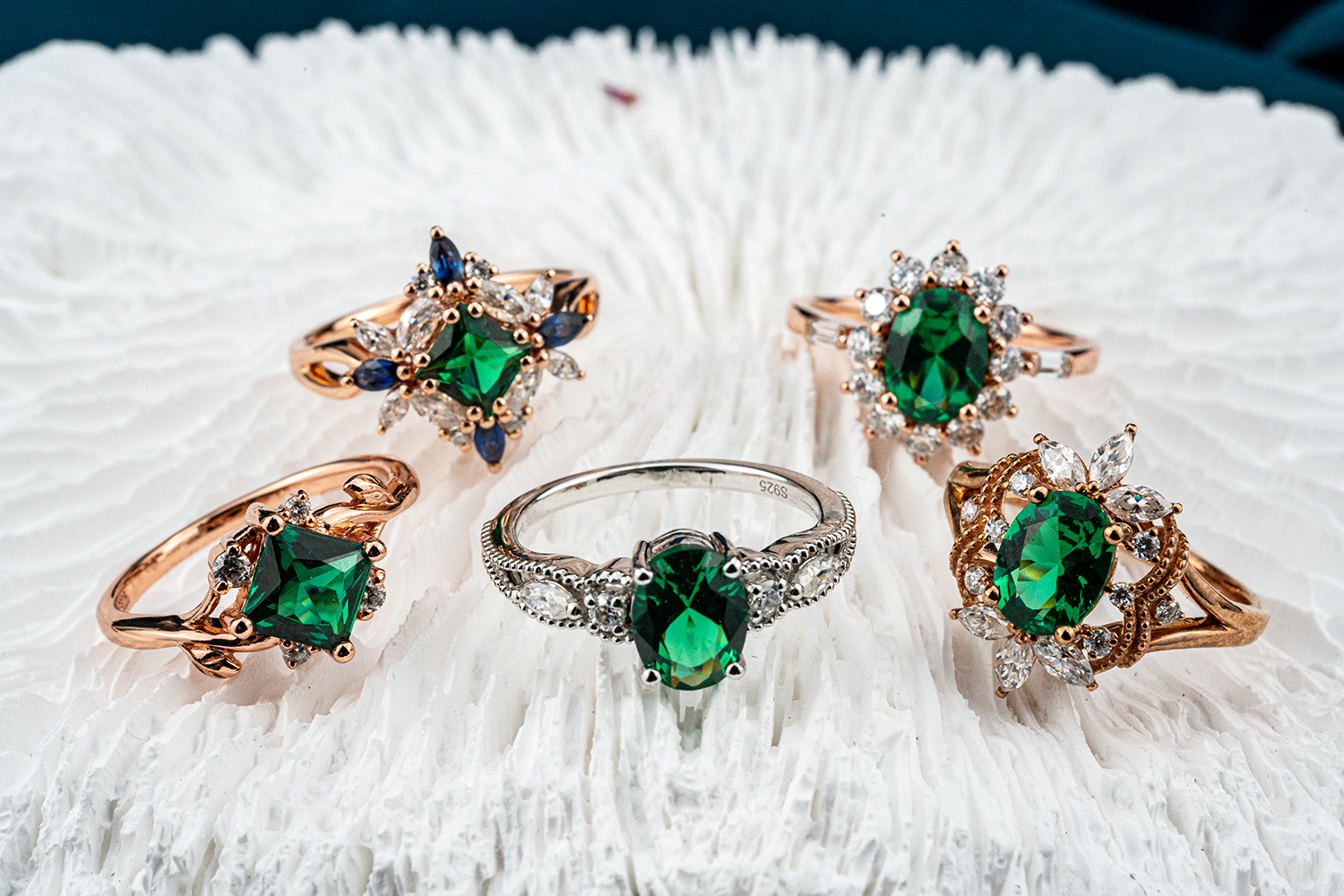
Tourmaline occurs in pink, green and many other hues. Faceting creates reflections and reveals the stone’s body color rather than opal-like play-of-color. Look at the color in daylight and under indoor light: a heavily saturated stone can look much darker once set. In GemifySpace’s tourmaline ring collection, compare the center stone as well as any colored accents—some designs use tourmaline as a side stone rather than the main gem.

Durability: What Changes for a Ring?
GIA places opal at about 5–6.5 and tourmaline at 7–7.5 on the Mohs hardness scale. Hardness describes resistance to scratching, not resistance to a blow. Opal scratches more readily and can also crack under rough impact or abrupt temperature changes. Tourmaline is more resistant to scratches and GIA describes it as generally suitable for everyday wear, yet rates its toughness only fair: a knock against a hard counter can still chip a stone, particularly at an exposed edge.
For a ring worn chiefly on dinners, weekends or meaningful occasions, an opal can be a lovely fit. If the wearer types, cooks, works with their hands or frequently wears a ring throughout the day, tourmaline is the more forgiving October option—but take it off for exercise, gardening, cleaning and any activity that could strike the gem. A protective design and realistic habits matter more than a hardness number alone.
Choose a Setting for the Way You Wear It
Opal: Keep the Vulnerable Edges Covered
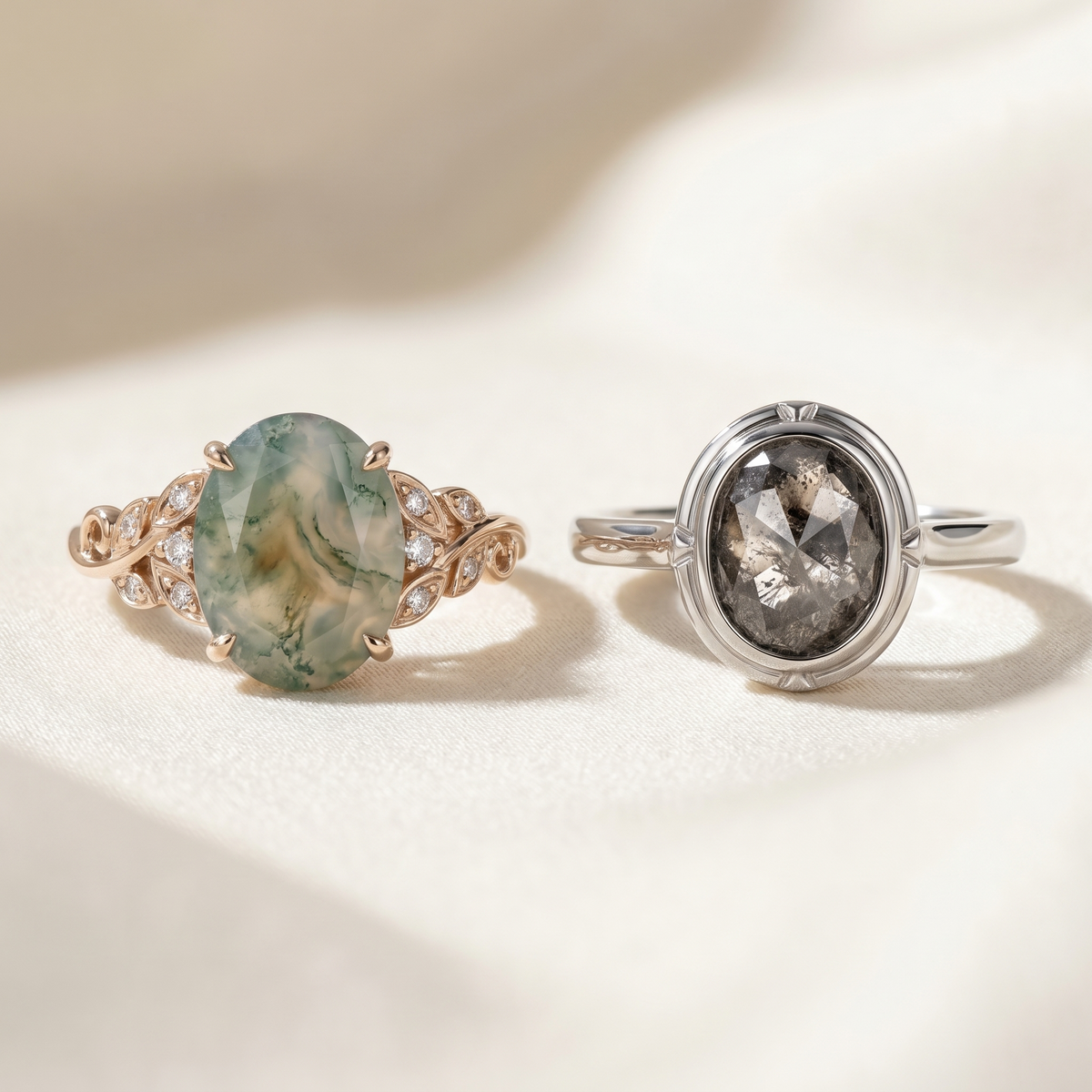
A smooth bezel or well-designed protective rim helps shield an opal’s perimeter; a lower profile reduces the chance of catching on clothing. It cannot make a soft stone invulnerable. Consider whether the wearer is happy to remove the ring for active tasks, and inspect the center stone and setting closely. For an example of a romantic opal-led design, see the oval opal engagement ring with moissanite accents; judge its actual mounting on the product page rather than assuming it is bezel-set.
Tourmaline: Look Beyond the Prongs
Tourmaline can be beautifully faceted in an oval or elongated shape. If set in prongs, check that they are even, secure and positioned to protect corners or pointed tips; consider a lower-set stone if the wearer is often on the move. For an organic alternative, look at the tourmaline leaf ring in white gold, and verify its center-stone details and optional gem choices before checkout.

Match Gemstone Color to Gold
White opal can look warm and romantic beside yellow or rose gold, while pink tourmaline often feels soft in yellow gold and green tourmaline can look crisp beside white gold. These are styling suggestions, not universal rules. Ask to see the specific stone in the chosen metal color if images show different variants: gem tone, treatment and lighting can change the result. If choosing between 10K, 14K and 18K, use GemifySpace’s gold-karat comparison guide as a separate check on budget and routine; confirm which combinations are offered on the individual listing.
What to Check Before You Buy
-
Which stone is in the center? A ring tagged “tourmaline” might have tourmaline accents and a different main gem. Read the stone specification for the selected variant.
-
Is the opal solid or assembled? A solid opal, doublet and triplet do not have identical care requirements. Ask for the structure and any treatments; avoid treating “natural-looking” photographs as proof of origin. Likewise ask about tourmaline color treatment if that matters to you.
-
How does it look away from studio lights? Review daylight and side-angle images or request details on play-of-color, color depth and any visible inclusions.
-
How is the gem protected? Inspect prongs, bezel, height and any exposed points. Ask how a wedding band will sit beside it before committing to a bridal set.
-
Does the exact order fit your date? Confirm ring size, metal variant, production and delivery estimates on the current product page. For a proposal, use the order-planning timeline to leave a delivery buffer.
A Simple Care Routine for Each Stone
Opal: Wipe gently with a soft cloth and, when needed, use a small amount of warm, mild soapy water; rinse briefly and dry with a soft cloth. Do not soak an opal ring when its construction is unknown, since prolonged water exposure may weaken the adhesive in a doublet or triplet. Avoid ultrasonic or steam cleaning, hot cars, extreme heat and sudden changes of temperature. Store alone in a soft-lined compartment so harder jewelry cannot scratch it. If unsure about a treatment or the setting, ask a jeweler before cleaning.
Tourmaline: Wash gently with warm, mild soapy water and a very soft brush or cloth, rinse and dry. Skip ultrasonic and steam cleaners, and protect the gem from high heat, thermal shock and hard knocks. Store it separately from harder gemstones. For either ring, periodically check for a loose stone or worn prongs; stop wearing it and have the setting examined if it moves.

Which October Birthstone Ring Is Right for You?
The most useful test is a simple one: picture the recipient’s ordinary Tuesday, not just the birthday celebration. For a careful wearer who loves shimmering, ever-changing color, opal can be unforgettable. For someone who wants a particular pink or green and will wear their ring more often, tourmaline is usually the more practical October birthstone. Browse GemifySpace opal rings and tourmaline rings, compare the center-stone details and choose the design that fits both their eye and their routine.
FAQ
Is October’s birthstone opal or tourmaline?
Both. Opal is the traditional October birthstone and tourmaline is the newer alternative; either can make a meaningful October gift.
Is tourmaline tougher than opal for a ring?
Tourmaline is harder and generally better suited to regular wear, but its toughness is rated fair. It can still chip with an impact. Opal needs more careful handling and storage.
Can an opal be used in an engagement ring?
Yes, if the wearer understands the extra care and does not expect a soft gemstone to withstand constant rough use. A protected, lower-profile setting and taking the ring off for active work help; no setting guarantees safety.
Can a tourmaline engagement ring be worn every day?
Often, with sensible precautions. GIA says tourmaline is generally suitable for everyday wear, but remove it for activities likely to strike the stone and avoid heat or sudden temperature changes.
Do all opals show rainbow flashes?
No. Precious opal is prized for play-of-color, but the amount and pattern vary, and some opal varieties have little or no visible play-of-color. Check images of the exact gem if possible.
Are opal doublets and triplets the same as solid opal?
No. They are assembled stones made with thin opal layers bonded to other materials. Prolonged water exposure can weaken the adhesive, so confirm the construction and care instructions before buying or cleaning.
What is the safest way to clean tourmaline?
Warm mild soapy water and a soft brush or cloth. GIA does not recommend ultrasonic or steam cleaners for tourmaline.
Which gold looks best with pink tourmaline?
Yellow and rose gold can complement pink; white gold can offer a cooler contrast. There is no single best choice—compare images of the selected stone in the actual available metal variant.