
Article: Birthstone Rings by Month: Meaning, Gemstones & How to Choose a Gold Birthstone Ring
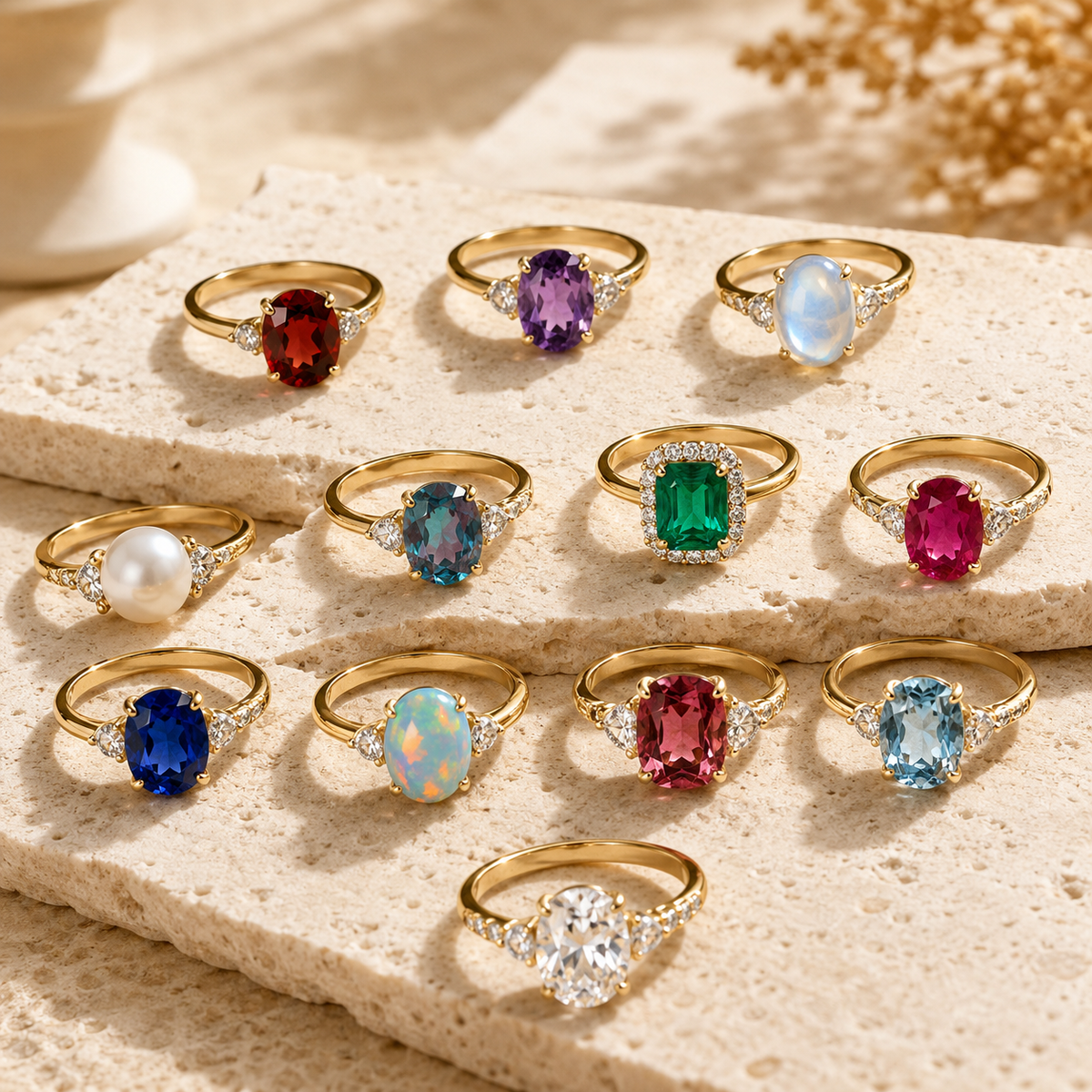
Birthstone Rings by Month: Meaning, Gemstones & How to Choose a Gold Birthstone Ring
A birthstone ring connects a gemstone with a month that matters to you. It may mark your own birthday, a partner's birthday or a family connection. Start with the month's recognized stones, then choose the material and setting that suit the wearer.


Birthstone rings by month
The following reference follows the monthly selections in GIA's birthstone guide. Traditions can vary, so use it as a clear starting point rather than a restriction on personal taste.
| Month | Birthstone choices |
|---|---|
| January | Garnet |
| February | Amethyst |
| March | Aquamarine, bloodstone |
| April | Diamond |
| May | Emerald |
| June | Pearl, alexandrite, moonstone |
| July | Ruby |
| August | Peridot, spinel, sardonyx |
| September | Sapphire |
| October | Opal, tourmaline |
| November | Topaz, citrine |
| December | Turquoise, tanzanite, zircon |


One month can offer very different appearances
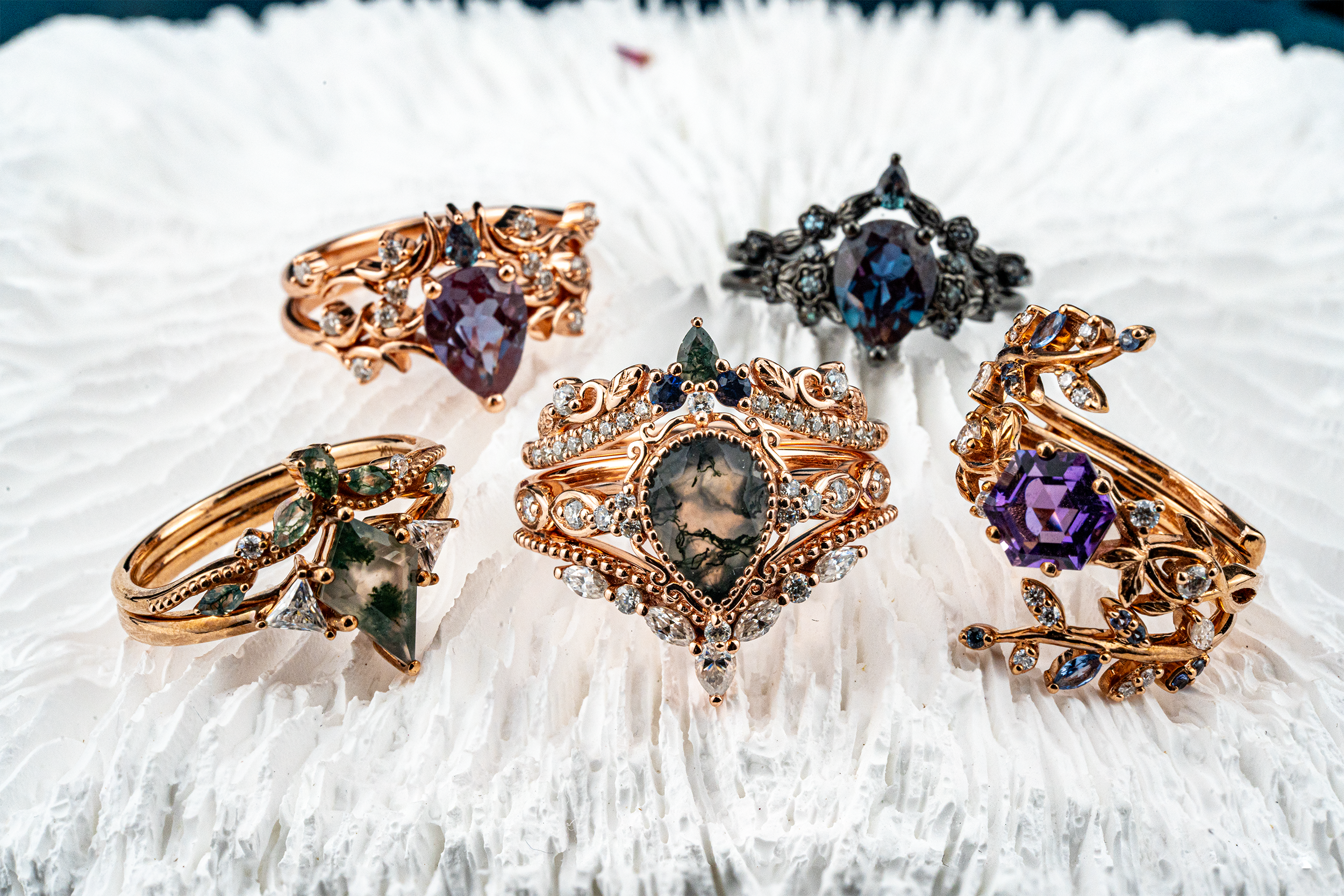
June birthstone rings illustrate the range especially well. Pearl offers luster, moonstone has a moving sheen, and alexandrite is known for color change. Compare their care needs before choosing only by the strongest photograph.
An October birthstone ring can feature opal or tourmaline. Those are different materials, so decide which appearance you prefer and ask about the actual stone's origin, treatments and care. An opal-inspired color does not establish that a product is opal.
For a November birthstone ring, topaz and citrine offer distinct choices. Check the gemstone name rather than treating every golden-colored stone as a November birthstone. The same principle applies to other months: color alone is not an identity.


Separate a birthstone from an alternative
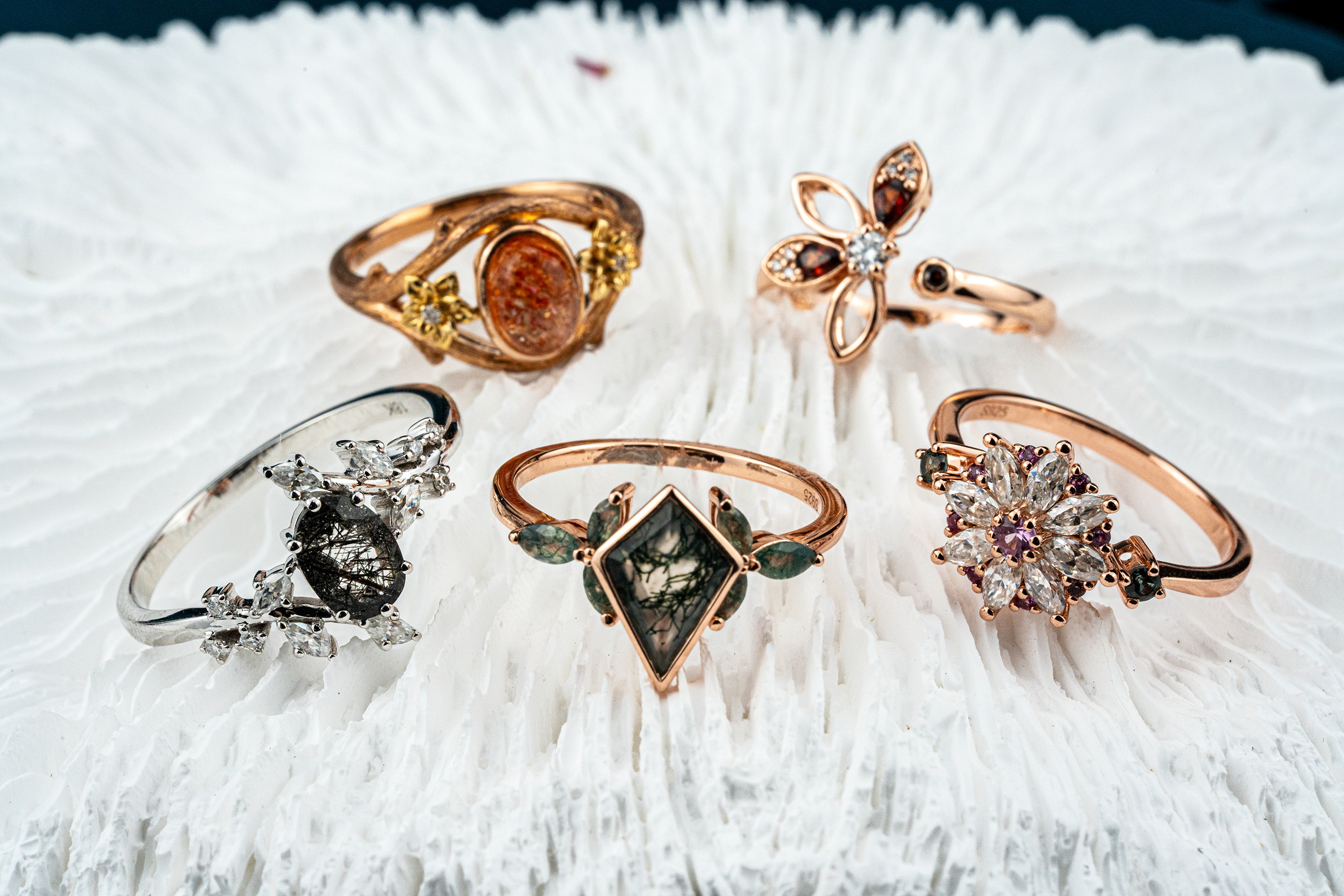
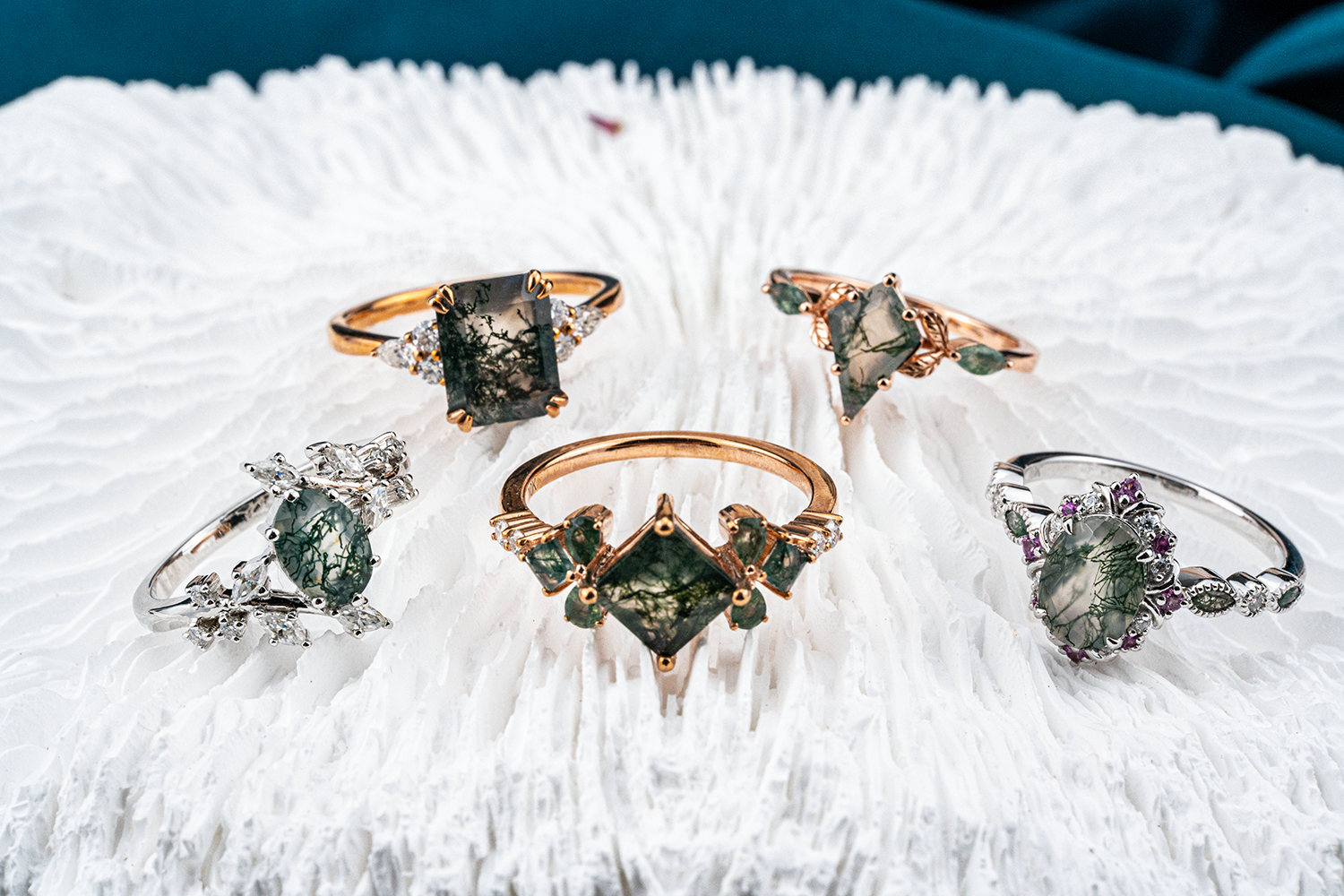
You can choose another stone simply because you like it. Moss agate may suit a nature lover, moissanite may appeal for its fire, and sunstone may be chosen for its warm appearance. Those preferences do not make them the recognized birthstones for March, April or August in the reference above.
Lab-grown origin should also be stated clearly. A lab-grown diamond is diamond, while moissanite is a different material. Natural and lab-grown descriptions should remain explicit for sapphire, ruby, emerald and alexandrite as well.


Give the ring a useful design brief
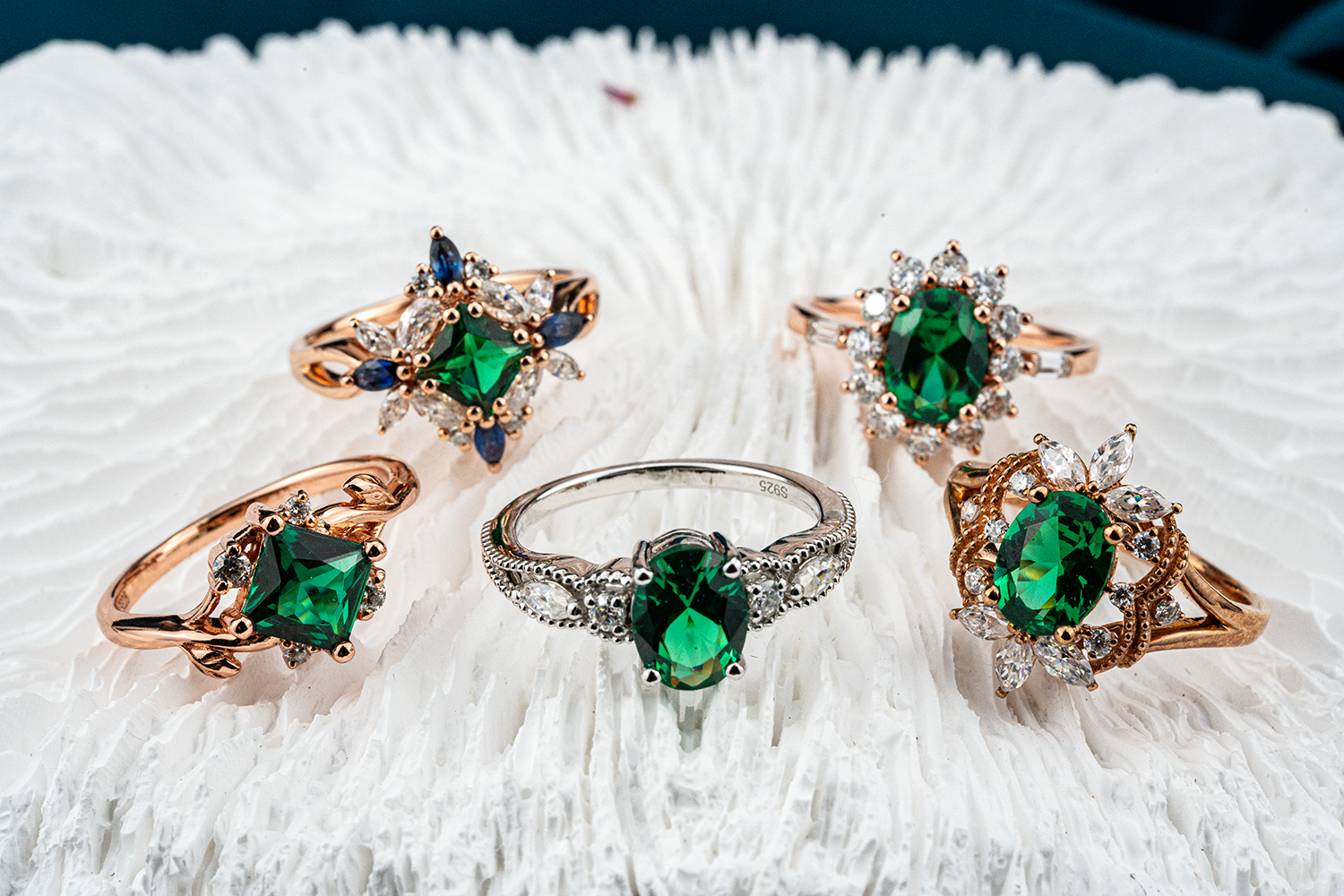
For January birthstone rings, decide whether garnet should be a small accent or the main focus. For an amethyst birthstone ring, compare the purple in ordinary light. A May birthstone ring should be chosen with emerald's treatment and care information in mind, not just its green color.
A three stone birthstone ring can represent several people or dates, but not every design can accept any combination of stones. Confirm the dimensions, layout and available customization before ordering.


Choose the gold and fit for the recipient
Use the recipient's existing jewelry to guide metal color, and check the gold karat options on the exact product. The available selection may differ between designs. Confirm the intended finger and size, particularly for a wide band or a set.
Birthstone symbolism does not remove the need for practical care. Pearl, opal and moonstone need gentler handling than many other ring stones, and even hard gemstones can be damaged by impact. Ask for care instructions for the complete piece and choose a design the recipient will enjoy wearing.
Browse gemstone collections
- Garnet
- Amethyst
- green gemstones
- Diamond
- Emerald
- Pearl
- Moonstone
- Alexandrite
- Ruby
- Sunston
- Sapphire
- Opal
- Tourmaline
Use the month as the start of a shortlist
For months with more than one stone, appearance and care can lead to very different choices. Compare opal and tourmaline for October or citrine and topaz for November before selecting a design. For June, pearl, moonstone and alexandrite should likewise be compared as distinct materials rather than interchangeable versions of the same birthday gift.

