Article: Alexandrite Rings: Color Change, Natural and Lab-Grown Origins

Alexandrite Rings: Color Change, Natural and Lab-Grown Origins
An alexandrite ring is chosen for a change in appearance: its hues can shift with the light source. That makes it especially important to compare more than one photograph and to distinguish natural alexandrite from lab-grown material before buying.

How hard is alexandrite?
Alexandrite has a Mohs hardness of 8.5, according to GIA’s alexandrite care guide. That describes scratch resistance; it does not make a pointed stone or its prongs immune to impact. For regular wear, compare the protection around the stone, the height of the setting and the activities for which you will remove the ring. A lab-grown origin does not remove the need to check the individual stone and its mounting.
Color change is the defining attraction
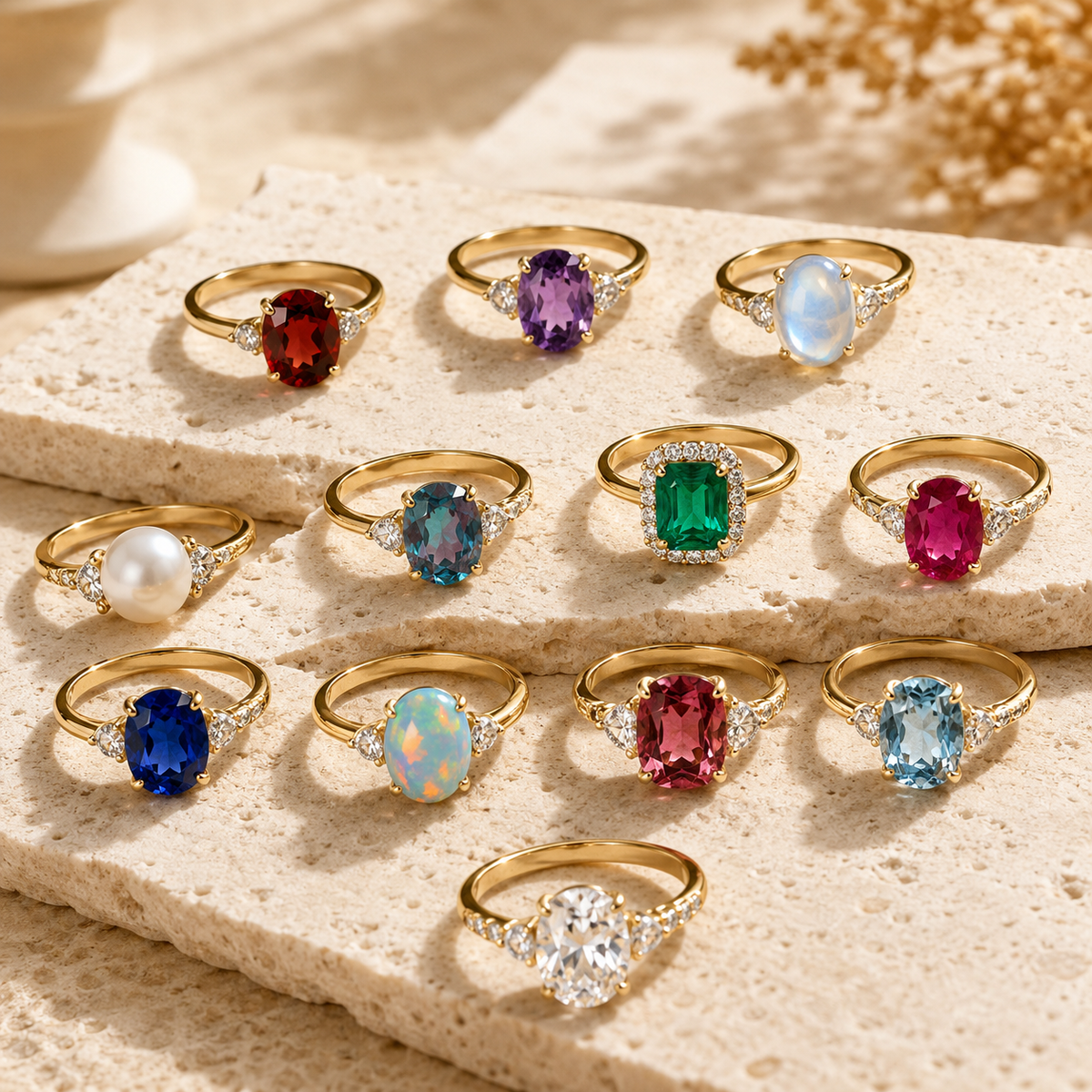
Alexandrite is a color-changing variety of chrysoberyl. Chromium contributes to its color behavior, but the strength and appearance of the change vary. A photograph showing green beside purple is an illustration of a possible effect, not a promise that every stone will look exactly that way.
Review images or video under identified lighting conditions. Mixed indoor light, camera settings and screens can all affect the appearance you see.

Natural and lab-grown are different origin claims
A listing for a natural alexandrite engagement ring should state that origin explicitly and provide the available identification information. A lab-grown alexandrite ring should be described just as clearly. A color-changing stone cannot be identified from its photograph alone.
Do not treat the rarity of natural alexandrite as a description of every alexandrite-colored product. For technical background, see GIA's alexandrite guide.

Choose a setting that works in both colors
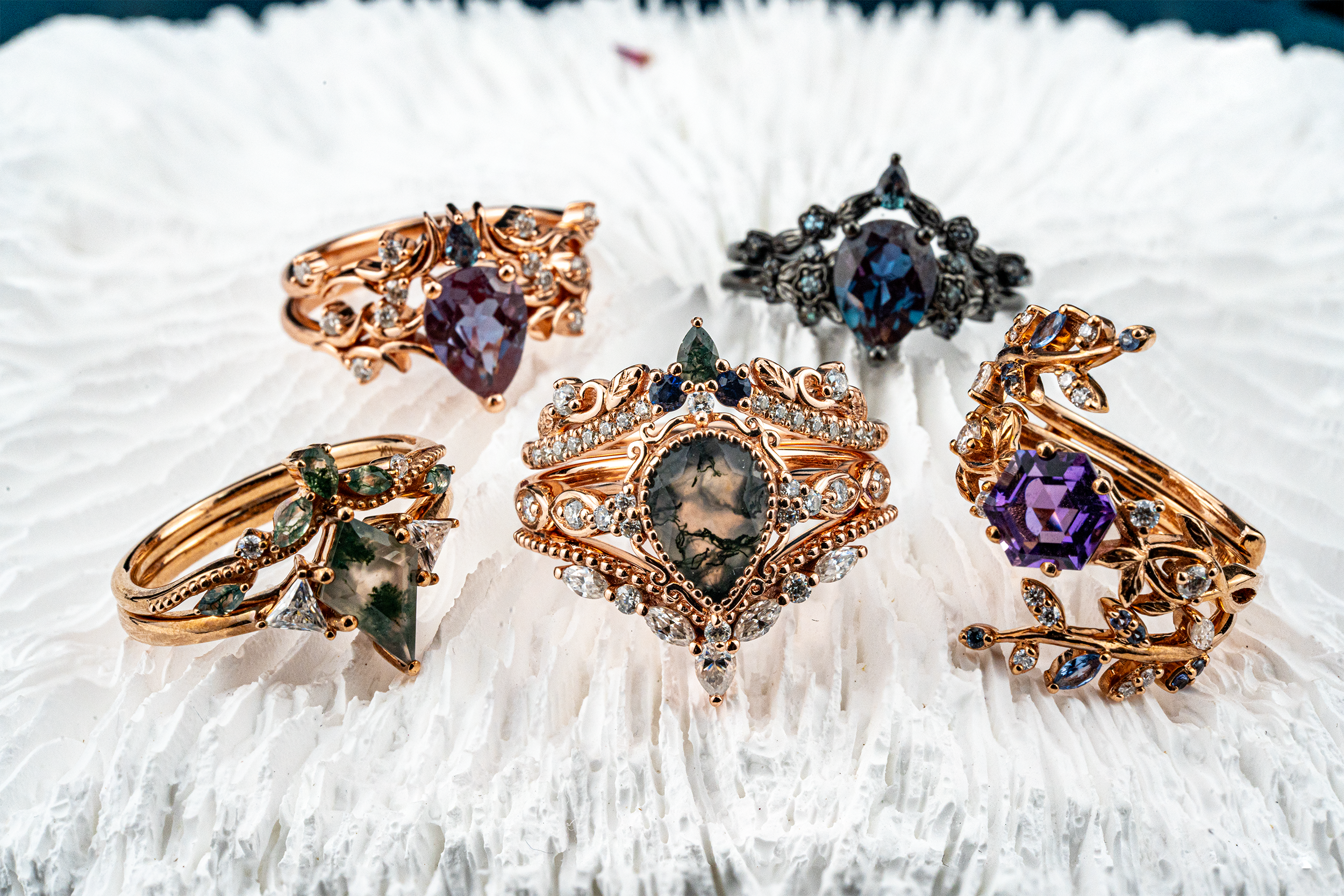
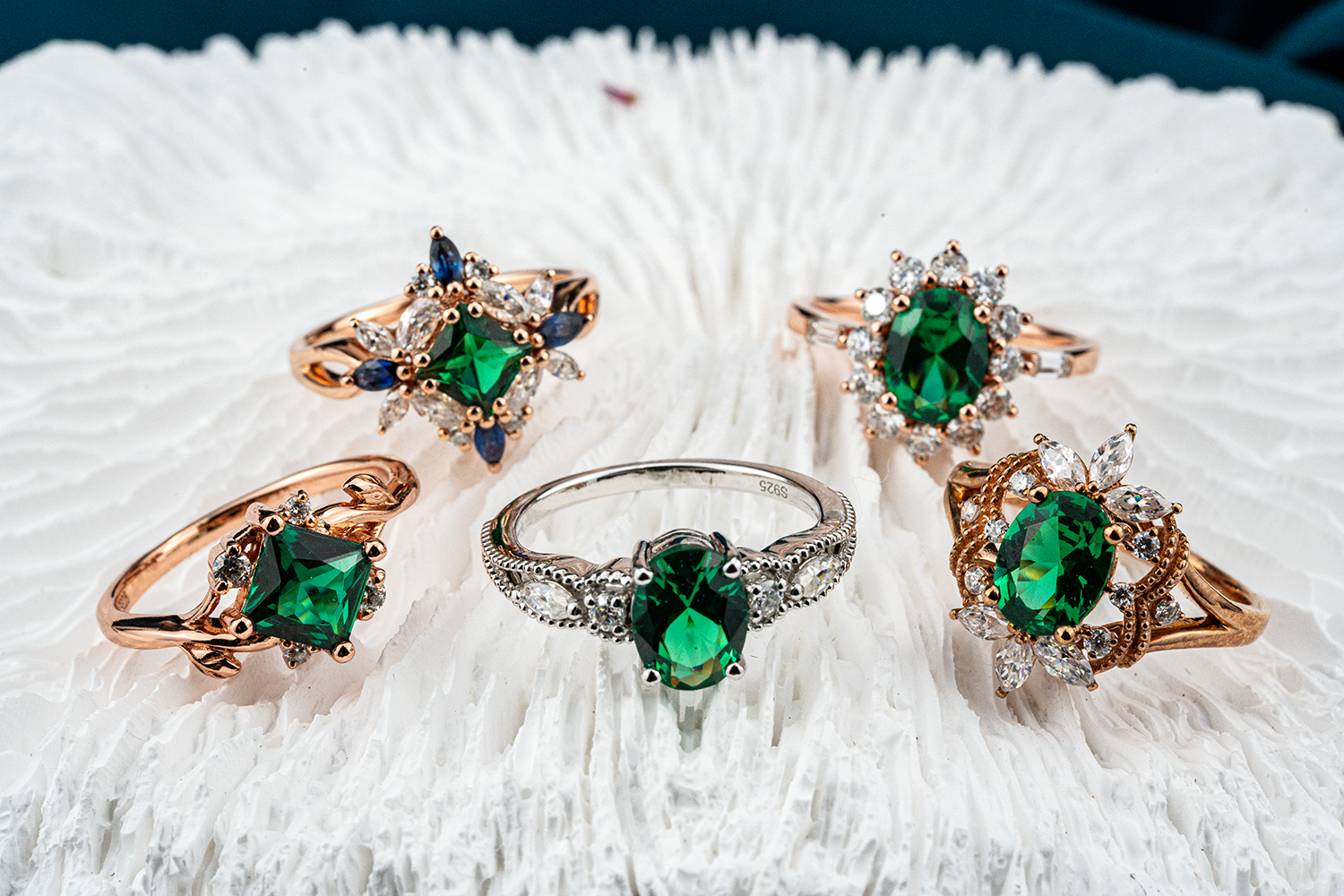
A vintage alexandrite ring can use fine metal detail to frame the changing center. A simpler setting puts more attention on the stone itself. When comparing an alexandrite gold ring in different metal colors, consider both the daylight and indoor appearance rather than matching only one image.
Read the dimensions and check side views. Elongated shapes may require protection around pointed ends, and a tall setting can affect comfort.

A June gift with clear expectations
Alexandrite is one of June's birthstones, but that association does not replace practical checks. Confirm the gemstone identity, origin, ring size, accent materials and care instructions. Choose it for the color behavior and design you enjoy, without relying on a promise of investment value.
Browse alexandrite designs
Compare lab-created alexandrite rings with a clear brief
When comparing a lab-created alexandrite ring with another design, keep the stone dimensions, gold karat and accent materials consistent. Ask to see daylight and warm indoor lighting views and whether they show the actual stone or a representative example. A strong shift in a promotional image should lead to a question about lighting, not an assumption about every ring in the collection.
GemifySpace’s lab alexandrite engagement rings provide a starting point for design comparisons. A pear or marquise center needs attention at its tips, while a halo changes the total width on the finger. Review bezel versus prong settings and wedding-band clearance before selecting a matching set. Natural rarity and natural-stone prices should not be used to describe a lab-grown product.