
Article: Bezel vs. Prong Engagement Rings: Which Setting Is Right for You?

Bezel vs. Prong Engagement Rings: Which Setting Is Right for You?
Two rings can feature the same gemstone, the same gold and nearly the same band—yet feel completely different because of the way the center stone is held. A bezel surrounds the gemstone with a smooth rim of metal. Prongs hold it at selected points with small metal claws. That structural difference changes the ring’s outline, protection, profile, maintenance and everyday feel.
So, is a bezel or prong setting better for an engagement ring? Neither wins in every situation. A bezel is often the stronger choice for a smooth, low-maintenance silhouette and extra edge protection. Prongs are ideal when you want the center stone to remain visually open and prominent. The right answer depends on the gemstone, its shape, the wearer’s routine and the wedding band you plan to pair with it.
This guide compares bezel and prong engagement rings in the details that affect a real purchase—not only how they look in a close-up photograph.
The Short Answer: Bezel vs. Prong at a Glance
A bezel setting uses a thin metal rim to hold all or part of the gemstone’s perimeter. A prong setting uses individual metal claws, commonly four or six, to grip the stone at carefully chosen points.
| Factor | Bezel setting | Prong setting |
|---|---|---|
| Overall look | Smooth, modern, architectural | Open, classic, light and stone-forward |
| Edge protection | More metal around the girdle or perimeter | More of the stone’s edge remains exposed |
| Snag potential | Usually lower when well finished | Can catch more easily if tall, worn or poorly finished |
| Visible gemstone outline | Framed by metal | More of the outline remains visible |
| Light and sparkle | Still bright with a well-cut, clean stone; metal changes the frame | More of the stone is uncovered, creating an airy presentation |
| Cleaning access | Debris can collect near the inner bezel edge | Open galleries can be easier to reach, but prong bases collect residue too |
| Inspection | Check the rim for gaps, damage or movement | Check every prong for wear, lifting or snagging |
| Best suited to | Active routines, smooth profiles, minimalist design | Classic styling, maximum outline visibility, detailed stone shapes |
This table is a starting point. A high-set bezel can still catch on objects, and a low, well-designed prong setting can be practical. Band thickness, basket construction, center-stone height and workmanship often matter as much as the setting name. Look at the whole ring rather than relying on one label.

What Is a Bezel-Set Engagement Ring?
In a full bezel, a narrow metal rim surrounds the gemstone’s complete perimeter and is shaped over its edge to secure it. A partial or semi-bezel covers selected sections while leaving other areas open. Both versions create a defined frame around the center stone.
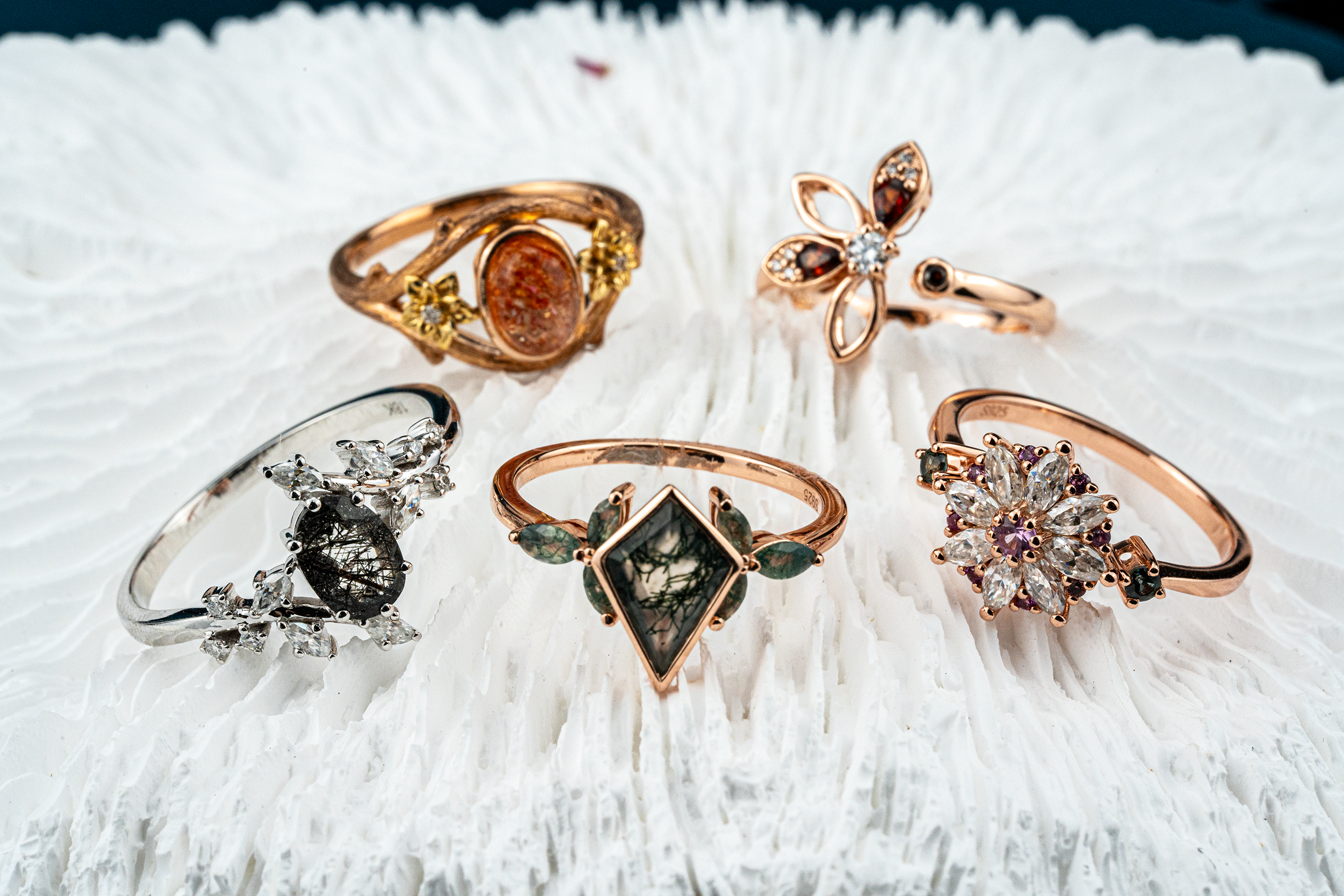
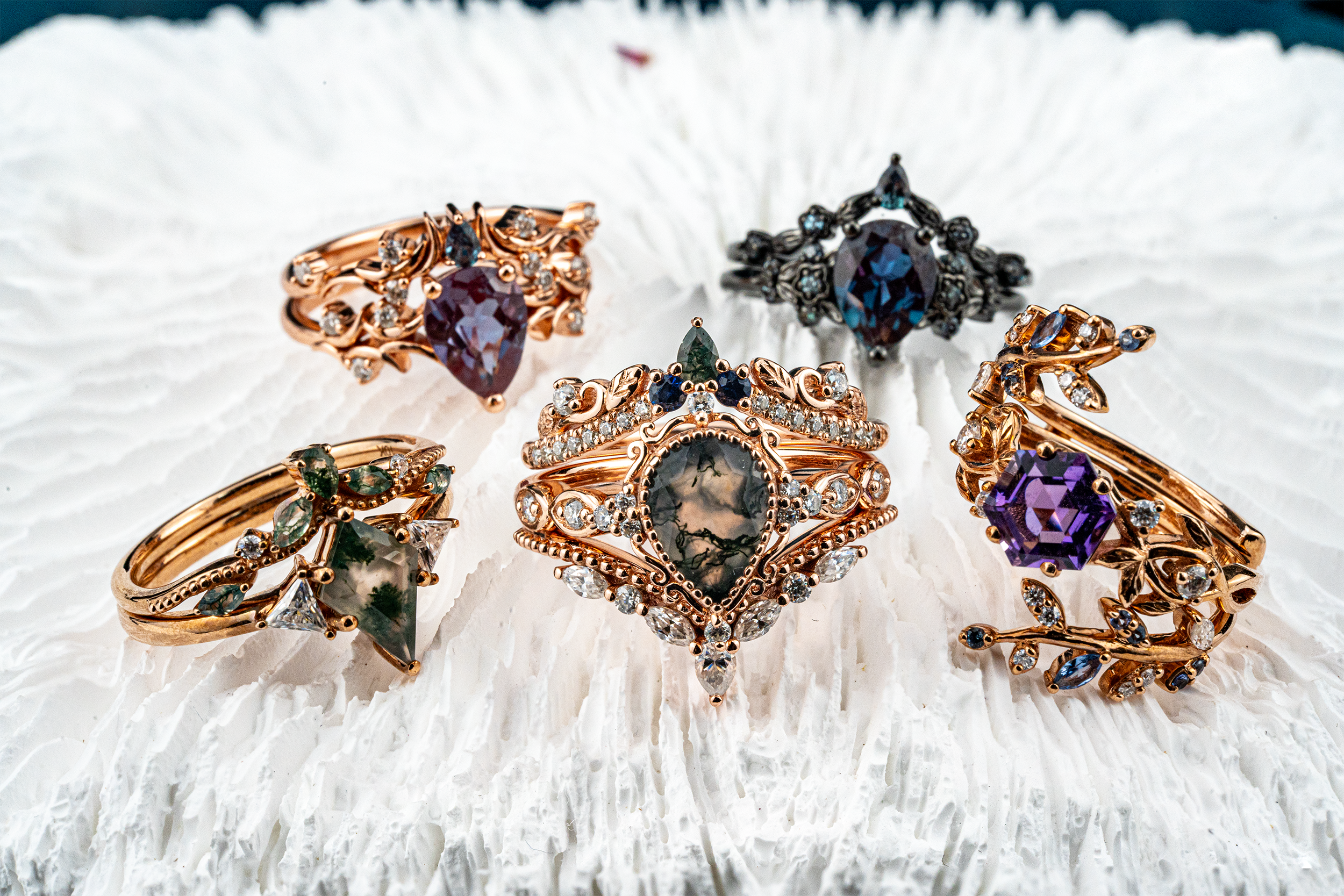
The design can feel sleek and contemporary, but bezel settings are not limited to minimalist rings. A fine bezel can follow an oval, pear, marquise, kite, hexagon or emerald-cut outline, and it can be combined with botanical shoulders, textured gold or small accent stones. The metal frame can also strengthen the visual contrast around colored gems such as moss agate, sapphire, alexandrite or black onyx.
Why Buyers Choose a Bezel
- The rim protects more of the gemstone’s vulnerable edge from direct knocks.
- A smooth outer profile is less likely to catch on clothing, hair or gloves.
- A bezel can make an irregular or geometric outline feel crisp and intentional.
- The metal border can add visual width without requiring a larger center gem.
- Low-profile bezel designs often feel stable and comfortable on the finger.
What to Check Before Buying a Bezel
A bezel is protective, not indestructible. The center stone can still chip after a severe impact, the ring can bend and the gem can loosen if the rim is damaged. Examine product photos from the top and side. The metal edge should look even, the gem should sit level, and there should be no obvious gap between the stone and its frame.
Also consider whether you like the metal border. A full bezel visually changes the exact outline of a stone and can make the design feel more structured. If seeing every millimeter of the gemstone’s edge is a priority, a prong setting may be more satisfying.
What Is a Prong-Set Engagement Ring?
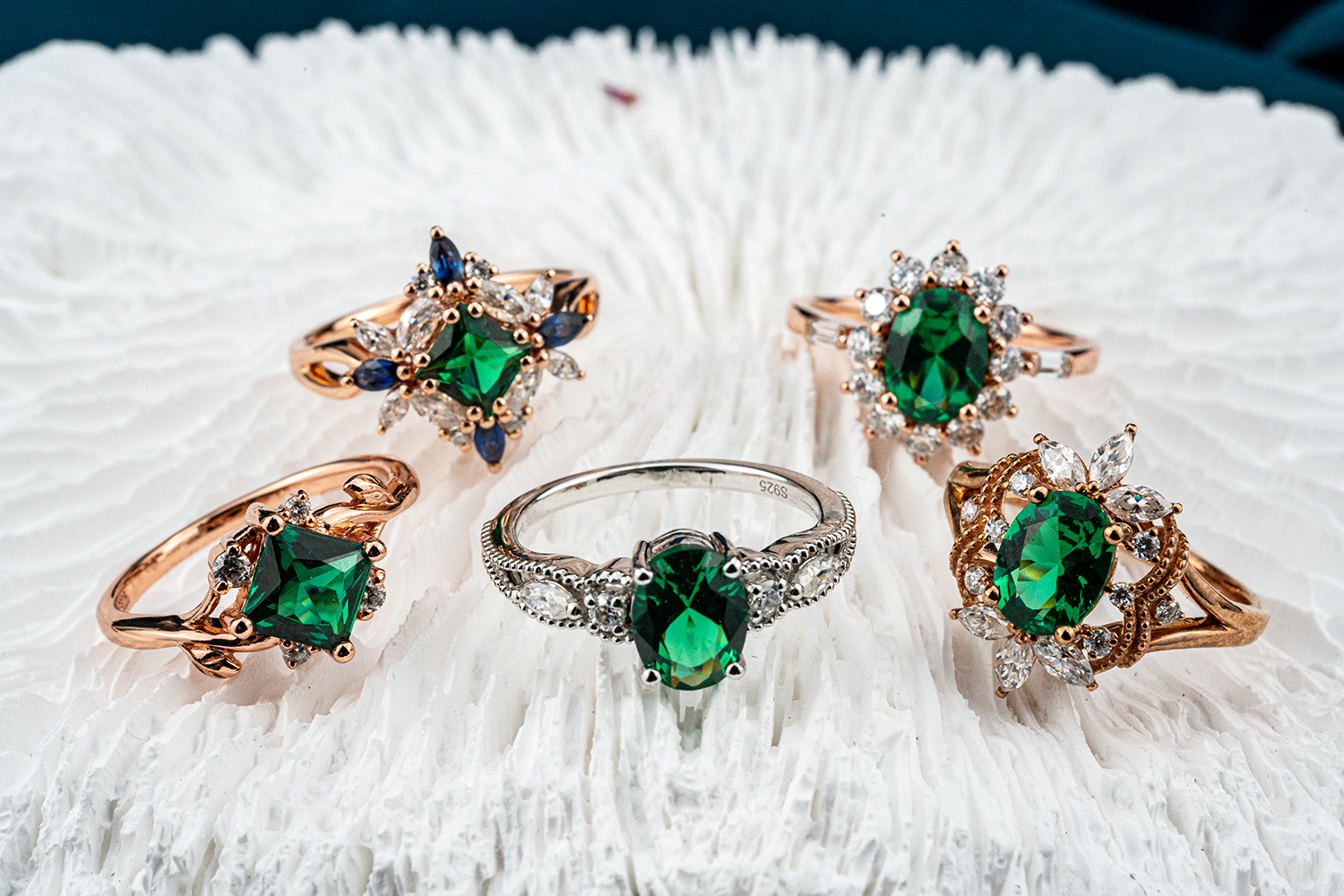
A prong setting uses narrow metal claws to hold the gemstone at separate contact points. Four-prong settings leave more of a stone visible, while six-prong designs add two more points of contact and can create a rounder visual frame on a round center stone. Fancy shapes may use specialized prongs: a V-prong can shield a pear or marquise tip, and corner prongs can protect the corners of princess, emerald or other angular cuts.
Prongs remain popular because they create an open presentation. The eye reads the gemstone first, with less metal surrounding its outline. They work across classic solitaires, halos, three-stone rings, vintage designs and detailed nature-inspired settings.
Why Buyers Choose Prongs
- More of the center stone’s face-up shape and side profile remain visible.
- The design can feel lighter and more traditional than a full bezel.
- Prongs adapt to many gemstone shapes and can be fine-tuned to protect points and corners.
- An open basket may make the underside of the stone easier to clean.
- Worn prongs can often be rebuilt or retipped by a qualified jeweler.
What to Check Before Buying Prongs
Each prong should sit securely against the gem, with no obvious gap or sharp edge. The tips should be balanced rather than bulky, and pointed corners need deliberate protection. Run a fingertip very gently over the setting; a rough or raised prong deserves attention before regular wear.
Prongs gradually wear through contact with desks, doors, bags and other hard surfaces. A ring can look normal from above while one tip has become thin. Regular inspection is therefore part of owning a prong-set engagement ring.
Does a Prong Setting Sparkle More Than a Bezel?
Prongs leave more of a gemstone uncovered, so they create an open, airy look and expose more of its outline. A bezel introduces a visible metal frame and may cover a small portion of the edge. That does not mean every prong ring will sparkle more than every bezel ring.
For faceted transparent gems, most of the light you see returns through the top. Cut quality, proportions, cleanliness, lighting and the stone’s optical properties have a major effect on appearance. A well-cut gemstone in a clean, well-proportioned bezel can still be highly brilliant. A poorly cut or dirty stone in prongs will not become lively simply because its sides are exposed.
Choose prongs if you love an unobstructed outline and delicate metalwork. Choose a bezel if you enjoy the intentional frame and want added perimeter protection. Compare videos in natural light when possible instead of making the decision from a single, highly lit product photo.
Which Setting Is More Secure?
A full bezel generally offers more protection around a gemstone’s girdle and creates fewer projecting parts that can catch. That makes it a compelling option for frequent wear. GIA’s current engagement-ring setting guide describes the setting as a major factor in security, appearance and wearability, and notes that bezel metal encircles the gemstone while prongs secure it at individual points.
However, “more protective” is not the same as “risk-free.” Security depends on:
- the quality and thickness of the metal;
- how precisely the stone fits the setting;
- whether the ring sits high or low;
- the number, placement and condition of prongs;
- protection for pointed tips and corners;
- the hardness, toughness and cleavage of the gemstone; and
- how the wearer uses their hands.
A sturdy six-prong basket may be safer than a very thin or damaged bezel. Likewise, a low four-prong setting can be more practical than an ornate, tall setting with many exposed details. Ask for side-view images and inspect the complete architecture.
Choose a Bezel If Your Days Are Hands-On
A bezel is worth prioritizing when the wearer frequently puts on gloves, works around children, uses tools, travels often or simply dislikes catching a ring on knitwear. The smooth frame and lower profile of many bezel designs reduce projecting points.
It is still wise to remove fine jewelry for weight training, climbing, gardening, household chemicals, machinery, swimming and tasks that could crush or sharply strike the ring. A secure setting helps with normal daily contact; it is not protective equipment.
If your style leans clean and modern, browse GemifySpace Engagement & Wedding Rings and look for low-profile or bezel-set designs. For a classic clear center, Lab-Grown Diamond Rings combine diamond durability with contemporary gold settings.

Choose Prongs If You Want an Open, Stone-Forward Look
Prongs suit shoppers who want the gemstone silhouette to remain prominent. They are especially effective for elongated ovals, pears, marquises and other shapes whose outline defines the personality of the ring. A refined prong basket can also make a center stone appear visually lighter on a delicate band.
For bright fire and a classic bridal profile, explore GemifySpace Moissanite Rings. If you want more surrounding detail, the Halo Rings collection shows how prong- or bezel-held center stones can work with a frame of smaller accents.
Choose a realistic prong count and style for the stone rather than defaulting to the fewest visible prongs. Protecting a pointed end or angular corner is more important than making the metal almost disappear.
Match the Setting to the Gemstone Shape
Round and Oval
Both shapes work well in bezels or prongs. A full bezel gives a crisp outline and smooth edge. Four prongs keep the silhouette open; six prongs add contact points on a round stone but change its visual outline. For an oval, inspect the stone’s alignment and confirm that the setting is balanced from end to end.
Pear and Marquise
The pointed tips are vulnerable. A full bezel can surround the outline, while a prong design should include protective treatment at each point—often a V-prong or carefully shaped tip prong. Decorative prongs that leave the point exposed are not a good trade for a cleaner photograph.
Emerald, Princess and Other Angular Cuts
Corners deserve attention. A bezel creates a continuous border, but its geometry must be precise. Prong designs should grip and protect the corners without obscuring too much of the cut. Ask whether the setting uses corner, claw or V-style prongs appropriate to the exact shape.
Kite, Hexagon and One-of-a-Kind Gemstones
Unusual outlines often benefit from a custom-fit bezel because the metal can follow the stone’s individual contour. Prongs can also work beautifully when their position is engineered around the actual corners and points. This is especially important for natural stones whose measurements vary from one piece to another.

Bezel vs. Prong for Different Gemstones
The setting should complement the gemstone’s physical properties, not only its color.
- Lab-grown diamond: A lab-grown diamond has essentially the same chemical, physical and optical properties as a natural diamond. Either setting can work well. Choose based on profile, outline and lifestyle rather than treating a lab-grown diamond as an imitation stone.
- Moissanite: Durable synthetic moissanite is suitable for frequent wear. Prongs highlight its lively fire; a bezel can give the bright stone a more modern frame.
- Sapphire and ruby: These durable corundum gems can work in either setting. A bezel can intensify the graphic contrast around saturated color.
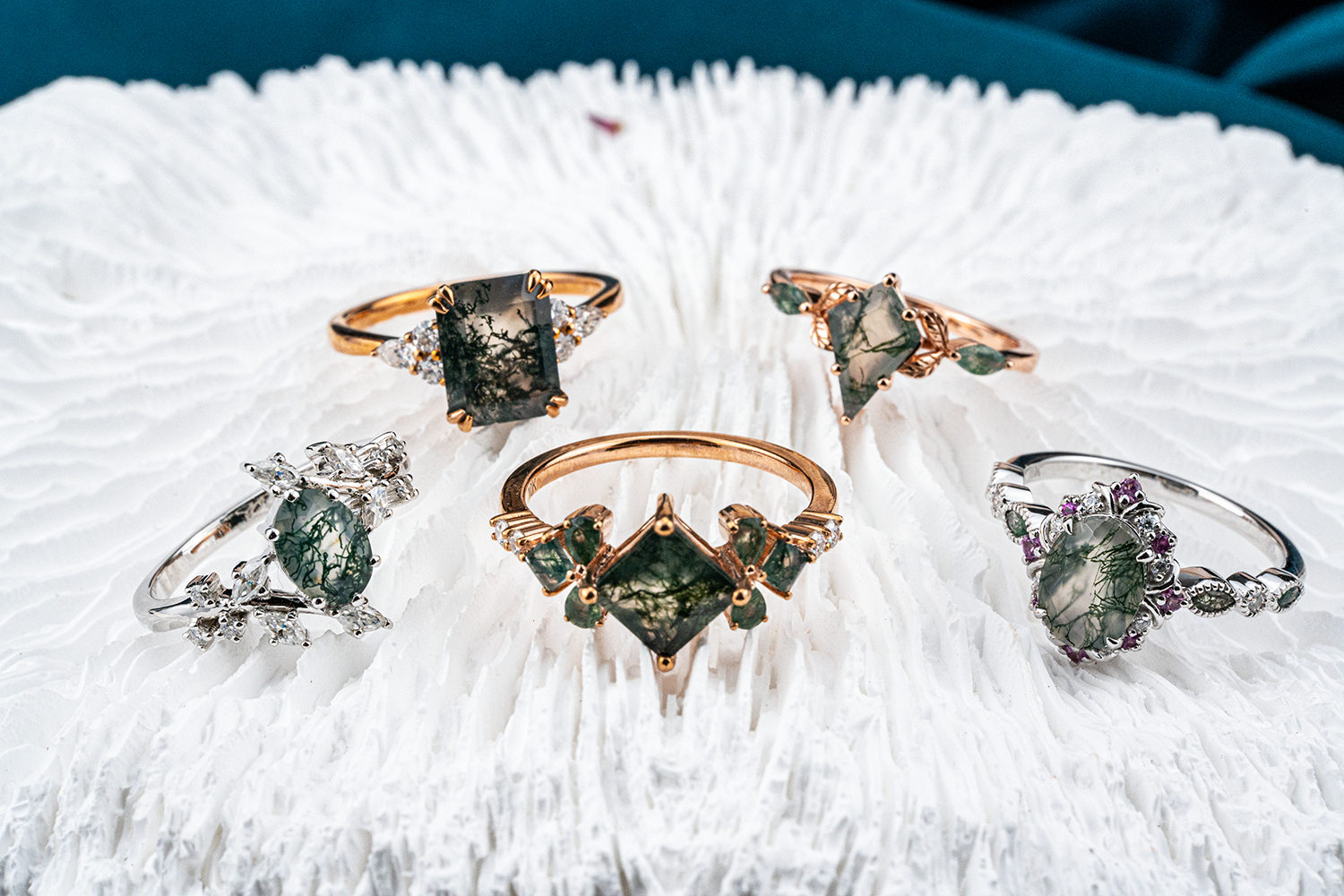
- Moss agate and included natural stones: A bezel offers useful edge coverage, but natural inclusions and variation mean that each stone should still be evaluated individually. Protection does not erase internal features.
- Moonstone, opal and pearl: These require more mindful wear regardless of setting. A bezel may shield an edge, but it cannot turn a more delicate material into a diamond. Pearl settings also differ structurally from faceted-stone bezels and prongs.
If you are comparing multiple center-stone families, start with the GemifySpace Rings collection and evaluate gemstone, setting and profile as one system.
How the Setting Affects Wedding-Band Fit
Do not choose the engagement ring without checking the side profile. A low basket can prevent a straight wedding band from sitting flush, whether the center is bezel- or prong-set. A higher cathedral or elevated basket may leave room beneath the head, but it also raises the stone farther from the finger.
Before ordering, ask:
- Does the center setting extend beyond the band at finger level?
- Can a straight wedding band slide beside or under it?
- Will a curved or contour band be required?
- Could the wedding band rub against prongs, the bezel wall or side stones?
- Is the preferred look flush, intentionally gapped or asymmetrically stacked?
If exact pairing matters, compare GemifySpace Bridal Ring Sets before buying the engagement ring alone. The Curved Wedding Band Guide explains when a contour, chevron or fitted band may work better than a straight band.
How to Clean and Maintain Either Setting
For rings whose gemstones are suitable for water and mild soap, use lukewarm water, a small amount of gentle dish soap and a very soft brush. Clean around the stone, under an open basket and along the bezel edge, then rinse carefully and dry with a lint-free cloth. Never clean over an open drain.
Not every gemstone or treatment tolerates the same method. Opal, pearl and other sensitive materials need gemstone-specific care. When in doubt, ask a jeweler before soaking the ring or using steam or ultrasonic cleaning.
For a bezel setting:
- look for a visible gap between stone and metal;
- check whether the gem moves when the ring is handled gently;
- inspect the rim for dents or lifted areas; and
- remove lotion and residue that collects along the inside edge.
For a prong setting:
- inspect every prong from the top and side;
- watch for thinning, asymmetry, lifting or fabric snagging;
- stop wearing the ring if the stone clicks or moves; and
- arrange professional inspection periodically, especially after a hard impact.
Do not test security by pushing the gemstone with a sharp object. If anything looks different, place the ring in a soft pouch and have it examined before wearing it again.

A Practical Buying Checklist
Before choosing bezel or prong, confirm all of the following:
- Daily routine: How often will the ring meet gloves, pockets, equipment or hard surfaces?
- Center gemstone: Is the material appropriate for the intended wear frequency?
- Stone shape: Are pointed tips and corners protected?
- Profile: How far does the center stone sit above the finger?
- Finish: Are there rough edges, gaps or uneven metal?
- Visual preference: Do you prefer a metal frame or a fully visible outline?
- Cleaning: Can you reach areas where residue will collect?
- Maintenance: Are you willing to schedule prong checks or bezel repairs when needed?
- Wedding band: Will the chosen band sit as intended?
- Order details: Have you confirmed stone, gold karat, gold color, ring size and production timing?
GemifySpace rings are available in selected 10K, 14K and 18K gold options depending on the design. Gold karat affects color, alloy composition, price and wear characteristics, but workmanship and setting proportions remain essential at every karat.
Final Verdict: Which Setting Should You Choose?
Choose a bezel engagement ring if your priorities are a smooth silhouette, greater edge coverage, reduced snagging and a modern framed look. Choose a prong engagement ring if you want an open presentation, more of the gemstone outline visible and a classic setting that can be adapted to many shapes.
If you are still undecided, compare the same gemstone shape in both settings from the top, side and on the hand. The best ring is not simply the one that looks brightest in a studio image. It is the one whose structure, height, maintenance and visual character fit the person who will wear it.
Explore GemifySpace Engagement & Wedding Rings, then review your preferred setting from every angle. If you need help confirming the gemstone, gold option, size or band pairing, contact GemifySpace before ordering so the finished ring supports both your style and your everyday life.
Frequently Asked Questions
Is a bezel setting safer than prongs?
A full bezel generally covers more of the gemstone’s edge and has fewer projecting parts, so it often provides better protection from everyday knocks and snags. Security still depends on metal thickness, workmanship, ring height, stone fit and condition. Neither setting is damage-proof.
Does a bezel setting make a gemstone look smaller?
The metal rim changes how the outline is perceived and covers a small area near the edge, so some bezels can make the exposed gemstone face look slightly smaller. A fine, well-proportioned bezel can also add a crisp border that increases the ring’s total visual width. Judge the complete face-up design, not the center stone in isolation.
Do prong-set rings sparkle more?
Prongs leave more of the stone uncovered and create a more open look. Actual sparkle depends heavily on the gemstone’s cut, optical properties, cleanliness and lighting. A clean, well-cut stone in a bezel can still be very bright.
Are four prongs or six prongs better?
Four prongs reveal more of the outline, while six provide additional contact points and can create a rounder visual frame on a round stone. The correct choice depends on stone size and shape, prong construction and design. Fancy shapes may need specialized protection rather than simply more prongs.
Is a bezel setting good for an active lifestyle?
Often, yes. A smooth, low-profile bezel is less likely to snag and shields more of the gemstone edge. Remove the ring for sports, weight training, climbing, machinery, gardening and other activities that can crush or sharply impact fine jewelry.
Can any gemstone be bezel-set?
Many gemstones can be bezel-set, but the stone’s hardness, toughness, cleavage, treatments, cut and individual condition affect how it should be handled. Some delicate or unusually shaped stones require a highly experienced setter and mindful wear even after they are framed by metal.
Are bezel rings harder to resize?
They can be, especially if the bezel is integrated into a rigid design, the band has stones around much of its circumference or the requested size change is large. Resizing feasibility depends on the entire ring, not only the center setting. Confirm the correct US size before ordering.
How often should prongs be checked?
There is no single interval for every wearer. Inspect the ring yourself regularly and arrange professional inspection when a prong snags, looks uneven, follows a hard impact or the gemstone moves. Frequent wear and hands-on routines may justify more frequent checks.

