
Article: 10K vs. 14K vs. 18K Gold: Which Is Best for an Engagement Ring?

10K vs. 14K vs. 18K Gold: Which Is Best for an Engagement Ring?
Choosing an engagement ring usually begins with the center stone and design, but the gold beneath that stone matters just as much. The difference between 10K, 14K and 18K gold affects the ring's color, price, resistance to everyday wear and long-term maintenance.
There is no single gold karat that is best for everyone. A person who works frequently with their hands may value the practical strength and accessible price of 10K gold. Another buyer may prefer 14K as a balanced everyday option, while someone who values richer gold color and higher purity may choose 18K.
This guide explains what gold karat means, how the three options compare and which questions to ask before ordering a GemifySpace engagement ring.
What Does Gold Karat Mean?
Karat measures the proportion of pure gold in a gold alloy. Pure gold is described as 24K, or 24 parts gold out of 24. Because pure gold is relatively soft, fine jewelry is commonly made by combining it with other metals. These additional metals help create a practical alloy and can influence hardness, color and working properties.
-
10K gold contains 10 parts gold out of 24, equal to approximately 41.7% gold.
-
14K gold contains 14 parts gold out of 24, equal to approximately 58.3% gold.
-
18K gold contains 18 parts gold out of 24, equal to 75% gold.
The remaining percentage consists of alloying metals. The precise recipe can vary by manufacturer and by gold color, so two rings with the same karat may not have exactly the same alloy composition or shade.
Do not confuse karat, which describes gold purity, with carat, which is a unit of gemstone weight in the United States.

10K Gold Engagement Rings
10K gold has the lowest pure-gold content of the three options and the highest proportion of other alloying metals.
Advantages of 10K Gold
-
It is generally the most accessible solid-gold option.
-
Its higher alloy content can make it more resistant to bending and everyday surface wear than higher-karat gold, although the exact alloy and ring design also matter.
-
It is practical for customers who want a real gold ring while keeping more of the budget available for the gemstone or setting.
-
Its lighter yellow tone may appeal to someone who prefers subtle gold color.
Considerations Before Choosing 10K
10K yellow gold normally looks paler than 14K or 18K yellow gold. Its larger proportion of alloying metals also means the precise alloy deserves attention if the wearer has a known metal sensitivity. A lower karat does not automatically cause a reaction, but the wearer is exposed to a greater proportion of non-gold metals.
10K can be a sensible choice for an everyday engagement ring, especially when durability and budget are more important than a rich yellow-gold color.
14K Gold Engagement Rings
14K gold sits between 10K and 18K in purity, price and color. This middle position is why many shoppers consider it a practical default for frequently worn jewelry.
Advantages of 14K Gold
-
It offers more gold content and a warmer appearance than 10K.
-
It generally provides a useful balance between durability and a recognizable gold color.
-
It is usually more affordable and less prone to bending than comparable 18K designs.
-
It works well with minimalist, floral, halo, three-stone and bridal-set styles.
Considerations Before Choosing 14K
14K does not have the same saturated gold color as 18K yellow gold. It can still scratch, dent or deform under sufficient force, and delicate prongs require inspection regardless of karat.
For many customers, 14K is the strongest all-around choice: it feels distinctly like fine gold jewelry without demanding the higher price or softer wear characteristics of 18K.
18K Gold Engagement Rings
18K gold contains 75% pure gold, giving yellow-gold designs a richer, more saturated appearance.
Advantages of 18K Gold
-
It has the highest gold content among these three options.
-
18K yellow gold offers a deep, luxurious gold color.
-
It can be appealing to customers who place a high value on purity and traditional fine-jewelry character.
-
The lower total proportion of other metals may be helpful for some wearers, although suitability still depends on the exact alloy and the individual's sensitivity.
Considerations Before Choosing 18K
18K is generally more expensive because it contains more gold. It is also softer than comparable lower-karat alloys, so it may show scratches, dents and changes in surface finish more readily. That does not make it unsuitable for engagement rings; it simply makes design, band thickness and wearing habits more important.
Choose 18K when rich color and higher gold content matter more than maximizing resistance to everyday marks.
10K vs. 14K vs. 18K Gold: Quick Comparison
| Feature | 10K Gold | 14K Gold | 18K Gold |
|---|---|---|---|
| Approximate pure-gold content | 41.7% | 58.3% | 75% |
| Yellow-gold color | Paler and subtle | Balanced and warm | Rich and saturated |
| General resistance to wear | Highest of the three in comparable alloys | Balanced | Softer and more prone to marks |
| Relative price | Most accessible | Mid-range | Highest |
| Best suited to | Active wear and practical budgets | Balanced everyday wear | Purity and rich gold color |
This table is a starting point, not a guarantee of performance. Band thickness, setting construction, alloy recipe, finishing and wearing habits can matter as much as karat.
Which Gold Karat Is Best for Your Lifestyle?
Choose 10K Gold If You:
-
want the most budget-conscious solid-gold option;
-
work frequently with your hands;
-
prefer a paler yellow tone;
-
want to direct more of the budget toward the center stone;
-
are comfortable confirming the alloy if you have metal sensitivities.
Choose 14K Gold If You:
-
want a balance of color, durability and price;
-
plan to wear the ring most days;
-
prefer a classic gold appearance that is not overly saturated;
-
want a versatile choice for detailed or minimalist settings.
Choose 18K Gold If You:
-
prioritize higher gold content;
-
love a rich yellow-gold color;
-
are comfortable with a higher price;
-
can accept that the surface may develop marks and patina more quickly;
-
are willing to remove the ring for rough or high-impact activities.
Even a durable gold alloy is not intended for weightlifting, construction work, gardening with tools or exposure to harsh cleaning chemicals. Removing the ring for these activities protects both the gold and the gemstone setting.
Image placement: Insert
gold-rings-everyday-wear.pnghere.
Does a Higher Karat Mean a Better Ring?
Not necessarily. Higher karat means a higher proportion of pure gold. It does not automatically mean better construction, a more secure setting or a better choice for the wearer's lifestyle.
A well-made 10K or 14K ring can be more practical for an active wearer than a very delicate 18K design. Conversely, a thoughtfully constructed 18K ring may be the right choice for someone who appreciates richer color and treats jewelry carefully.
Assess the whole ring:
-
band width and thickness;
-
prong or bezel construction;
-
setting height;
-
number and size of accent stones;
-
gemstone durability;
-
fit with a wedding band;
-
expected frequency of wear.
The best ring is the combination of metal, gemstone and structure that suits the person wearing it.
Gold Karat Is Different from Gold Color
Karat describes purity. Color describes the appearance created by the alloy and, in some cases, a surface finish. GemifySpace designs may be offered in yellow, rose, white or black gold depending on the product.
Yellow Gold
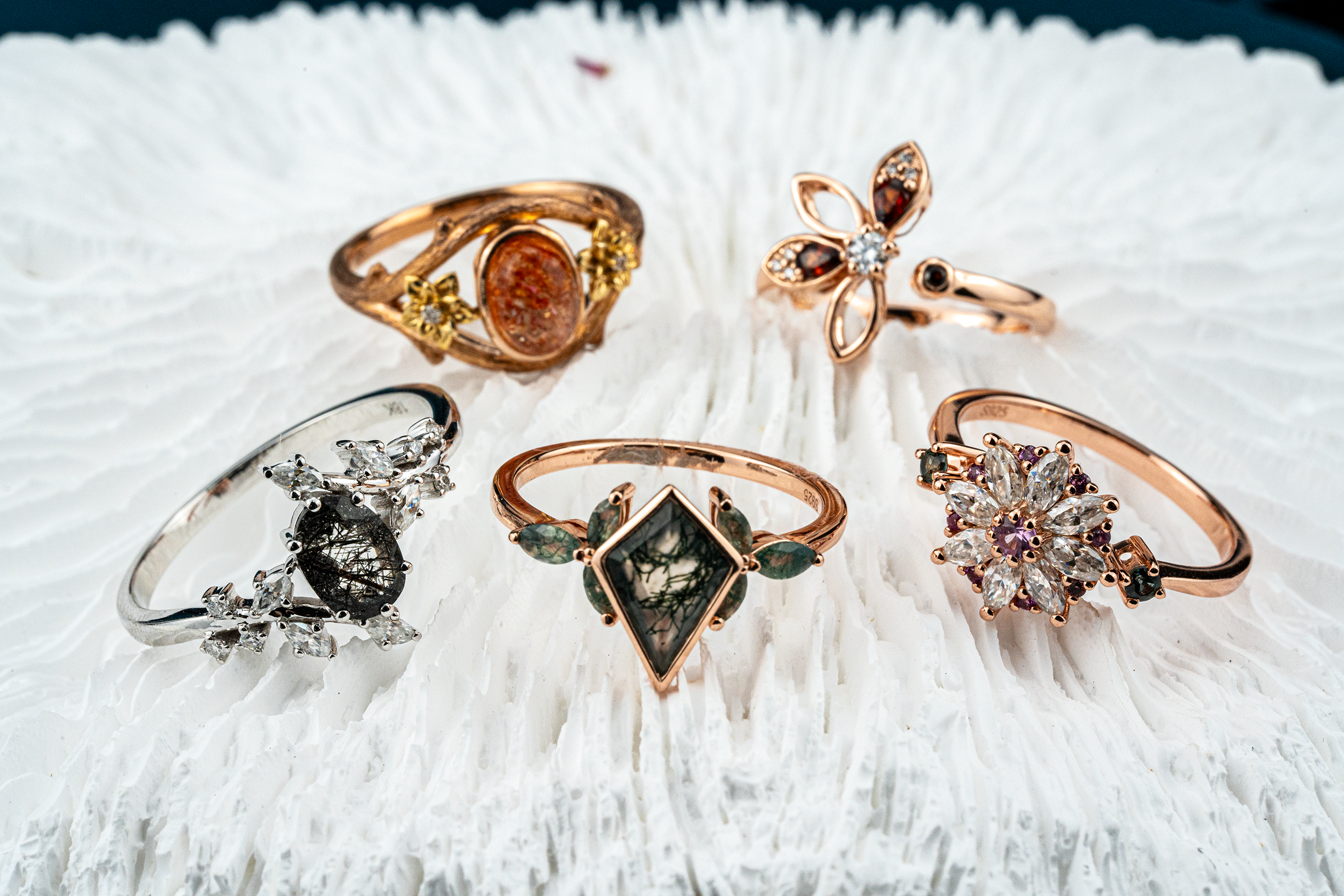
Yellow gold preserves the most traditional gold appearance. Its color usually becomes richer as gold content increases, although the alloy formula and lighting also affect the final shade. Yellow gold pairs naturally with moss agate, alexandrite, sapphire, garnet, moissanite and lab-grown diamond.
Rose Gold
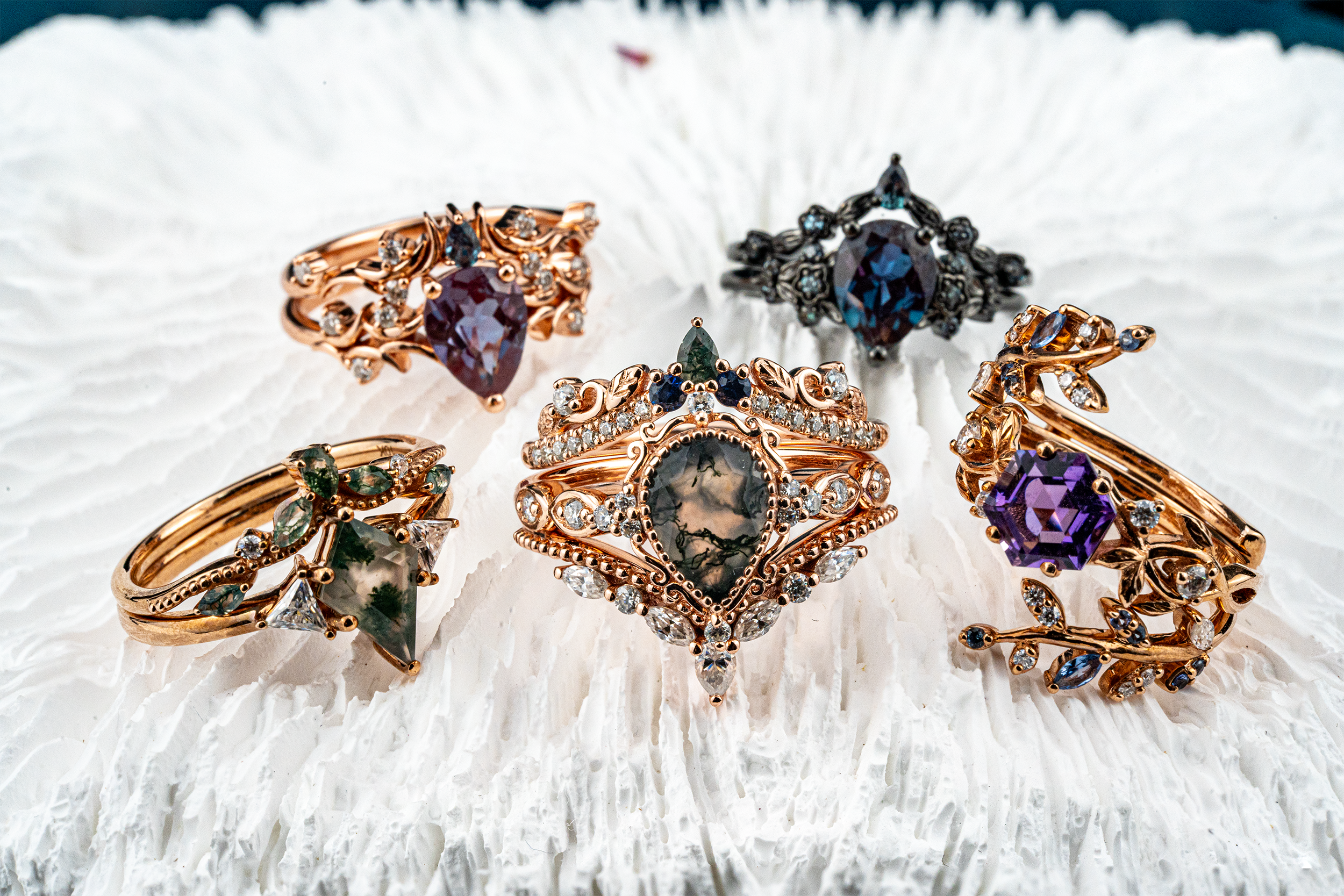
Rose gold gets its warm pink character largely from copper in the alloy. The exact shade can range from soft champagne rose to a more noticeable pink, depending on karat and alloy composition. It complements floral, vintage-inspired and romantic gemstone designs.
White Gold
White gold is created by combining gold with light-colored metals. Many white-gold rings are finished with rhodium for a brighter white appearance. Rhodium is a surface layer and may gradually wear, particularly on areas exposed to friction, so occasional replating can be part of long-term ownership.
Black Gold
Black gold generally refers to real gold with a dark surface treatment rather than a naturally black solid-gold alloy. The finish can gradually show wear and may require professional refinishing. It is an expressive choice for black onyx, alexandrite, salt-and-pepper diamond and other alternative ring styles.
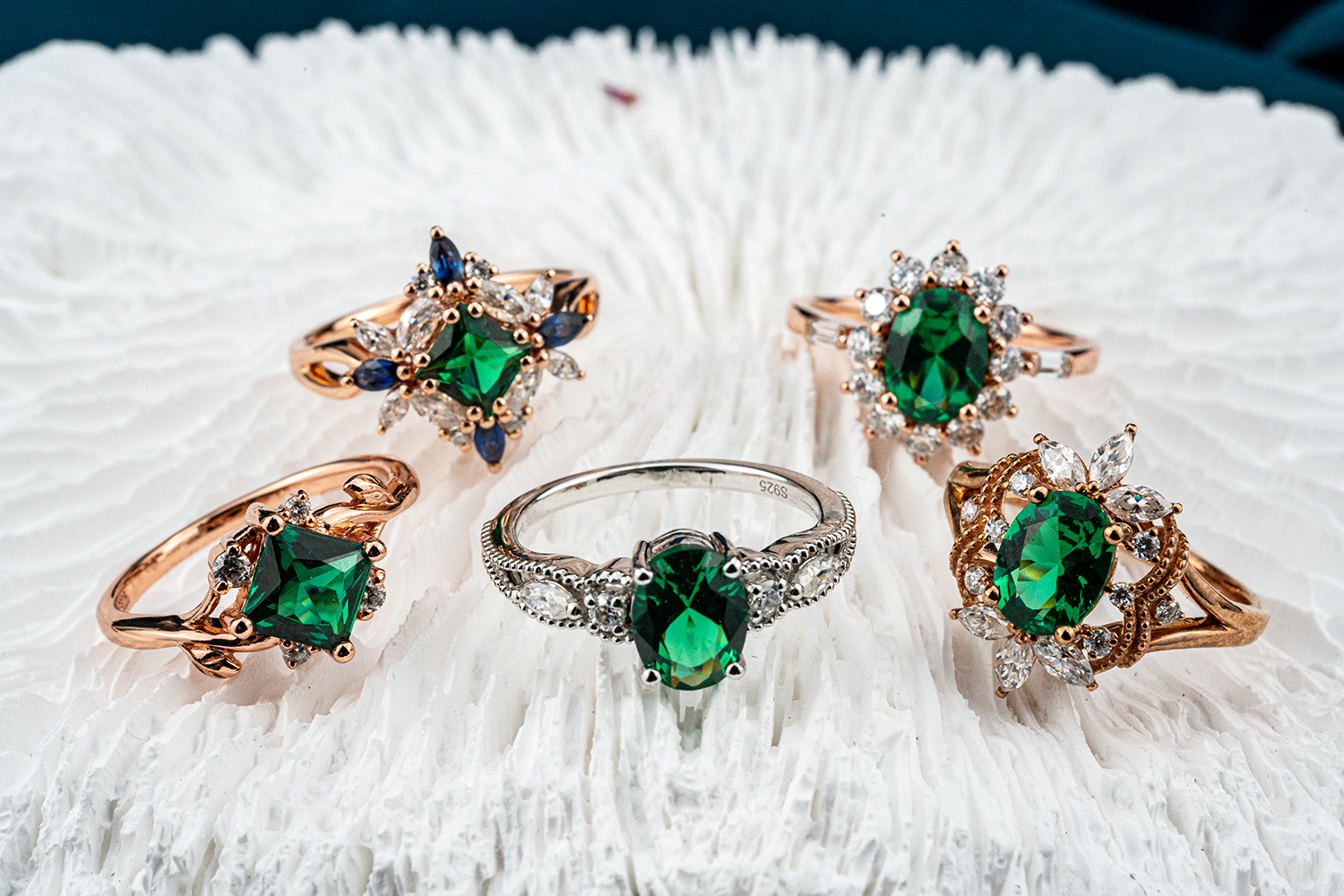
Compare examples in the GemifySpace Rings collection before choosing. Product photos viewed on the same screen and under similar lighting make differences easier to judge.

How Gold Karat Affects Different Gemstone Rings
The metal should support the visual character and practical needs of the gemstone.
Moss Agate and Nature-Inspired Rings
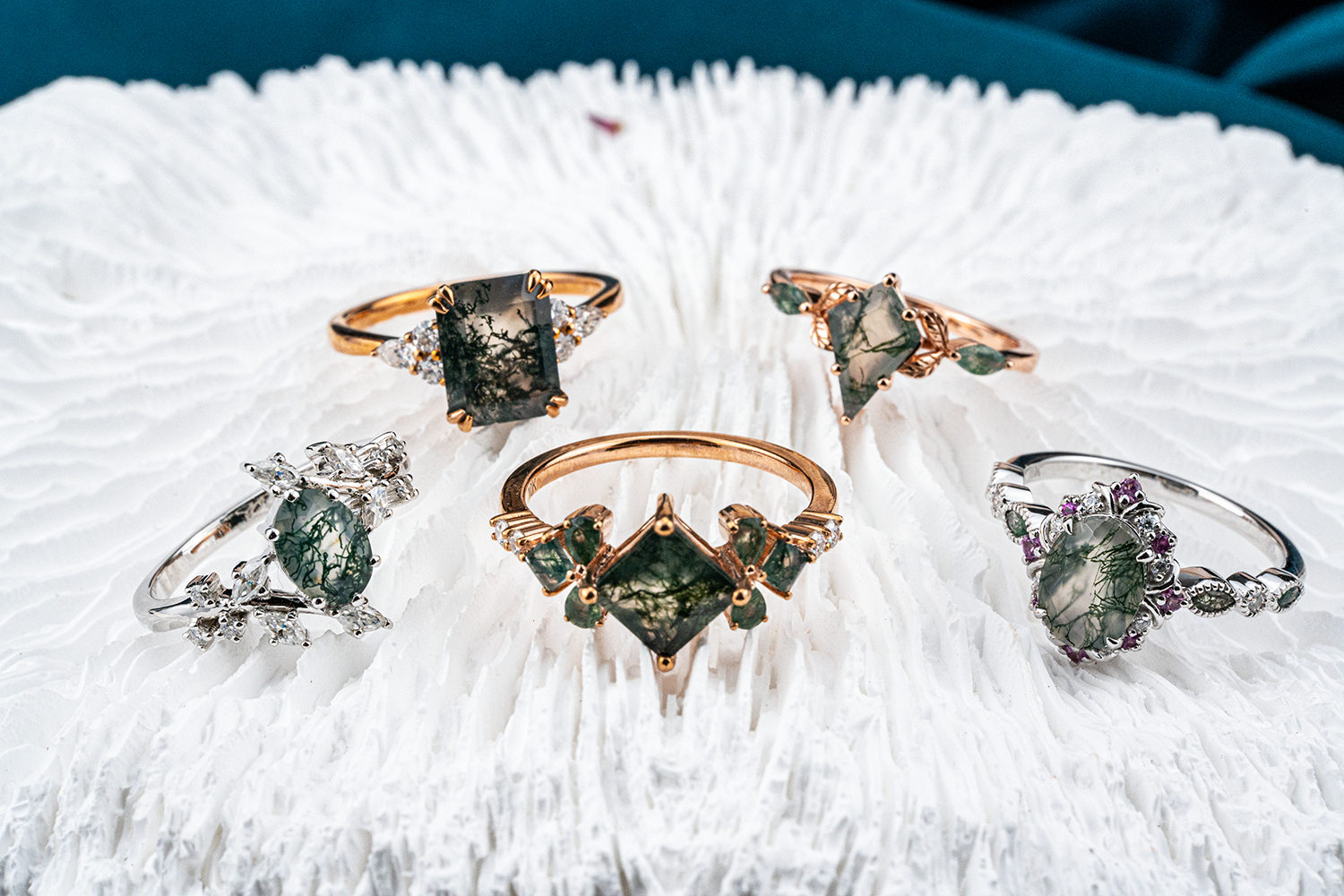
Yellow and rose gold bring warmth to green inclusions, while white gold creates a cleaner contrast. Because many moss agate designs include leaves, vines or accent stones, construction and snag resistance may be more important than karat alone. Explore Moss Agate Rings and Nature-Inspired Rings.
Moissanite and Lab-Grown Diamond Rings
White gold produces a cool, seamless frame around colorless stones. Yellow or rose gold creates visible contrast, while black gold offers a bold outline. Browse Moissanite Rings and Lab-Grown Diamond Rings.
Sapphire and Alexandrite Rings
Rich yellow gold can create a classic contrast with blue sapphire. White gold emphasizes cooler color, while rose or black gold can make alexandrite feel more unusual. Compare Sapphire Rings and Alexandrite Rings.
Bridal Ring Sets
For a matching set, choose the same karat and color for both pieces unless a mixed-metal appearance is intentional. Matching the alloys helps the rings wear and change appearance more consistently. Browse GemifySpace Bridal Ring Sets to compare fitted engagement rings and wedding bands.
What About Metal Allergies or Sensitive Skin?
Pure gold is often well tolerated, but gold jewelry is made from alloys. Nickel, copper or other components may cause reactions in some people. The exact alloy—not simply whether the ring is 10K, 14K or 18K—determines which metals contact the skin.
If the wearer has a known sensitivity:
-
Ask what metals are present in the specific alloy.
-
Do not assume every white-gold, rose-gold or yellow-gold formula is identical.
-
Remember that plating may reduce direct contact temporarily but can wear over time.
-
Seek medical advice for persistent irritation rather than trying to diagnose the cause from the ring alone.
A higher karat contains less alloying metal overall, but it is not automatically allergy-free.
How to Care for a Gold Engagement Ring
All three karats benefit from the same basic habits:
-
Remove the ring before heavy work, exercise with metal equipment, swimming and household cleaning.
-
Avoid bleach, chlorine and abrasive cleaners.
-
Clean gently with warm water, mild soap and a very soft brush when the gemstone can safely be cleaned this way.
-
Rinse in a bowl rather than over an open drain.
-
Store the ring separately so harder gemstones do not scratch the metal.
-
Check prongs and small accent stones regularly.
-
Ask a jeweler to inspect the ring if it catches on clothing, makes a sound when gently moved or shows a visibly bent prong.
Polishing removes a very small amount of metal, so it should be done thoughtfully rather than every time a minor scratch appears. Surface marks and patina are normal signs of wear. White-gold rhodium or black finishes may need professional renewal over time.

Gold Engagement Ring Buying Checklist
Before placing an order, confirm:
-
the selected karat and gold color;
-
whether the ring is solid gold or finished/plated over another metal;
-
the alloy composition if the wearer has sensitivities;
-
the ring size and width;
-
the gemstone and accent-stone details;
-
whether the wedding band will sit flush;
-
the current production and delivery estimate;
-
customization, resizing, care and return terms.
If you are planning a proposal, read When to Order an Engagement Ring and allow a realistic buffer for production, review and delivery.
Choose Your Gold Ring at GemifySpace
Choose 10K for practical value and stronger resistance to everyday wear, 14K for a versatile balance, or 18K for richer gold color and higher purity. None is the correct choice for every customer; the best gold karat is the one that fits your budget, design preferences and wearing habits.
Explore GemifySpace Engagement and Wedding Rings to compare gemstones, settings, gold colors and available 10K, 14K or 18K options. Always review the individual product page because available combinations vary by design.
Frequently Asked Questions
Is 10K, 14K or 18K gold best for an engagement ring?
14K is often a balanced choice for everyday wear, but 10K may suit a practical budget or active lifestyle, while 18K suits buyers who prioritize higher purity and richer gold color.
Is 18K gold too soft for an engagement ring?
No. 18K gold is widely used in fine engagement rings, but it is softer than comparable 10K and 14K alloys. A well-constructed setting and careful wearing habits are important.
Does 10K gold look different from 18K gold?
Usually. In yellow gold, 10K tends to look paler, 14K looks balanced and 18K appears richer. Alloy recipe, finish, lighting and screen settings can change how noticeable the difference is.
Is 14K gold real gold?
Yes. 14K gold is a gold alloy containing 14 parts gold out of 24, or approximately 58.3% pure gold.
Which gold karat scratches the least?
In otherwise comparable yellow-gold alloys, lower-karat gold is generally harder and more resistant to wear because it contains more alloying metal. However, every gold ring can scratch, and the exact alloy and construction matter.
Is higher-karat gold better for sensitive skin?
It contains a smaller proportion of other metals, but it is not automatically allergy-free. Ask about the exact alloy if the wearer has a known nickel, copper or other metal sensitivity.
Does white gold need replating?
Many white-gold rings have a rhodium finish that can wear with friction. Replating may be needed periodically to restore a bright white appearance.
Can I mix 14K and 18K rings in one bridal stack?
You can, but their color and wear characteristics may differ. Matching karat and alloy is the simplest way to create a consistent set, especially when the rings touch every day.

