Article: Choosing Gold Jewelry on a Budget: Karat, Materials and Practical Value

Choosing Gold Jewelry on a Budget: Karat, Materials and Practical Value
When gold feels expensive, a useful jewelry budget begins with the finished ring you want to wear. The price includes more than gold content: gemstone selection, metal weight, design, setting work and customization all contribute. Comparing those parts helps you make a deliberate choice without relying on a prediction about the next gold-price move.

Separate gold purity from ring weight
10K, 14K and 18K describe the proportion of gold in an alloy, not the weight of the finished ring. A heavier lower-karat design can contain a different amount of gold from a lighter higher-karat design. Do not compare prices by karat alone.
Ring metal types also influence color and maintenance. Ask about the actual alloy or surface treatment if you have a specific sensitivity or care concern. A higher karat is not automatically the most practical choice for every wearer.

Spend on the detail you will notice
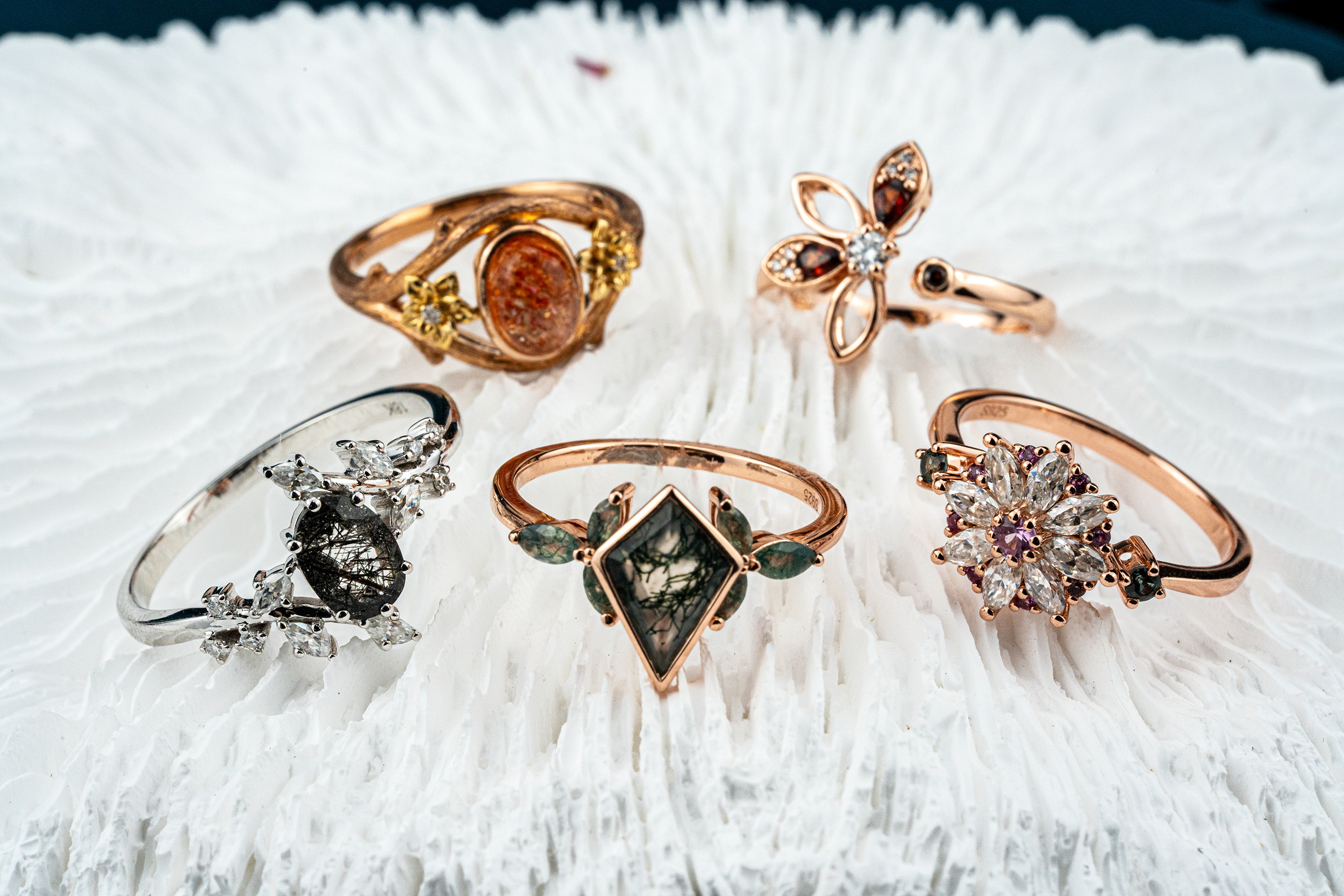
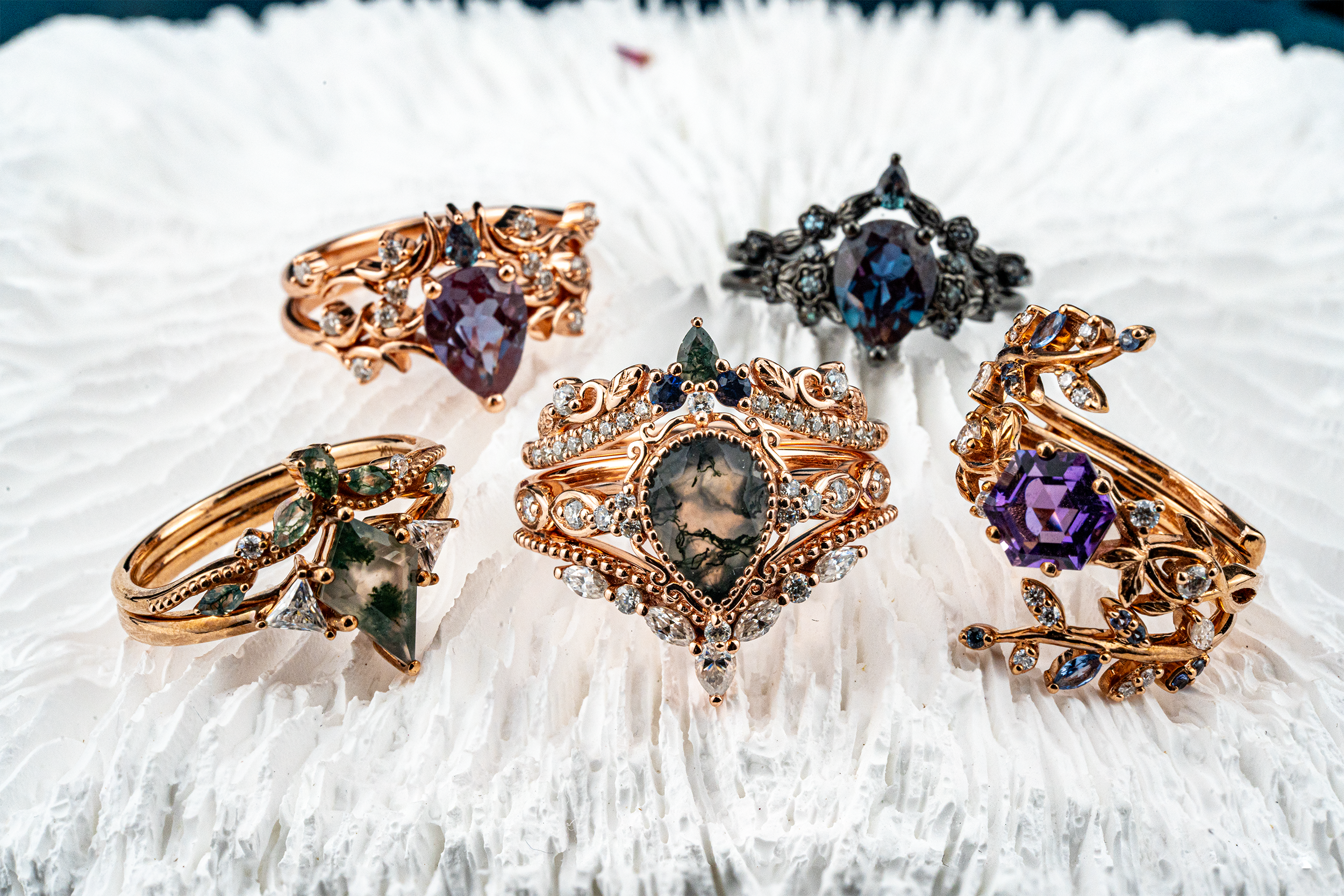
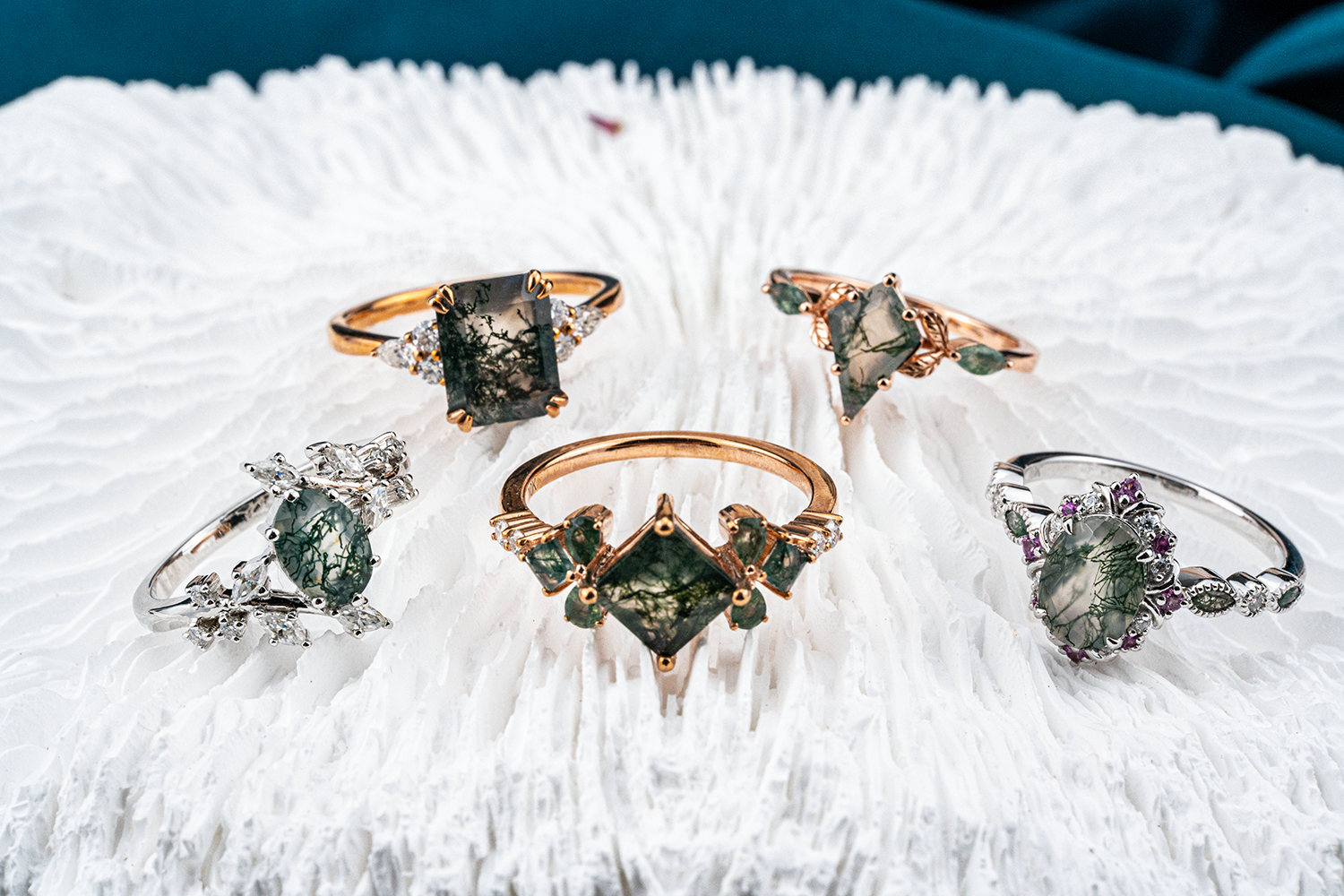
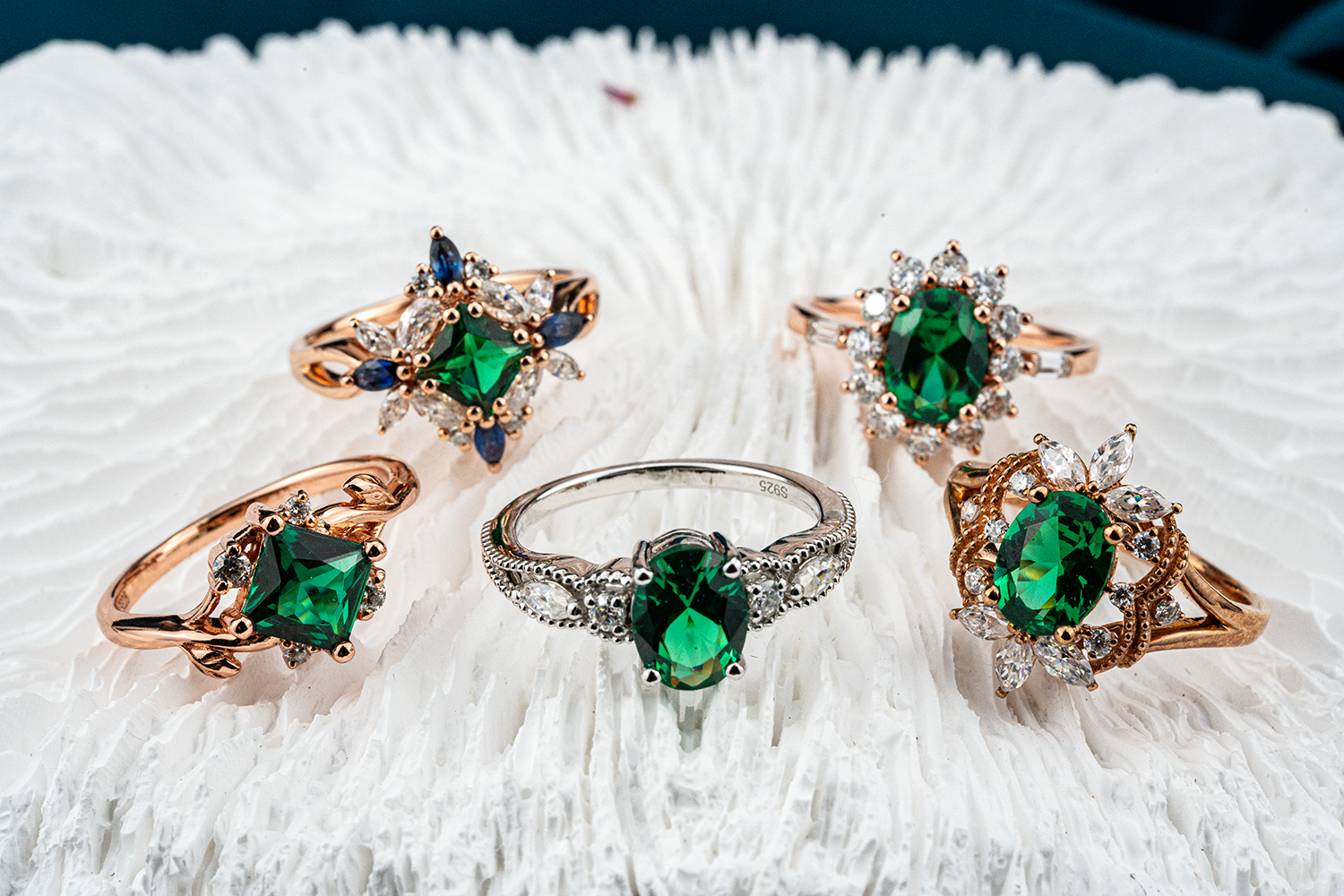
If you enjoy minimalist engagement rings, a simple setting may make the stone's proportions and the band finish your priorities. If you want a botanical design, some of the budget pays for details around the center stone rather than a larger gemstone.
Set a comfortable total budget before comparing options. Include customization, shipping charges where applicable and any expected future maintenance. The least expensive initial quote is not always the most useful comparison if the specifications differ.

Compare like with like
- Confirm the gold karat, ring size and design dimensions.
- Distinguish natural gemstones, lab-grown gemstones and simulants.
- Check whether one ring or a complete bridal set is included.
- Review the available treatment information and documentation.
- Read the current return, resizing and customization terms.
A lab-grown stone may offer a different budget option from a natural stone, but the listing must identify it accurately. Moissanite should be compared as its own material, not presented as a less expensive kind of diamond.
Choose for ownership, not a promised return
A jewelry price includes design and retail costs that are not the same as the value of its metal content. This guide does not forecast gold prices or promise that a ring will retain its purchase price. For a personal ring, fit, appearance and realistic care needs are more useful starting points than an investment label.
Ask for a current quote on the exact combination you want. If it exceeds your budget, discuss a simpler setting, different stone dimensions or another available gold option while preserving the feature that matters most to you.
Use two comparable quotes
Request one quote for the design you first chose and another changing only one feature, such as the stone dimensions or an available gold option. This makes the cost difference useful: changing the center, setting and band together hides what drives the price. Our gold karat comparison explains the metal decision, while lab-grown diamond vs. moissanite addresses two different clear-stone materials. Record the complete specification beside each quote and compare the final total rather than a starting price.

