Article: Lab-Grown Diamond vs Moissanite: Which Engagement Ring Should You Choose?
Lab-Grown Diamond vs Moissanite: Which Engagement Ring Should You Choose?
If you are comparing lab-grown diamond and moissanite, begin with material identity rather than a photograph. A lab-grown diamond is diamond produced in a laboratory. Moissanite is a different gemstone with its own optical character. Either can suit an engagement ring, but the choice should be deliberate.

Compare the light you enjoy
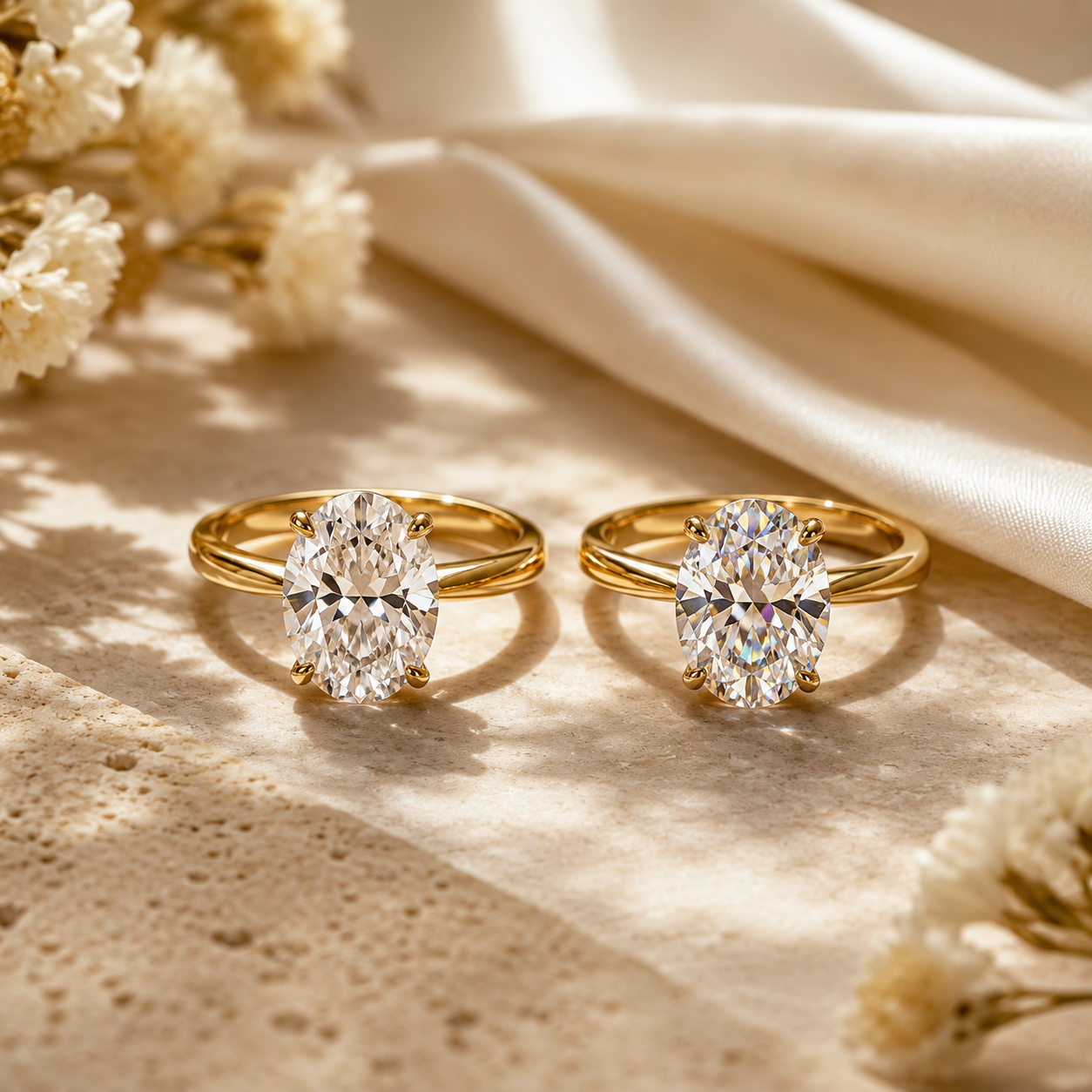
Moissanite is known for strong fire—the colored flashes visible as a stone moves. Diamond has a different balance of brilliance and fire. Cut, lighting, size and the setting influence the appearance of either stone, so compare videos in ordinary indoor light as well as bright spot lighting.
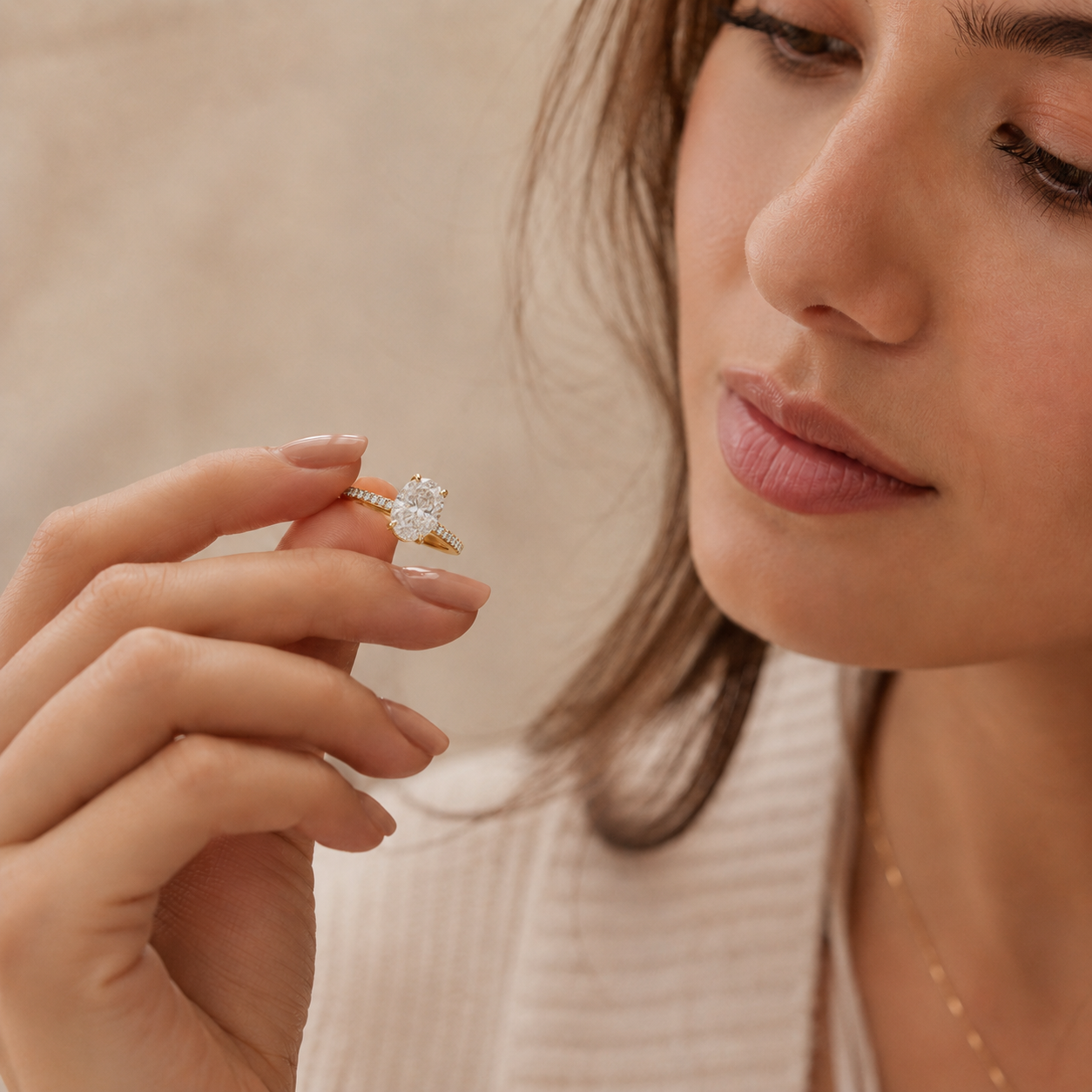
A still photograph cannot tell you everything about sparkle or verify gemstone identity. Use it to compare design, then use the written specifications to confirm the material.

Match dimensions before comparing size
Compare length and width in millimeters. A diamond carat weight and a moissanite diamond-equivalent weight are not the same measurement of material. If a listing uses an equivalent figure, it should say so clearly.
For minimalist engagement rings, a small difference in center-stone diameter can noticeably change the proportions. In a halo or three-stone ring, the surrounding stones also affect the total coverage across the finger.

Make the budget comparison specific
Obtain current prices for the actual designs you are considering. Keep gold karat, size, setting and accent materials consistent where possible. A custom moissanite engagement ring with elaborate metalwork may not be directly comparable to a simple lab-grown diamond solitaire.
Ask what documentation accompanies the stone and read the return and customization terms. Neither an appealing photograph nor a high price replaces a clear specification.

Both still need a secure setting
Diamond and moissanite are suitable options for many frequently worn rings, but no stone makes a ring maintenance-free. Check the protection of pointed tips, the ring's height and whether the band is comfortable. Remove the ring for abrasive or impact-prone work and have loose stones inspected.

Choose the design after the material
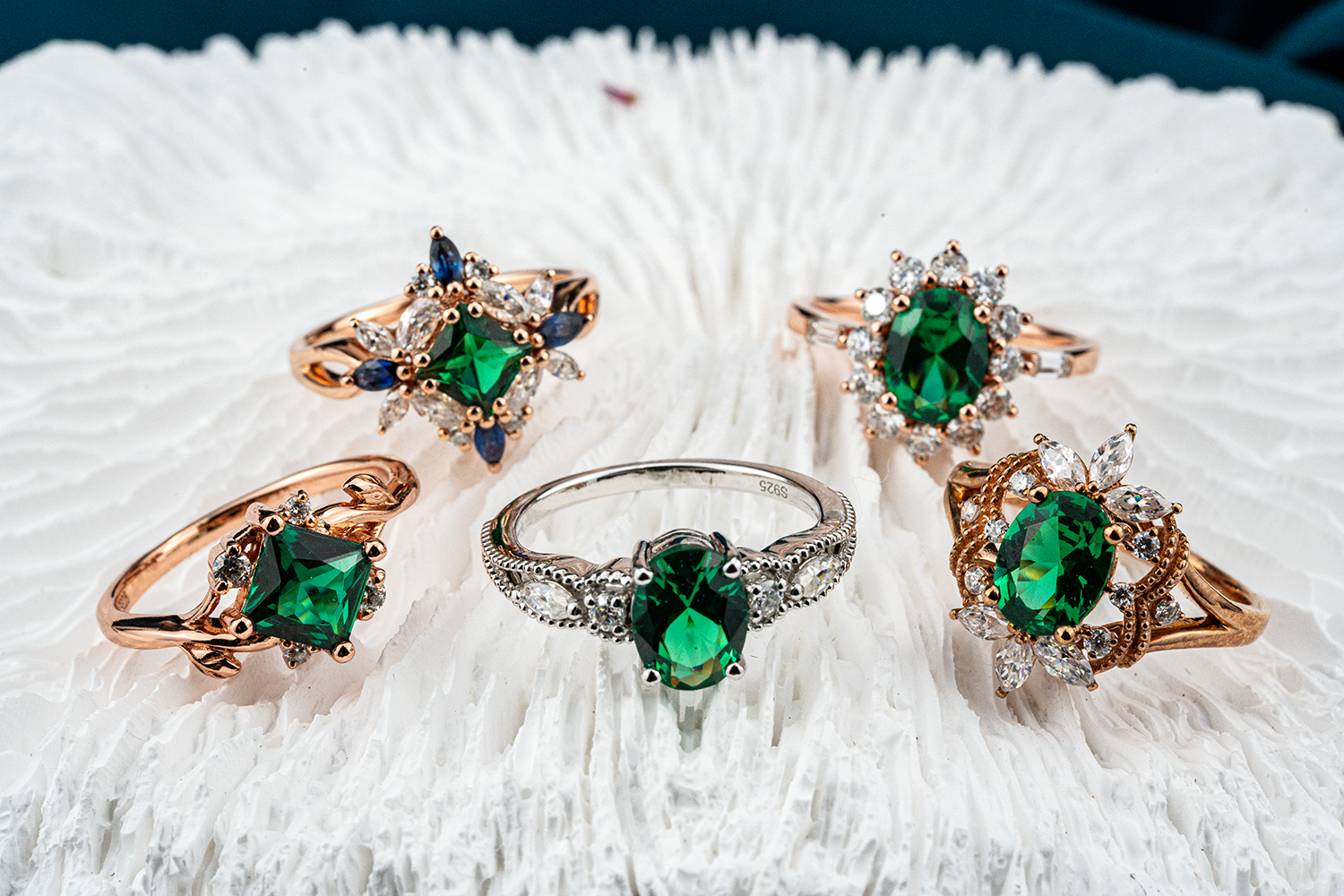
A simple moissanite engagement ring lets the stone's fire lead the design. A vintage style moissanite engagement ring adds decorative detail, while a lab-grown diamond solitaire may appeal if diamond identity is a priority. Those are preferences, not rankings of personal meaning.
Before deciding, answer three questions: Do I prefer this stone's appearance in normal light? Are its identity and dimensions clear? Does the complete ring fit my budget and routine? A confident answer to all three is more useful than searching for one material that is best for everyone.