Article: Lab-Grown Diamond Engagement Rings: A Modern Guide for Brides
Lab-Grown Diamond Engagement Rings: A Modern Guide for Brides
A lab-grown diamond engagement ring combines diamond as a material with a laboratory origin. Once that distinction is clear, the useful questions are about the individual stone and the ring around it: how it looks, how it fits and whether the specifications support the price.

Read the diamond description before choosing a style
Check the stated origin, shape, carat weight, dimensions, color and clarity information. Ask what documentation is supplied for the particular stone. A general collection description should not be treated as a grading report for every diamond.
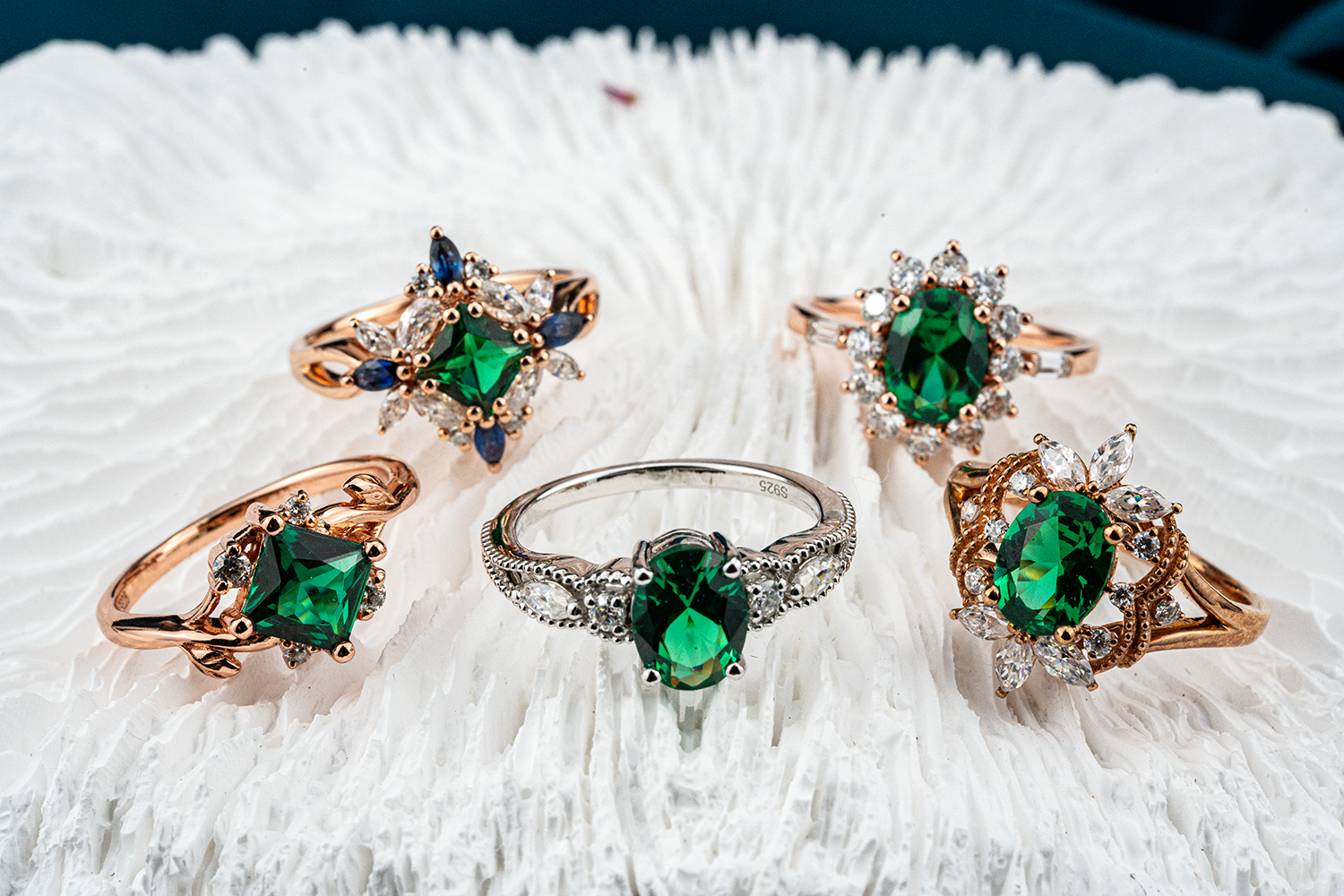
Lab-grown diamond and moissanite are not interchangeable names. Both appear in engagement rings, but a listing should identify the material of the center stone and any accents separately.

Choose a shape at realistic scale
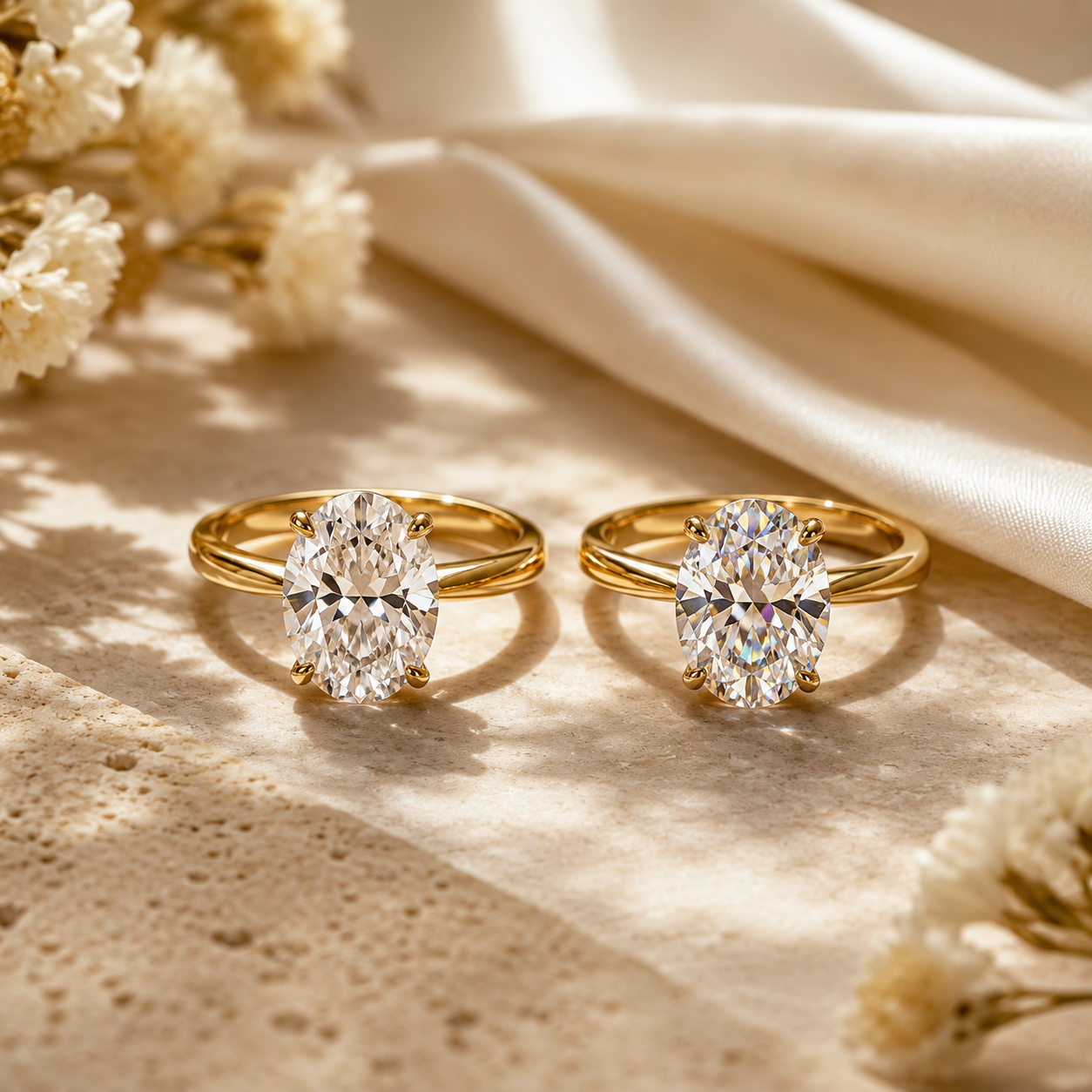
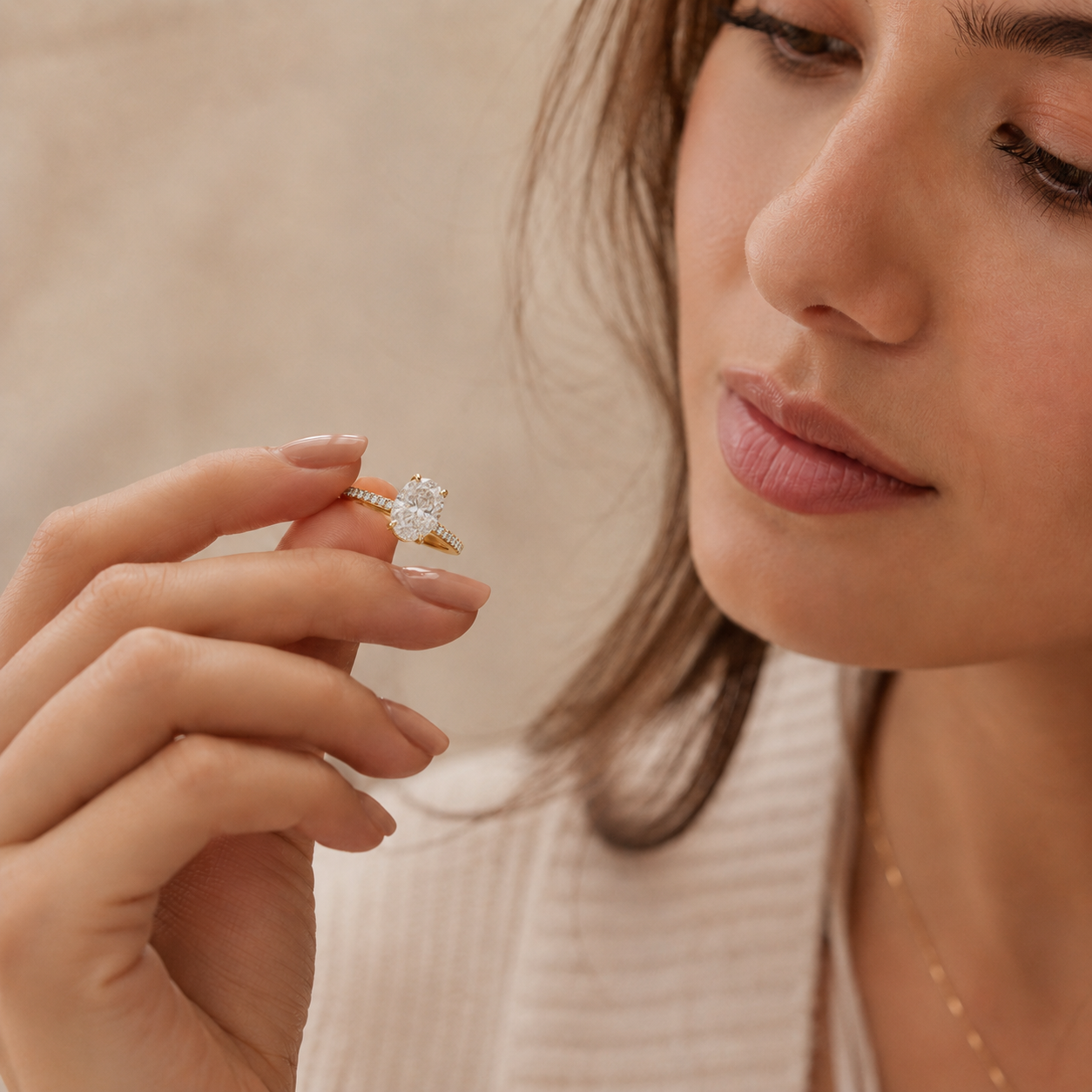
Look at hand photographs and dimensions in millimeters. Oval and marquise outlines may extend along the finger, while a round stone gives a more compact shape. An east-west setting turns an elongated stone across the finger and changes the overall width of the design.
Compare the side view, too. A large face-up outline does not tell you how high the ring sits or how easily a wedding band will fit beside it.
Decide what the setting should do
- Solitaire: makes the center stone the focus. Check band proportions and prong placement.
- Hidden halo: adds small stones beneath the center; view it from the side to understand where the detail is visible.
- Bezel: gives the stone a metal outline. Evaluate the actual construction rather than assuming every bezel is equally protective.
- Three-stone design: spreads the composition across the finger. Consider the combined width and side-stone material.

Compare complete quotes
Keep the diamond specifications, gold karat, ring size and included pieces consistent when comparing prices. Confirm whether engraving, customization or a matching band changes the total. Choose a budget for ownership and enjoyment rather than relying on a resale-value promise.
Plan for regular wear
Diamond resists scratching very well, but impacts can still damage a stone and settings can loosen. Remove the ring for heavy work and have a moving stone or bent prong checked. Surface finishes on the gold may also require maintenance.
Before ordering, confirm the chosen size, current production estimate and applicable return terms. A precise order description helps ensure that the ring you receive matches the one you intended to buy.