Article: Cluster Engagement Rings: Gemstone Styles and Wedding Band Pairing
Cluster Engagement Rings: Gemstone Styles and Wedding Band Pairing
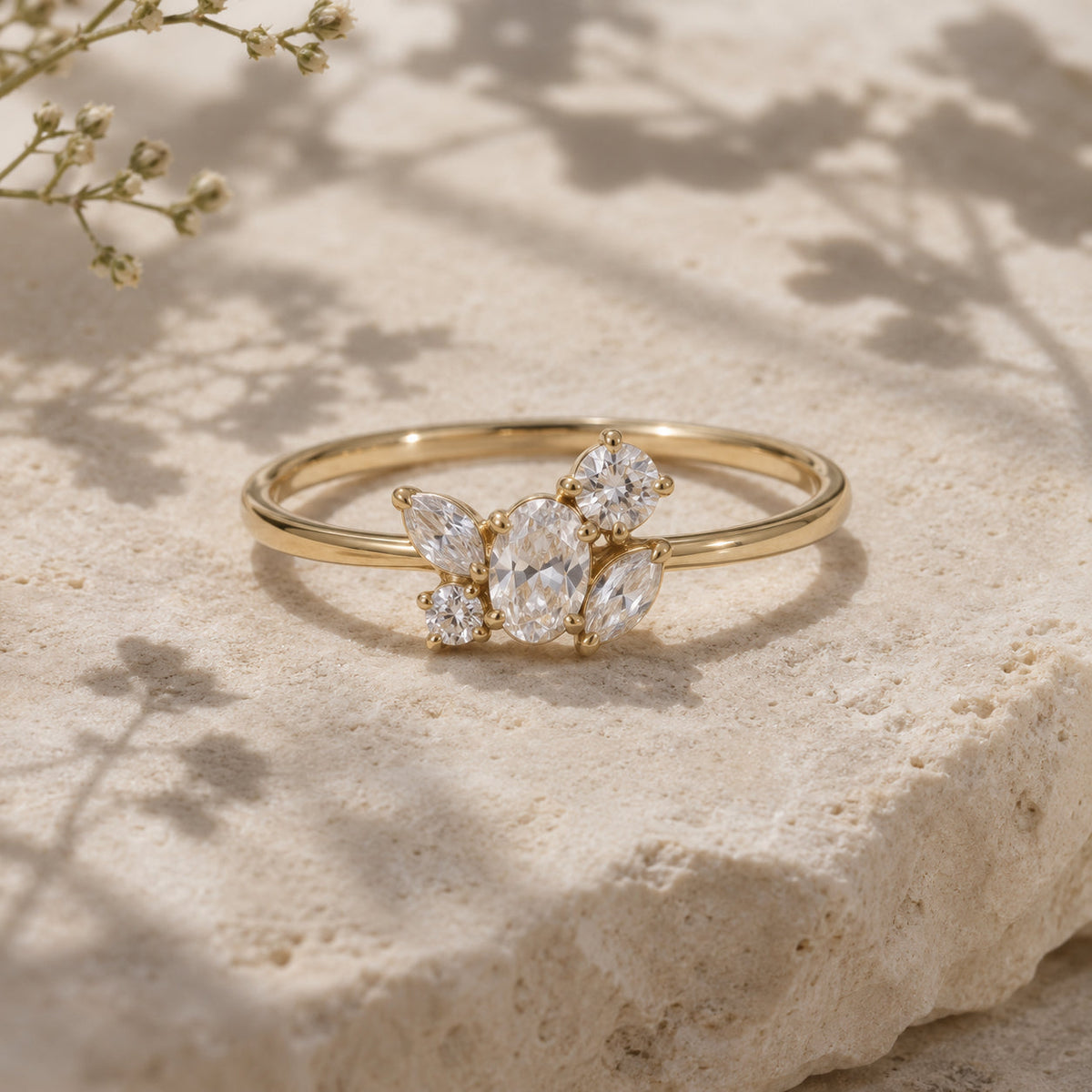
A cluster engagement ring is chosen for the way its stones work together. A small flower of clear gems, an uneven spray of colored stones, or an oval center with clustered shoulders can each create a very different impression—even when the rings occupy a similar space on the hand.
The useful question is not simply how many stones a ring contains. It is whether you like the overall outline, how it feels on your finger, and how it will sit beside a wedding band. This guide helps you compare those details before choosing.
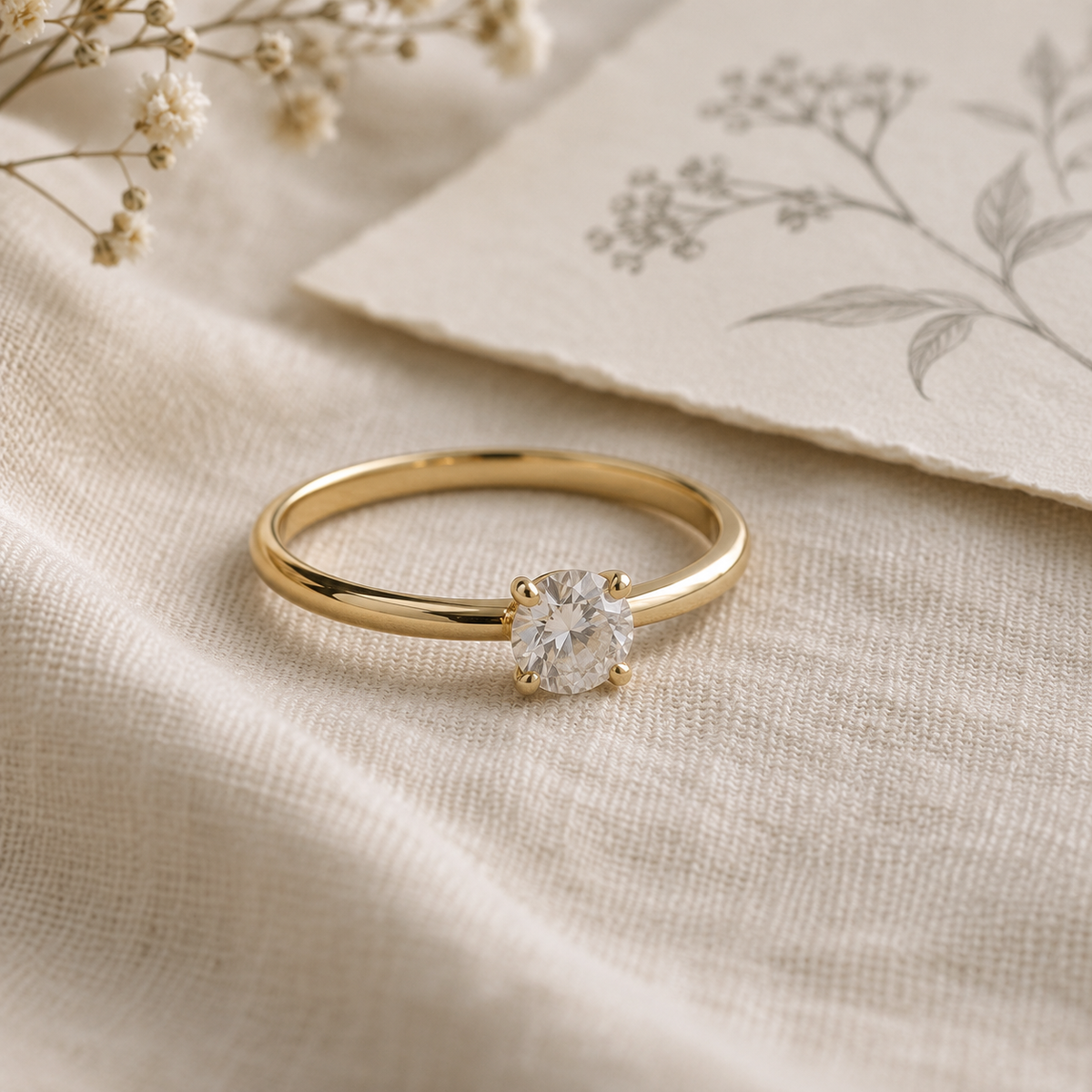
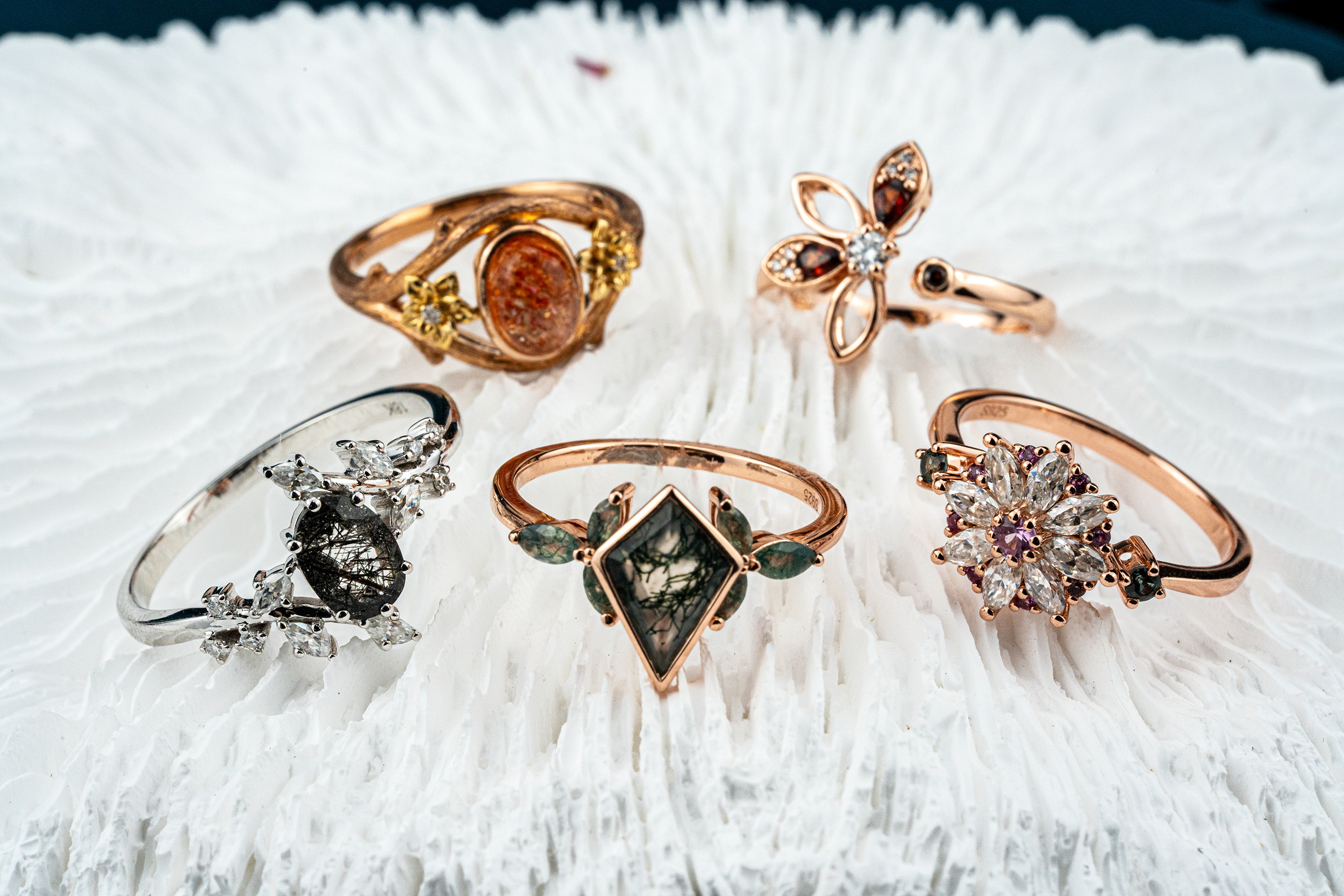
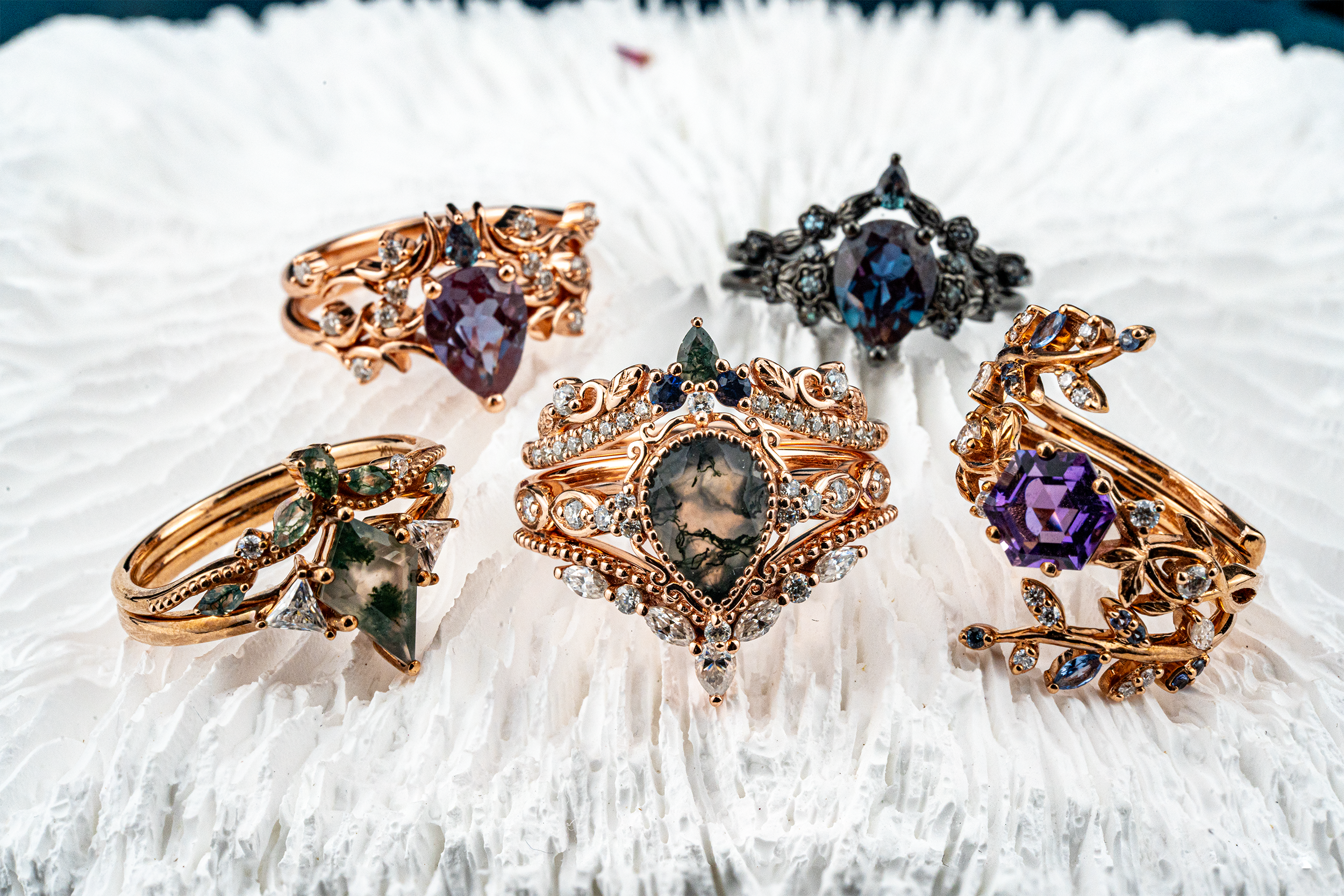
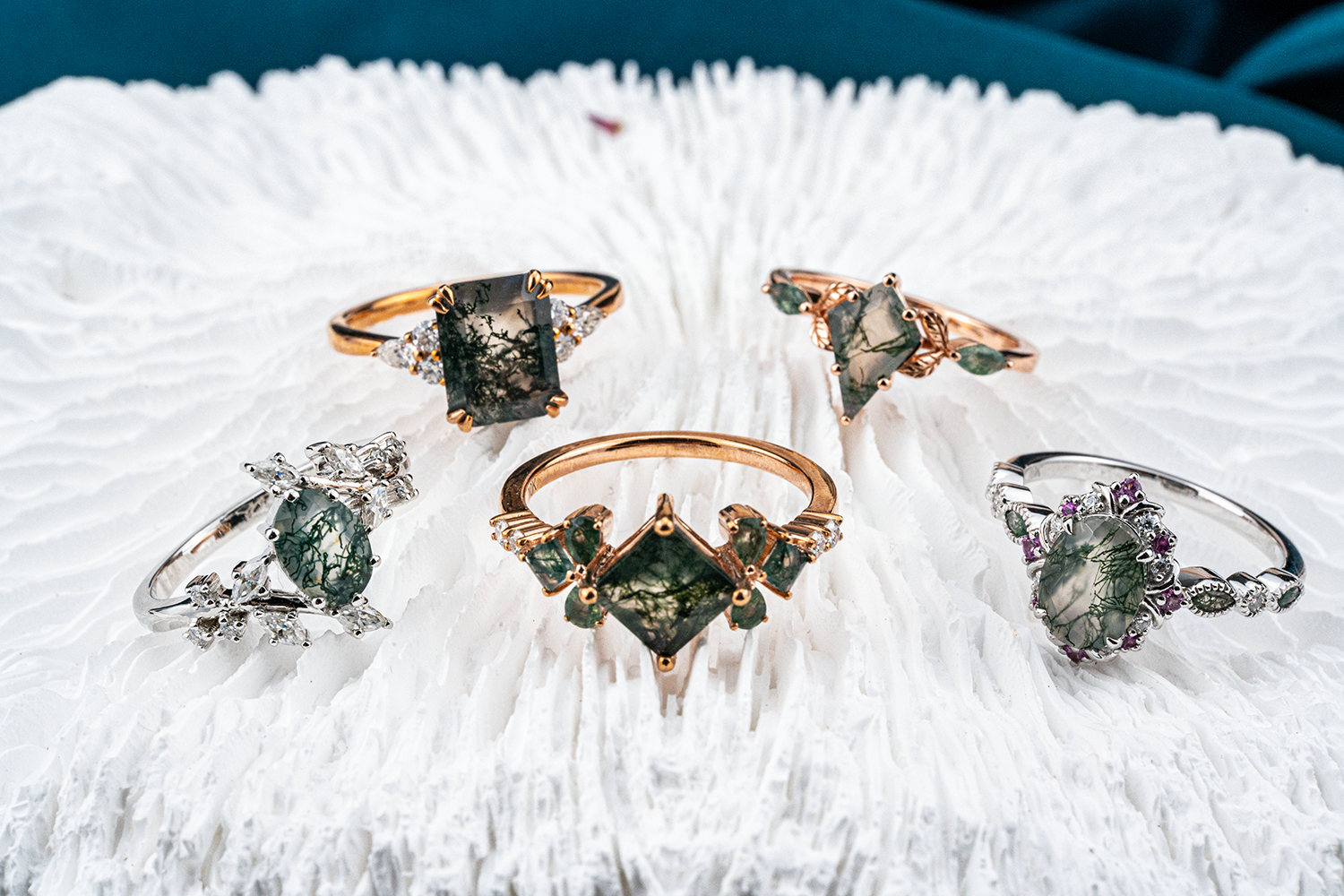
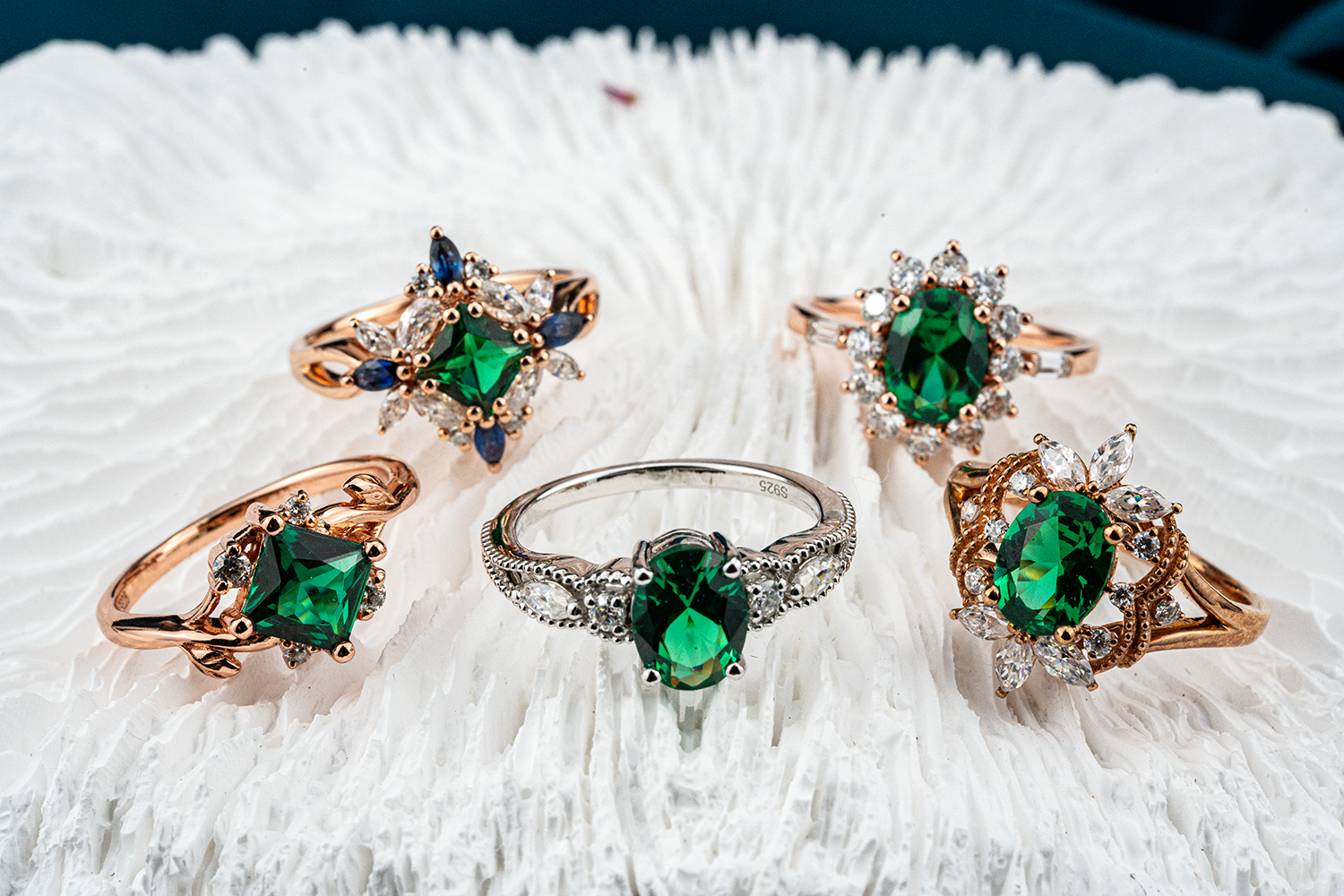
The images in this guide are AI-generated style illustrations, not photographs of specific GemifySpace products. Check individual product listings for the actual design, gemstones and measurements.
What is a cluster engagement ring?
A cluster ring groups several gemstones into one composition. The arrangement may resemble a flower, follow a geometric outline, or branch into an asymmetrical shape. Some designs use similarly sized stones; others include a more noticeable center with smaller clustered accents.
“Cluster” describes the arrangement rather than the gemstone material. A gold cluster ring can contain diamonds, moissanite, colored gemstones, or a combination. Read the stone details separately: a clear accent is not necessarily a diamond, and a colored stone’s appearance does not establish whether it is natural or lab-grown.
Cluster, halo or three-stone: which look are you choosing?
These names can overlap, especially in floral designs. Look at the structure rather than relying on a label alone.
| Style | Visual structure | What to compare |
|---|---|---|
| Cluster | Several gems read as a grouped composition. | The complete outline, spacing and distribution of color. |
| Halo | Smaller stones form a border around a central gemstone. | The relationship between the center and its surrounding frame. |
| Three-stone | Three principal gems form the main arrangement. | The proportions and balance of the three main stones. |
| Solitaire with side clusters | A distinct center is accompanied by groups of smaller stones on the shoulders. | Whether the side groups complement or compete with the center. |
For example, a compact flower cluster may look like one small bright shape from a distance. An oval ring with marquise side clusters keeps the central oval more clearly defined. Neither is the better design; they simply place emphasis differently.
Choose the outline before adding more stones
Compact floral clusters
A rounded flower arrangement gives the eye an easy shape to follow. It is a useful starting point if you enjoy decorative jewelry but want a contained silhouette. Compare the size of the flower against the band: a delicate band does not automatically mean the whole ring will look small.
Asymmetrical cluster engagement rings
Uneven arrangements can resemble a sprig, a scattering of petals or a small constellation. Look for a deliberate relationship between the larger and smaller stones. Imagine the ring turned slightly on your hand and ask whether you still enjoy its outline.
Oval centers with clustered shoulders
An oval can provide a recognizable focal point while round, pear or marquise accents create detail across the finger. Check how far the side clusters extend. A ring can look slender from above the center yet feel wide where the neighboring fingers meet it.

If petal and leaf shapes appeal to you, explore our floral rings and flower engagement rings. Use the individual images and specifications to compare each arrangement.
Building a gemstone palette that feels personal
For a multi gemstone cluster ring, begin with one color you want to notice first. Then decide whether the remaining stones should echo it, add a gentle contrast, or provide clear sparkle. This keeps the choice manageable when several materials and shapes are available.
A purple-and-green palette can feel botanical; a single blue focal gem with clear accents reads differently from a ring filled with several equally prominent colors. These are styling choices, not rules. A birthstone cluster ring can include a meaningful gemstone without assigning a separate symbol to every accent.

When comparing a cluster diamond engagement ring with a moissanite or mixed-gemstone design, ask for a stone-by-stone description. If diamonds are listed, distinguish the center stone’s weight from the combined weight of all diamonds. If the ring mixes materials, ask which stones are natural, which are lab-grown, and whether any treatments or special care instructions apply.
Check scale, comfort and the side view
Large cluster engagement rings can make a strong visual statement, but a close-up product photograph does not tell you how large the ring will feel. Ask for the overall setting length and width in millimeters, not just the dimensions of its largest stone.

- Setting height: Request a side view so you can judge how far the top rises above the finger.
- Band dimensions: Width runs across the band; thickness describes its depth. They are separate measurements and should not be substituted for each other.
- Side clearance: Consider whether projecting stones or metalwork could press against adjacent fingers.
- Wear routine: Tell the jeweler if you frequently wear gloves or work with your hands, so the actual setting can be discussed.
- Inspection: Multiple stones mean multiple settings to check. Ask how to arrange an inspection if a stone moves or a prong begins catching.
There is no single band measurement that guarantees comfort or strength for every cluster design. The overall setting, ring size and construction need to be considered together.
How to choose a wedding band for a cluster ring
Start with the space below the engagement ring’s setting. A straight band may sit beside it, or the setting may leave a visible gap. A curved or pointed band can follow the outline, but a similar-looking curve does not guarantee a precise fit.

Ask to see the two rings together from above and from the side. Check whether the wedding band presses against prongs, whether stone edges contact the neighboring ring, and whether both pieces remain comfortable when worn together. Do not force a flush fit if a small intentional gap works better.
Our curved wedding band guide explains the main pairing options. When browsing gold wedding bands, compare their profiles as well as their decoration. A plain band can give an intricate cluster room to stand out; a detailed band can extend the pattern if the proportions work.
Questions worth asking before ordering
- What gemstones are used in the center and every accent group?
- What are the overall setting dimensions, band width, band thickness and setting height?
- Does the selected gold color match the photographed version?
- Can I see the ring from the side and alongside the proposed wedding band?
- What care, resizing and repair guidance applies to this particular design?
For cleaning, follow the instructions for the actual combination of stones and setting. A mixed-gemstone ring should not be treated as though every stone tolerates the same cleaning method. Ask before using ultrasonic or steam equipment, and have a loose stone checked before further wear.
Cluster ring questions
Are cluster engagement rings tacky?
That is a matter of taste, not a property of the setting. If a design feels too busy to you, try a smaller overall outline, fewer colors or a plainer band. Choose a composition you enjoy in ordinary daylight as well as in a close-up photograph.
Does a cluster ring have to contain diamonds?
No. The term describes a grouped arrangement. Check the product details to identify the gemstones rather than assuming clear stones are diamonds.
Can a cluster ring be a wedding ring?
Yes, if that is how you choose to wear it. A cluster wedding ring can stand alone, while a cluster engagement ring can be paired with a separate band. Decide whether you want one ring or a two-ring combination before comparing designs.
Can a cluster ring be resized?
That depends on the individual ring’s construction and where its stones are set. Ask about the available resizing range before ordering, especially if stones continue around the band.
The strongest choice is a cluster whose outline, colors and proportions you like together. Start with that composition, then confirm the details that make it practical to wear.
Further reading: GIA’s guide to engagement ring settings explains the distinction between settings and styles, including cluster and halo arrangements.