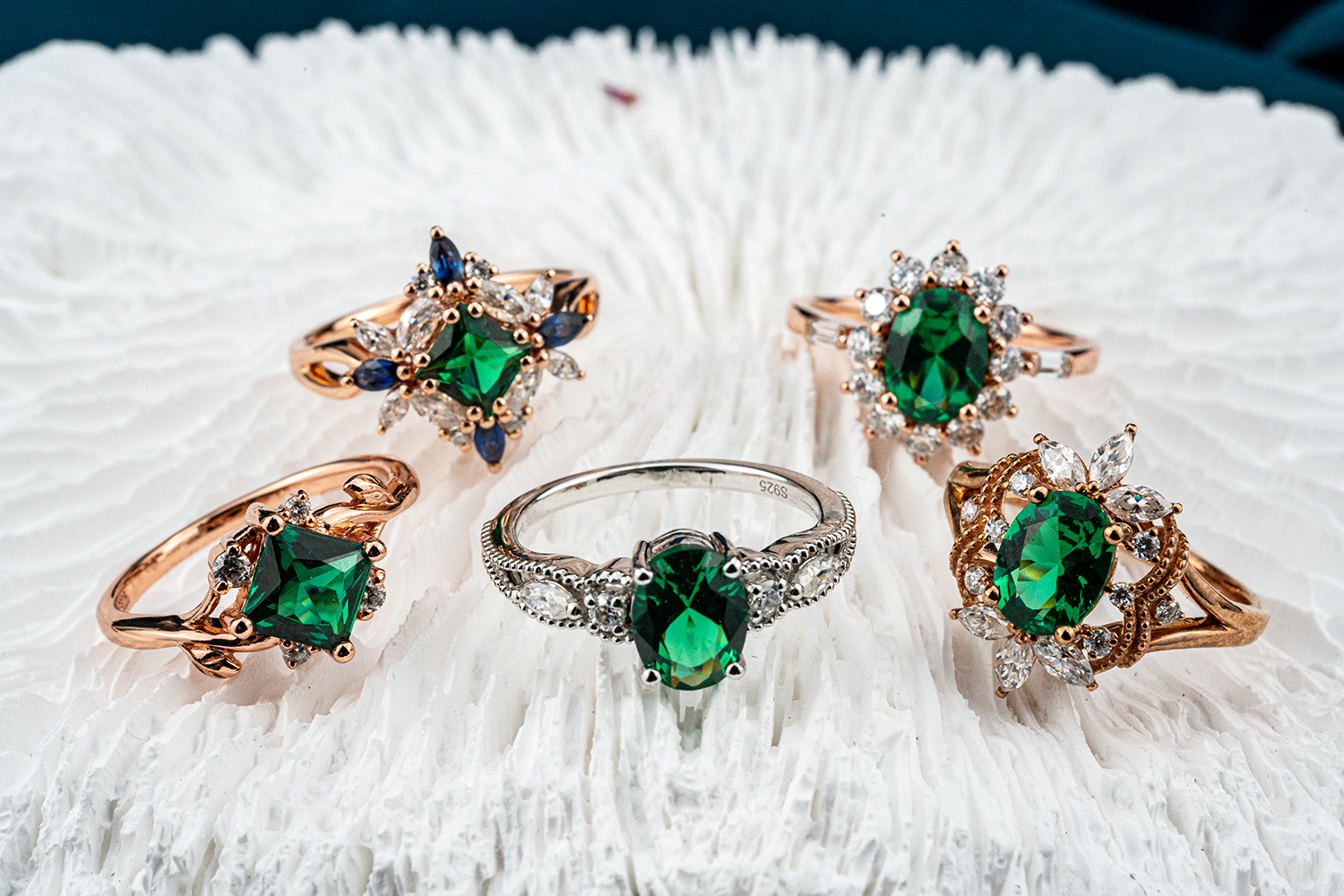

Gothic Engagement Rings: Dark Gemstones, Black Gold & How to Choose an Alternative Ring
A gothic engagement ring offers a dramatic alternative to traditional bridal jewelry. Defined by dark gemstones, sculptural settings, black gold finishes, vintage-inspired details, and symbolic design elements, gothic rings are made for couples who want their jewelry to feel personal, expressive, and unmistakably different.
While classic engagement rings often focus on bright stones and minimal settings, gothic engagement rings explore deeper color, stronger contrast, and more detailed silhouettes. A black onyx center stone, a salt-and-pepper diamond, black rutilated quartz, color-changing alexandrite, or brilliant moissanite can all become the focus of a dark romantic design.
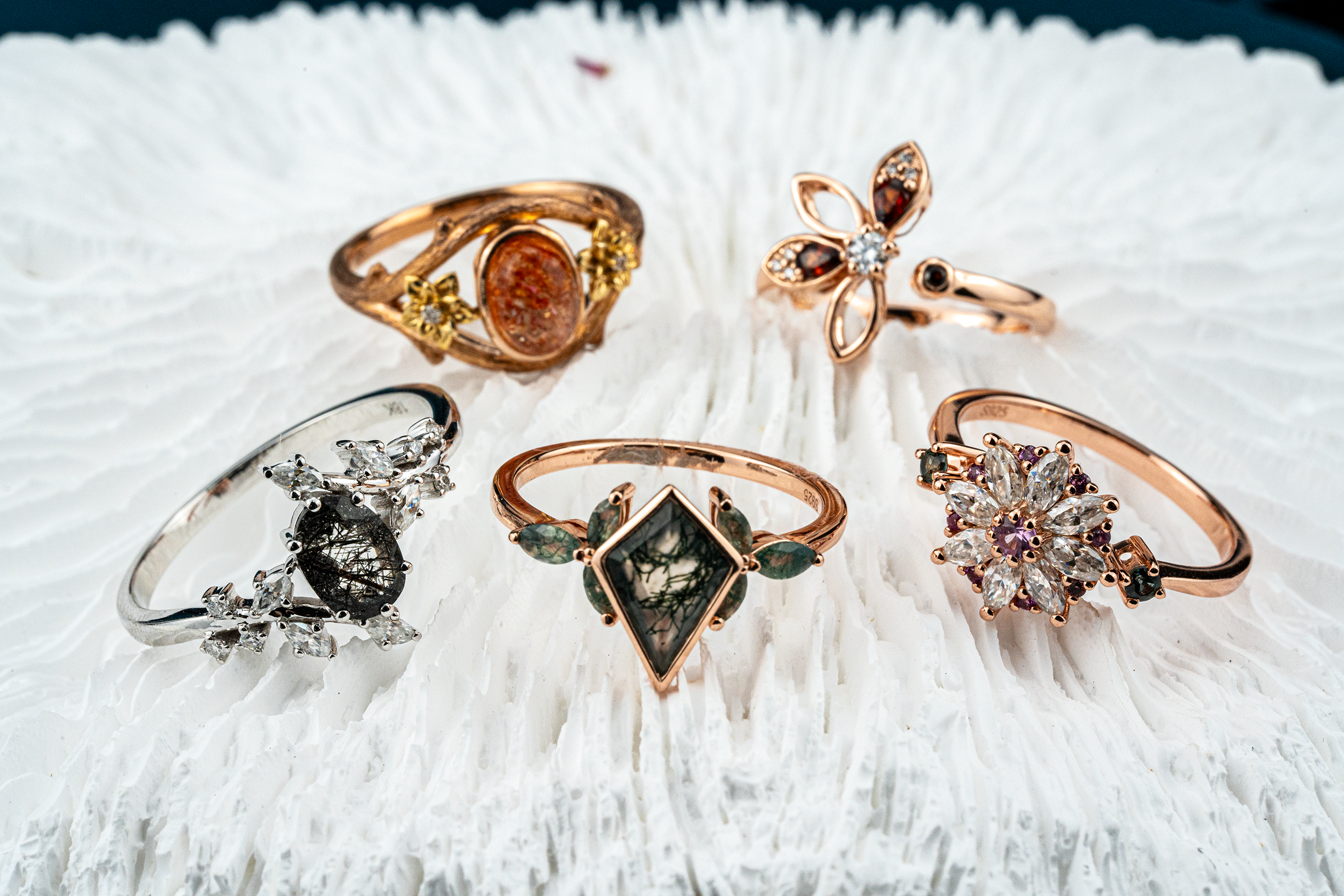
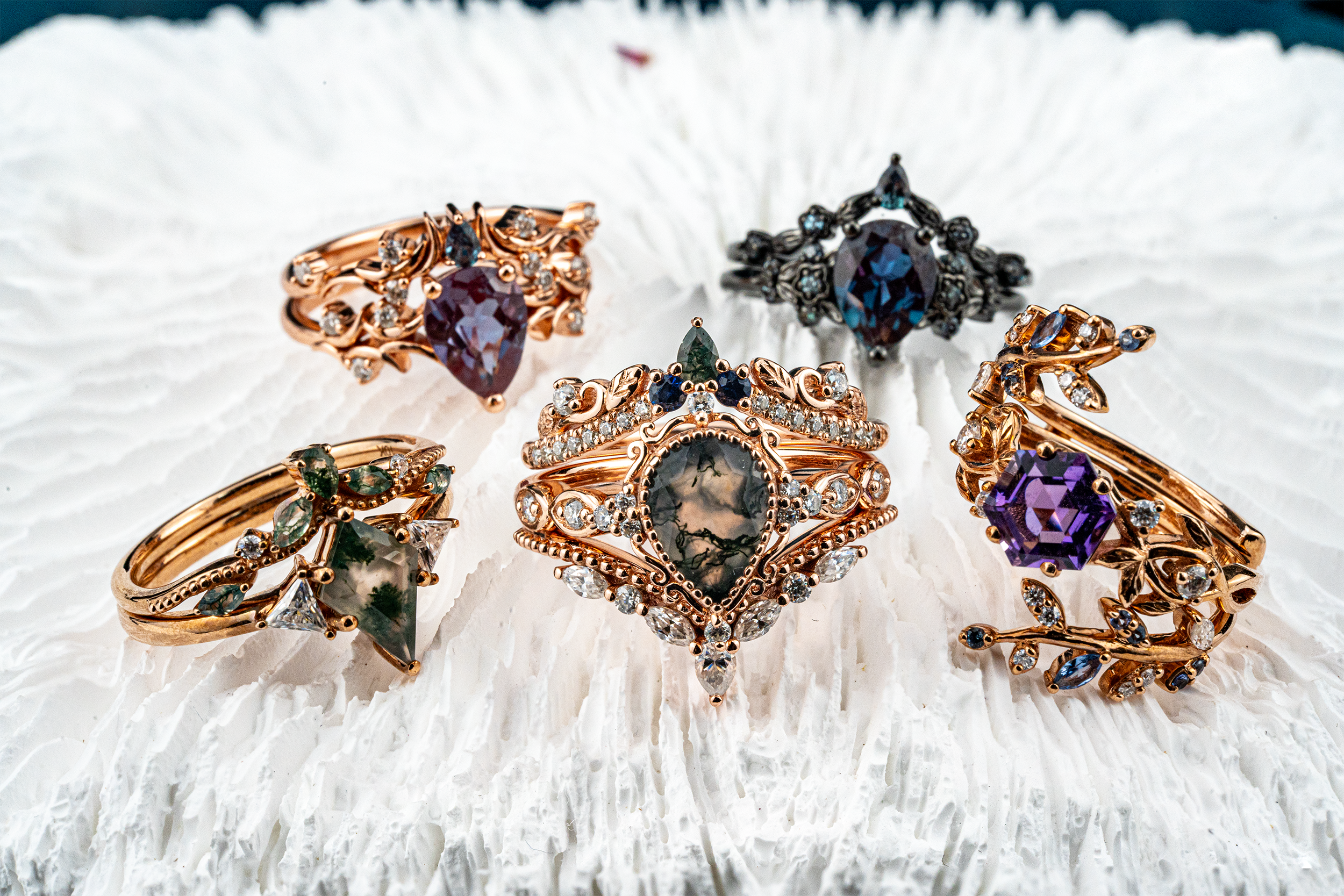
At GemifySpace, gothic-inspired rings are crafted in real 10K, 14K, and 18K gold. Depending on the design, they may feature yellow gold, rose gold, white gold, or a black finish over real gold. From vintage halo rings to coffin-shaped stones and nature-inspired black gold settings, each style offers a distinctive way to represent love, individuality, and commitment.
What Is a Gothic Engagement Ring?
A gothic engagement ring is an alternative ring style influenced by dark romance, antique architecture, Victorian detail, celestial motifs, nature, and dramatic gemstone color.
There is no single design that defines every gothic ring. Some are minimal and modern, featuring a dark center stone in a clean black gold setting. Others are highly detailed, with pointed arches, leaf patterns, halos, milgrain-inspired textures, or unusual gemstone shapes.
Common gothic engagement ring elements include:
- Black or deep-colored center stones
- Black-finished gold settings
- Coffin, kite, marquise, pear, hexagon, or elongated oval stones
- Vintage-inspired metalwork
- Celestial, floral, thorn, leaf, or vine motifs
- Halo and three-stone settings
- Curved or pointed wedding bands
- Strong contrast between the center stone and accent stones
A gothic engagement ring does not need to look heavy or theatrical. Many designs combine dark details with delicate proportions, creating a ring that feels romantic, refined, and wearable.

Why Choose a Gothic Ring for an Engagement?
A gothic engagement ring is ideal for someone who does not connect with conventional bridal jewelry. It offers more freedom to choose an unusual stone, a darker metal color, or a design that reflects a specific aesthetic.
Many couples choose gothic rings because they feel more personal. Instead of following a traditional formula, the ring can represent individual style, shared interests, or a love story that feels unconventional.
Dark gemstones can also create a strong sense of contrast and symbolism. A black center stone framed by bright moissanite accents may feel bold yet romantic. A salt-and-pepper diamond can highlight natural inclusions rather than hiding them. Alexandrite can shift in color under different lighting, giving the ring a mysterious and changeable appearance.
For some wearers, gothic jewelry feels powerful and confident. For others, it feels poetic, vintage, celestial, or connected to nature. The best gothic engagement ring is one that reflects the person wearing it rather than simply following a trend.
Best Gemstones for Gothic Engagement Rings
The center gemstone plays an important role in the mood, durability, and appearance of a gothic ring. Some stones create a deep monochromatic look, while others add color, contrast, or unusual natural texture.

Black Onyx
Black onyx is known for its smooth, opaque black appearance. It creates a clean and dramatic center stone, especially when paired with yellow gold, rose gold, or bright accent stones.
A black onyx engagement ring can feel minimal, vintage, or bold depending on the setting. Oval, pear, kite, coffin, and marquise shapes work particularly well with gothic-inspired designs.
Because onyx requires more care than harder bridal gemstones, it is best for someone who is comfortable removing the ring during heavy work, exercise, cleaning, or activities that may cause impact.
Salt-and-Pepper Diamond
Salt-and-pepper diamonds contain visible dark and light inclusions that give each stone an individual pattern. Instead of aiming for a completely clear appearance, these diamonds celebrate natural character and variation.
They are especially suitable for gothic engagement rings because their smoky, gray, black, and translucent tones create a distinctive alternative bridal look. No two salt-and-pepper diamonds appear exactly the same, which makes them appealing to customers who want a one-of-a-kind center stone.
Salt-and-pepper diamonds pair beautifully with black gold, yellow gold, and vintage-inspired settings.
Black Rutilated Quartz
Black rutilated quartz contains dark needle-like inclusions within a clear or smoky quartz body. These inclusions create organic patterns that may resemble branches, threads, or abstract landscapes.
This gemstone is ideal for nature-inspired gothic rings because each stone has its own internal composition. A black rutilated quartz ring can feel mysterious without being completely opaque, allowing light to pass through parts of the gemstone.
It works particularly well in oval, pear, kite, hexagon, and elongated settings.
Alexandrite
Alexandrite is loved for its color-changing appearance. Depending on the light, it may show green, blue, purple, or reddish tones. This shifting color gives alexandrite rings a mysterious and unconventional character.
In a black gold or white gold setting, alexandrite can feel cool, celestial, and dramatic. In yellow or rose gold, it becomes warmer and more romantic.
Alexandrite is a strong option for someone who wants a gothic engagement ring with color rather than a completely black or gray palette.
Moissanite in Black Gold
Moissanite creates a striking contrast in a dark setting. Its clear brilliance stands out against black-finished gold, making the center stone appear bright and defined.
A black gold moissanite engagement ring is a good choice for someone who wants the structure and mood of gothic jewelry while still enjoying a clear, brilliant center stone. It works especially well in halo, three-stone, celestial, and vintage-inspired designs.
Moissanite can also be used as accent stones around black onyx, alexandrite, salt-and-pepper diamond, or black rutilated quartz.
Black Gold vs. Yellow, Rose, and White Gold
The metal color changes the overall mood of a gothic engagement ring.

Black Gold
Black gold creates the strongest gothic appearance. In fine jewelry, the dark color is generally created through a black surface finish applied over real gold. The exact finishing method may vary by design.
A black finish can gradually show wear, especially on areas that experience regular friction. Proper care and occasional professional refinishing may be needed to maintain an even dark appearance.
Black-finished gold pairs beautifully with moissanite, black onyx, alexandrite, salt-and-pepper diamond, and black rutilated quartz.
Yellow Gold
Yellow gold adds warmth to dark gemstones. The contrast between rich gold and black onyx or smoky diamonds can feel antique, luxurious, and dramatic.
It is a good choice for vintage gothic rings and for customers who want a dark gemstone without an entirely dark metal setting.
Rose Gold
Rose gold softens gothic designs with a romantic pink warmth. It pairs especially well with alexandrite, moonstone, black rutilated quartz, and floral or celestial details.
A rose gold gothic ring can feel poetic and feminine while still remaining unconventional.
White Gold
White gold creates a cleaner and cooler appearance. It works well with gray diamonds, alexandrite, moissanite, and monochromatic gothic styles.
For someone who wants an alternative ring that still feels refined and versatile, white gold can be an excellent middle ground.
Popular Gothic Engagement Ring Styles
Gothic rings can range from simple dark gemstone settings to highly detailed bridal designs.
Coffin-Shaped Rings
Coffin-shaped gemstones are among the most recognizable gothic ring styles. Their angular silhouette creates a bold focal point and works especially well with black onyx, black rutilated quartz, salt-and-pepper diamond, and dark-colored gemstones.
A coffin ring may be minimal with a simple band, or more detailed with side stones, halos, or pointed wedding bands.
Vintage and Art Deco-Inspired Rings
Vintage gothic rings often use geometric symmetry, milgrain-style details, fan-shaped side stones, and dramatic halos.
Art Deco-inspired designs can create a structured, elegant appearance without feeling overly ornate. Black onyx, moissanite, emerald-cut stones, and salt-and-pepper diamonds work especially well in this style.
Nature-Inspired Dark Rings
Leaves, branches, vines, thorns, and floral details can give a gothic ring a softer organic character.
A dark gemstone surrounded by leaf-shaped moissanite accents can feel mysterious and romantic rather than severe. This style is especially suitable for customers who love both nature-inspired jewelry and dark bridal aesthetics.
Gothic Halo Rings
A halo setting surrounds the center gemstone with smaller accent stones. In a gothic design, this can create dramatic contrast between a dark center stone and bright moissanite or diamond-style accents.
Halo rings also add visual width and detail, making them suitable for oval, pear, round, cushion, and geometric center stones.
Gothic Three-Stone Rings
A three-stone ring typically features one center stone with two side stones. It is often associated with the past, present, and future of a relationship.
For a gothic style, the center stone may be black onyx, alexandrite, or salt-and-pepper diamond, while the side stones may be moissanite, pear-shaped stones, marquise stones, or dark matching gemstones.
Gothic Bridal Ring Sets
A gothic bridal set pairs an engagement ring with a matching wedding band. The band may be curved, pointed, V-shaped, or designed with leaf, celestial, or thorn-like details.
Choosing a coordinated set helps the two rings sit together more naturally while maintaining a consistent dark romantic style.
Gothic Ring vs. Traditional Engagement Ring
Traditional engagement rings often feature a clear center stone, a bright metal setting, and a classic solitaire or halo silhouette.
A gothic engagement ring usually places greater emphasis on contrast, symbolism, unusual gemstone shapes, and dark or vintage-inspired details.
Neither style is more meaningful than the other. The difference is primarily personal expression.
A traditional ring may be right for someone who prefers timeless simplicity. A gothic ring may be better for someone who wants:
- A dark or unusual gemstone
- Black-finished gold
- A vintage or celestial design
- A coffin, kite, hexagon, or marquise center stone
- A ring that feels less conventional
- Stronger contrast and more visible design detail
The most important consideration is whether the ring feels natural and personal to the wearer.
How to Pair a Gothic Engagement Ring with a Wedding Band
Many gothic engagement rings have a wide center setting, a low profile, or an unusual shape. As a result, a straight wedding band may leave a visible space between the two rings.

A curved wedding band or contour band can follow the shape of the engagement ring more closely. V-shaped and pointed bands also work well with pear, marquise, kite, coffin, and elongated center stones.
For a coordinated look, consider repeating one or two design elements from the engagement ring in the wedding band. These may include:
- Black gold finish
- Matching accent stones
- Leaf or vine details
- Pointed or arched shapes
- Milgrain-style texture
- Celestial motifs
- Black gemstone accents
A matching gothic bridal set is often the easiest way to ensure the engagement ring and wedding band work together in shape, height, and proportion.
Are Gothic Engagement Rings Suitable for Everyday Wear?
Many gothic engagement rings can be worn regularly, but everyday suitability depends on the gemstone, setting, and lifestyle of the wearer.
Moissanite, diamond, sapphire, ruby, and alexandrite are generally better suited to frequent wear than softer or more impact-sensitive stones. Black onyx, pearl, moonstone, and opal require more careful handling.
A highly detailed ring with pointed settings, raised stones, or many small accents may also need more maintenance than a low-profile solitaire.
Before choosing a ring, consider:
- How often it will be worn
- Whether the wearer works with their hands
- How high the center setting sits
- Whether the stone is protected by the setting
- How many small accent stones are included
- Whether the black finish may require future refinishing
A gothic ring can be both expressive and practical when the design is chosen with the wearer’s daily routine in mind.
How to Care for Black Gold and Dark Gemstone Rings
Remove your ring before heavy work, intense exercise, gardening, swimming, cleaning, or using harsh chemicals.
To clean most gold rings, use mild soap, lukewarm water, and a soft cloth or very soft brush. Avoid abrasive products that may scratch the metal or affect a black surface finish.
Do not use ultrasonic or steam cleaners unless they are confirmed as safe for the specific gemstone and setting. Softer gemstones, included stones, and treated surfaces may require gentler care.
Store the ring separately from harder jewelry to reduce scratching. If the black finish begins to wear unevenly, consult a professional jeweler about inspection and refinishing.
It is also helpful to have the prongs and small accent stones checked periodically, especially on halo rings, three-stone rings, and detailed bridal sets.
How to Choose the Right Gothic Engagement Ring
Begin with the wearer’s personal style rather than choosing only by trend.
Consider whether they prefer:
- A completely dark design or a mix of dark and bright details
- A smooth opaque gemstone or a stone with visible inclusions
- Minimal modern lines or vintage ornamentation
- A warm gold tone or a cooler black or white finish
- A traditional oval or round stone or a geometric alternative shape
- A single ring or a coordinated bridal set
Next, consider durability and maintenance. A ring intended for daily wear should have a secure setting and a gemstone suited to the wearer’s lifestyle.
Finally, choose a design that feels emotionally meaningful. A gothic engagement ring should not feel like a costume or temporary trend. The strongest designs balance individuality with craftsmanship, proportion, and long-term wearability.
Final Thoughts
Gothic engagement rings offer a distinctive way to celebrate love through dark gemstones, unusual shapes, vintage details, and alternative gold finishes.
From black onyx and salt-and-pepper diamonds to black rutilated quartz, alexandrite, and moissanite, each gemstone creates a different expression of dark romantic style. Black gold can make a ring feel bold and dramatic, while yellow, rose, and white gold offer warmer or more versatile alternatives.
Whether you are drawn to a coffin-shaped ring, a gothic halo, a nature-inspired design, or a matching bridal set, the right ring should reflect the wearer’s personality and daily life.
Explore GemifySpace gothic rings and alternative engagement rings to discover handcrafted designs made in real 10K, 14K, and 18K gold for meaningful commitments, unconventional love stories, and personal style.