Ruby Rings: Red Color, Natural and Lab-Grown Origins, and Settings
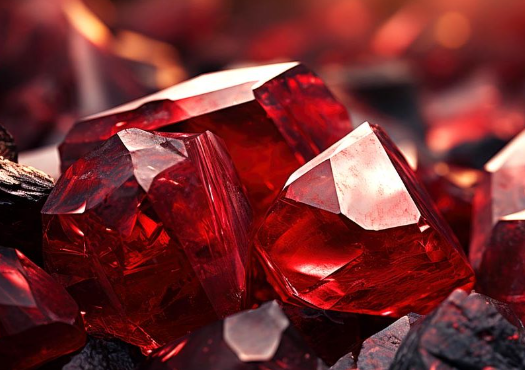
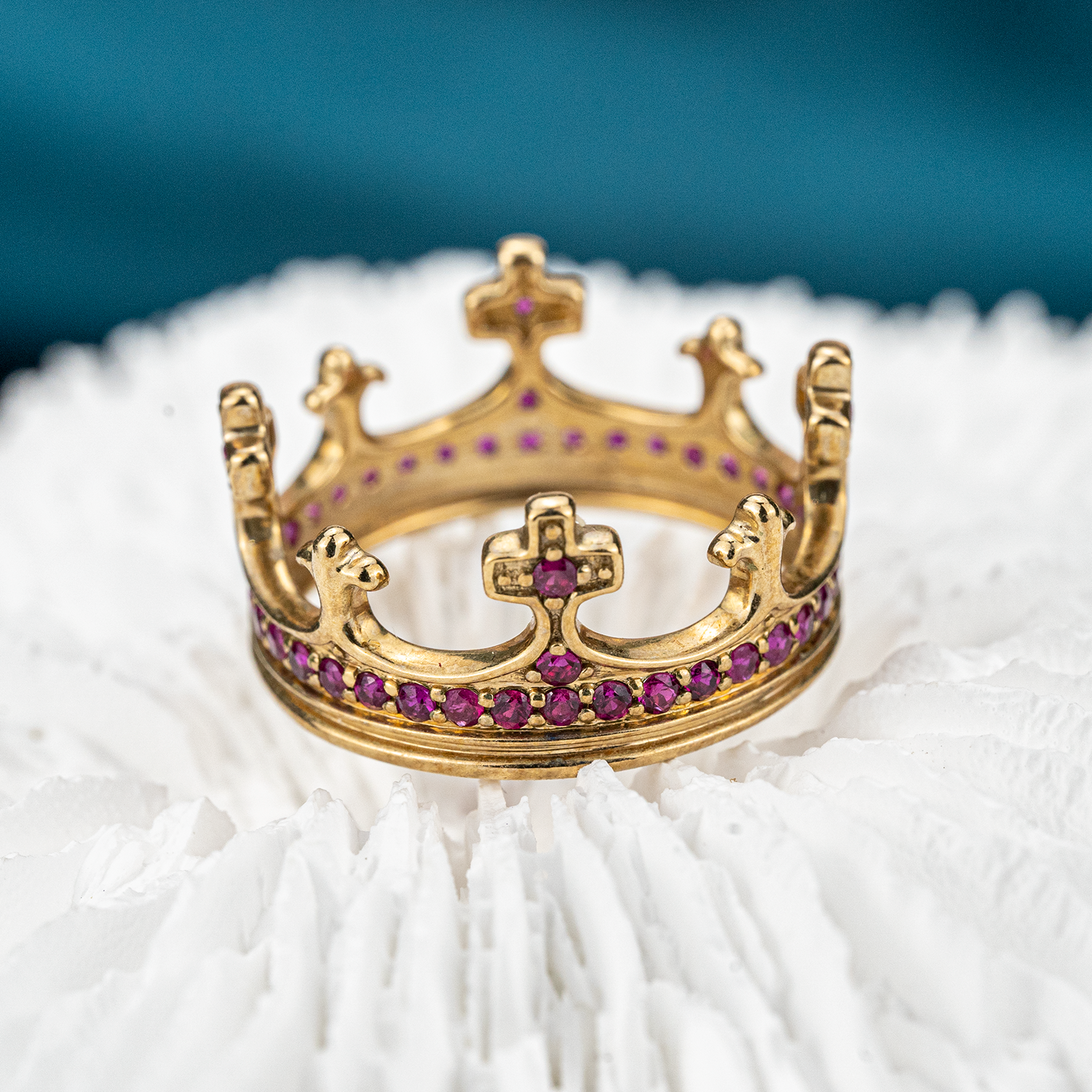
The appeal of a ruby ring is its red color: it can stand alone in a simple setting or bring a strong focal point to a detailed bridal design. Before comparing ruby engagement rings for sale, separate three decisions—whether you want natural or lab-grown ruby, which shade you prefer, and how the ring will be worn.

Ruby identity comes before a romantic name
Ruby is the red variety of corundum. Historical names are less reliable: the famous Black Prince's Ruby is actually red spinel, as explained by GIA's spinel guide. That distinction is a useful reminder to ask for the material's identity rather than judging by color or a traditional name.
A natural ruby and a lab-grown ruby have different origins. Neither label should be substituted for the other in a product description. Ask what the center stone is, whether the accents are ruby, diamond or moissanite, and whether treatment information is available.

Choose the red you want to live with
Look at photographs or video in more than one lighting condition. Some stones appear brighter or darker as the light changes. Compare the whole ring at normal hand distance as well as close-up images; a richly colored stone may create a very different impression in a small solitaire than in a broad halo ring.
Shape also changes the mood. A round ruby gives a compact focal point, an oval lengthens the outline, and a geometric cut can make the design feel more architectural. Check the listed dimensions before deciding how large it will look.

A setting that supports the stone
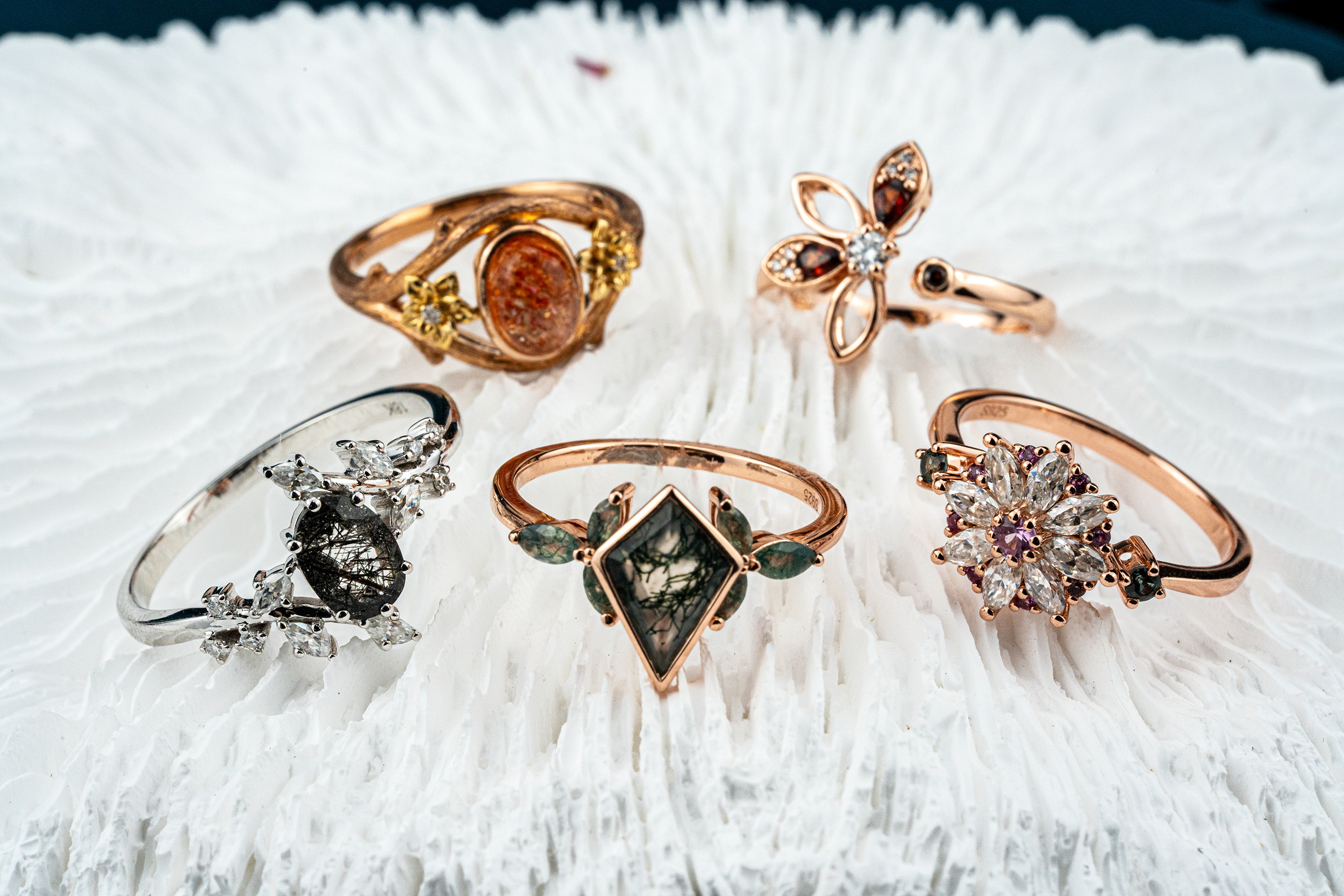
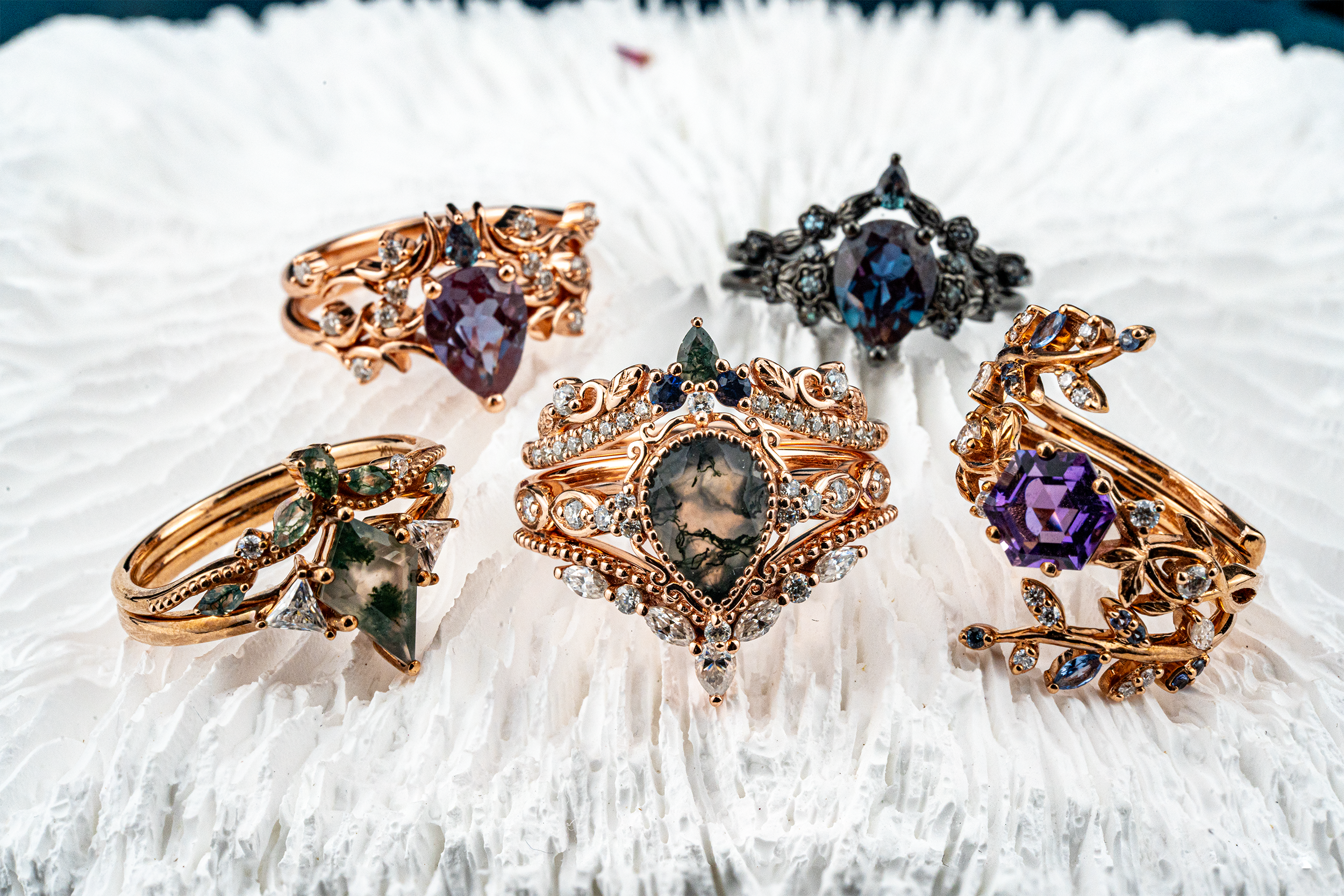
For frequent wear, look closely at the prongs, the height above the finger and protection around pointed corners. In a three-stone design, consider whether the side stones frame the ruby or compete with its color. Yellow, rose and white gold offer different contrasts; choose from the options confirmed on the exact listing.

Treatment and maintenance questions
Natural rubies can be treated, and some treatments affect how a stone should be cleaned or repaired. Ask for disclosure before purchasing. Do not assume a generic cleaning method is appropriate for every ruby simply because corundum is hard.
Avoid impacts, remove the ring for abrasive work and consult a jeweler if a stone moves or a prong catches. GIA's ruby buyer's guide explains why origin, treatment and independent identification matter.
Meaning without a formula
Ruby's connection with July and its association with affection can make it a personal gift. You do not need an elaborate story to justify the choice: a red gemstone that suits the wearer's taste, fits comfortably and has clearly stated specifications is a sound place to begin.
Keep the center and accents distinct
A ruby center surrounded by moissanite should be described differently from a ruby and diamond ring, even when their photographs look similar. Note the center’s origin and the accent material when comparing ruby ring designs. For a three-stone arrangement, our three-stone ring guide explains how side-stone proportions affect width and balance. A July connection can make the choice personal without overriding these practical differences.