
Article: Hexagon vs. Kite Engagement Rings: Which Shape Fits Your Hand?

Hexagon vs. Kite Engagement Rings: Which Shape Fits Your Hand?
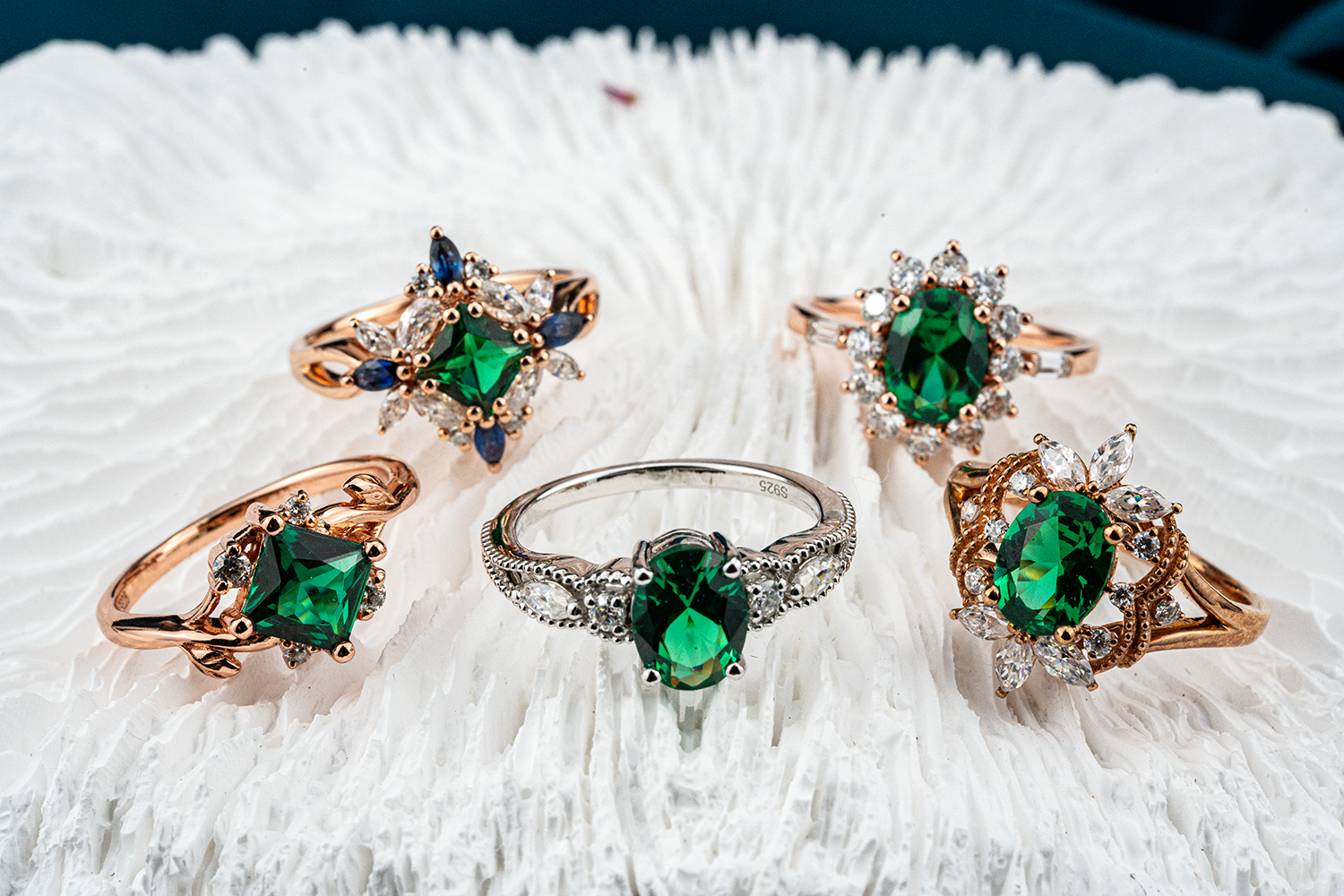
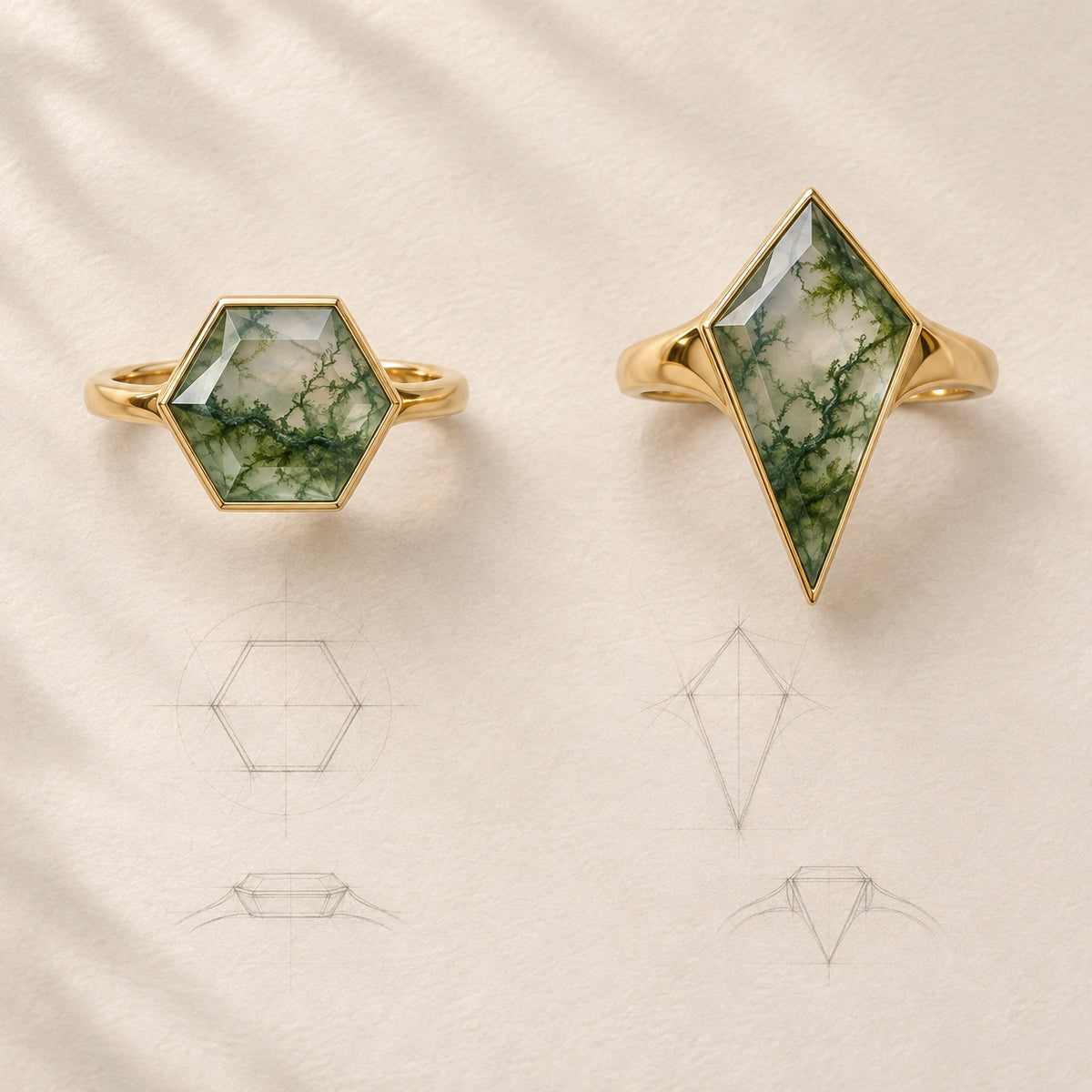
Look at the two green rings on the cover. On the left, your eye can follow the gold rim all the way around the stone. On the right, it travels down to a single long point. Both rings use the same color palette. It’s the outline that changes the way they look on a hand.
If you’re choosing between a hexagon engagement ring and a kite-cut ring, start with three questions. Where do you want the eye to land? How much of your finger do you want the stone to cover? And where will your wedding band sit?
Trace the outline before you look at the setting
A hexagon has six sides. A compact hexagon can look almost round at arm’s length, with its corners coming into focus as you move closer. An elongated hexagon has a different rhythm: the two long sides draw the eye along the finger, while the shorter end edges bring it back toward the center. You can see both the width and the direction of the shape.
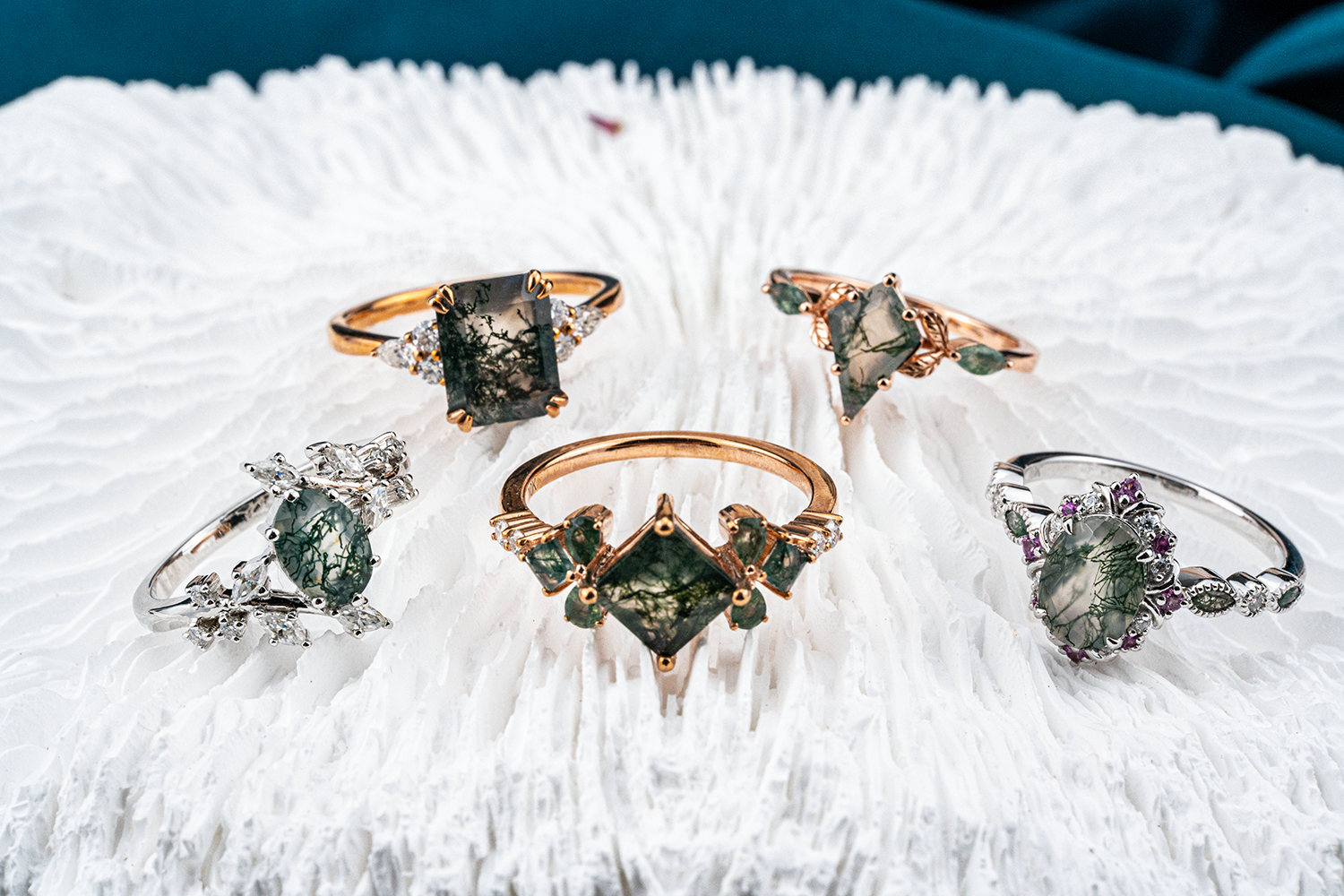
A kite has four sides. In the example below, the widest part of the stone sits closer to one end. Two long edges taper from those shoulders to the opposite point. If what caught your eye in a photograph was that sweep toward the fingertip, look closely at kite-cut rings. If you liked the uninterrupted straight sides framing the stone, start with hexagon engagement rings.

Compare two paper shapes at their actual size
Product photos fill a screen. Your ring will occupy only a few millimeters of your hand. Before deciding that a kite is too dramatic or a hexagon too wide, find the length and width of each center stone in its listing. Draw a box with those measurements on paper, sketch the outline inside it and cut it out. Keep the paper flat against the finger where you’ll wear the ring.
For example, if a listing gives a kite’s measurements as 6 × 9 mm, start with a box 6 mm wide and 9 mm long. Use the product photo to place the widest point. Moving it even a little higher or lower gives the taper a different feel. Make a second paper shape using the actual measurements of the hexagon you’re considering. Compare the two at reading distance, then relax your hand and look again.
The paper shows only the center stone’s footprint. A rim of gold, side stones or a leaf motif can add width beyond the outline. Ask for the overall width of the finished setting if coverage matters to you. If you like the kite’s length but prefer the balance of a hexagon, a long hexagon ring is a useful third shape to try on paper.

Let the moss agate pattern help you choose
In a hexagon moss agate ring, a branching green inclusion can spread across the broad center like a small canopy. In a kite cut moss agate ring, a narrow trail of green running toward the long point can echo the taper. Reverse the patterns and the effect changes: a dense patch near the kite’s shoulder gives it visual weight on one side, while a clear patch near a hexagon’s edge makes the gold outline easier to see.
When choosing a particular moss agate, ask whether the photo shows the stone you’ll receive or a representative example. If you can select the individual stone, look at a straight-on photo in the intended orientation. A pattern you love loose on paper may look different once a prong covers its edge.
Check the side view with your wedding band in mind
A straight band may sit neatly beneath a raised setting or leave a visible gap beside a lower one. The top view alone won’t tell you which. Look at where the head of the engagement ring meets the shank, then compare that space with the height of the band you plan to wear.
With a kite, pay particular attention to the long tip. A curved band can follow its outline, but the depth and width of the curve must suit the actual setting. With a hexagon, decide whether you like a band running beside a flat edge or framing a corner. Both arrangements can look intentional. If you already own the wedding band, send its dimensions and a side photo to the jeweler and ask where the two rings would touch.

A final way to decide: cover the leaf details, side stones and band in each product photo with two slips of paper. Look only at the center. If you keep returning to the broad field of color enclosed by straight edges, follow the hexagon. If it’s the line from shoulder to point you’d miss, follow the kite. Then uncover the rest and check that the setting and wedding band preserve the part you fell for.
The images in this guide are AI-generated editorial illustrations. Refer to the individual product listing for the stone, dimensions and setting of a ring for sale.
Keep the band’s curve in the comparison
If the two shapes still feel equally appealing, compare them with the wedding band you intend to wear. Our curved wedding band guide explains how to judge the opening and side clearance. The moss agate pattern guide can help if the stone’s internal landscape, rather than its outline alone, is the deciding feature.