

Sunstone Engagement Rings: Meaning, Sparkle, Durability & How to Choose One
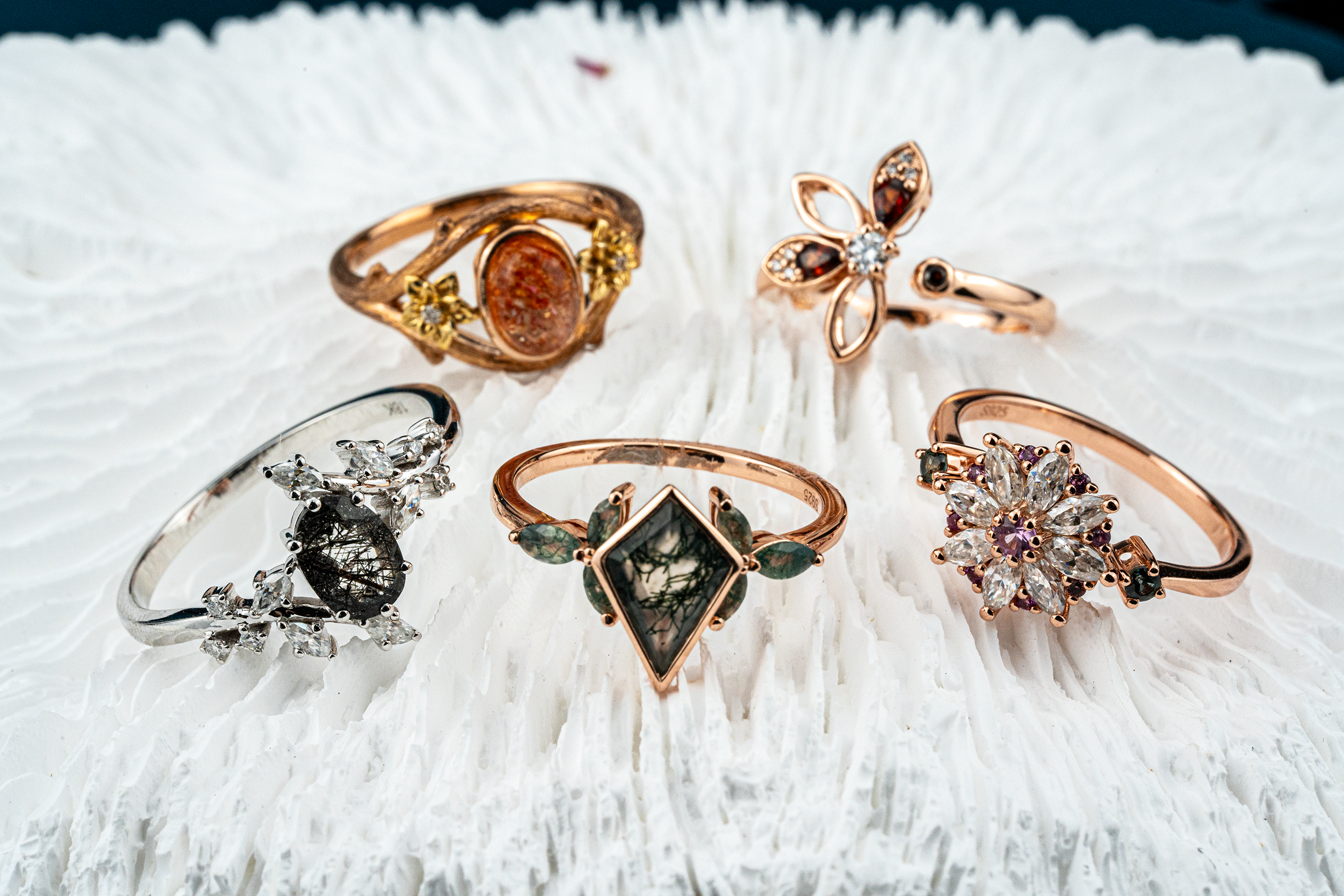
A sunstone engagement ring feels like captured sunlight: warm, luminous, and full of natural character. Instead of the icy brilliance of a colorless stone, sunstone offers shades of pale champagne, peach, apricot, orange, and copper. Some stones appear softly translucent, while others reveal a lively internal shimmer when they move through the light.
That individuality makes sunstone especially appealing to couples looking for an alternative engagement ring. It is expressive without feeling overly unconventional, and its warm palette pairs beautifully with real yellow, rose, white, or black-finished gold. However, sunstone is not as hard as diamond, sapphire, or moissanite, so choosing it well means understanding both its beauty and its care needs.
This guide explains what sunstone is, why it sparkles, what it symbolizes, how it performs in daily wear, and how to select a sunstone ring that fits your style and lifestyle.
What Is Sunstone?
Sunstone is a gemstone from the feldspar mineral group. Its appearance can range from nearly colorless or pale yellow to pink, peach, orange, red, and—in some exceptional material—green or blue-green. The exact color, transparency, and internal pattern vary from one stone to another.
The feature most associated with sunstone is aventurescence: a reflective, metallic-looking shimmer created when light meets tiny, flat inclusions inside the gem. Depending on the material, those reflective particles may be copper, hematite, or related minerals. Not every sunstone has the same amount of shimmer. Some show a subtle flash in only certain directions, while others have a bold, glittering field across the stone.
This variation is part of sunstone’s appeal. A natural sunstone should not be expected to look perfectly uniform. Its inclusions, zones of color, and changing response to light give it an individual identity.
Why Does Sunstone Sparkle?
Sunstone does not sparkle in exactly the same way as a diamond or moissanite. Faceted transparent gemstones return light from their polished facets, creating brilliance and flashes. Sunstone may show some of that facet reflection, but its signature glow comes from light reflecting off microscopic or eye-visible plate-like inclusions within the stone.
As the ring turns, these internal particles catch the light and produce a coppery or golden shimmer. Gemologists call this optical effect aventurescence; sunstone enthusiasts also use the term schiller. The result can look like fine metallic dust suspended inside warm glass.
When choosing a sunstone, view it in several lighting conditions and from more than one angle. Bright directional light will usually reveal aventurescence most clearly, while soft indoor light may emphasize the body color. Neither view is more “correct”—together they show how the gemstone will behave in real life.

Sunstone Ring Meaning and Symbolism
Sunstone is commonly associated in modern gemstone traditions with optimism, warmth, confidence, vitality, and joy. Its sunrise-like color also makes it a natural symbol of renewal and positive beginnings.
For an engagement ring, those ideas can feel especially appropriate. A sunstone ring may represent a relationship that brings light and warmth into everyday life, or a commitment to begin a new chapter with energy and openness.
Gemstone symbolism is cultural and personal rather than scientific, so there is no single meaning every wearer must follow. The most meaningful interpretation is the one a couple gives the ring themselves. Some choose sunstone for its joyful symbolism; others simply feel connected to its peach color and one-of-a-kind inclusions.
Is Sunstone Durable Enough for an Engagement Ring?
Sunstone generally measures about 6 to 6.5 on the Mohs hardness scale. This means it can be used in rings, but it scratches more readily than quartz, moissanite, sapphire, or diamond. Feldspar also requires care around hard knocks and sudden pressure.
So, can sunstone be an engagement ring? Yes—for a wearer who accepts mindful care. It is best suited to someone who is willing to remove the ring for workouts, gardening, household cleaning, heavy lifting, and other activities that could expose it to impact or abrasion.
Setting design matters as much as the stone itself. Protective prongs, a bezel or partial bezel, a lower profile, and a band with enough structure can reduce exposure. Very high, delicate settings may be less practical for an active lifestyle. Regular professional inspections are also useful because they can identify a loose prong before the stone is damaged or lost.
If maximum toughness and low-maintenance daily wear are your priorities, moissanite, sapphire, or diamond may be a better fit. If natural warmth and individual texture matter more—and you are comfortable taking the ring off for higher-risk activities—sunstone can be a beautiful personal choice.

How to Choose a Sunstone Engagement Ring
1. Choose the Color You Want to See Every Day
Sunstone is not limited to one orange shade. Pale champagne and peach stones feel subtle and romantic. Apricot and copper tones have a richer, earthier presence, while vivid red-orange material creates a stronger statement.
Look for a color that remains attractive in both daylight and normal indoor lighting. Product photography should help you understand the stone, but natural gemstones can look different as lighting changes. If the exact color is important, ask what degree of variation to expect before ordering.
2. Decide How Much Aventurescence You Prefer
More shimmer is not automatically better. A densely included stone may produce a dramatic copper flash but appear less transparent. A cleaner stone can look lighter and more luminous, with just a restrained glint.
Choose according to the mood you prefer:
-
Soft and romantic: pale body color, gentle translucency, fine scattered shimmer
-
Warm and organic: visible inclusions, peach or copper tone, moderate aventurescence
-
Bold and expressive: saturated color with a strong metallic flash
Because the inclusions are part of the gemstone’s natural appearance, compare individual stones rather than relying only on a generic grade.
3. Select a Shape That Supports the Design
Oval sunstone rings feel balanced and flattering, while pear and marquise shapes create a longer, more romantic silhouette. Round stones offer a classic look. Kite, hexagon, and elongated cuts bring out sunstone’s alternative character.
The shape also affects vulnerability. Pointed corners and tips require secure protection, particularly on pear, marquise, kite, and hexagonal stones. Ask whether the setting shields those areas with prongs or surrounding metal.
4. Match the Gold Color to the Stone
Sunstone changes personality with its setting:
-
Yellow gold intensifies golden, orange, and honey tones for a warm, sunlit look.
-
Rose gold complements peach and blush stones, creating a soft, romantic palette.
-
White gold adds cool contrast and can make a warm center stone appear brighter and more modern.
-
Black-finished gold creates dramatic contrast around orange or copper sunstone, ideal for an alternative design without changing the gem’s natural warmth.
GemifySpace rings are made in real 10K, 14K, and 18K gold. Beyond appearance, consider how the ring will be worn. Gold alloy and design construction both influence practical wear; the most suitable choice depends on the setting, band proportions, and wearer’s routine.
5. Consider the Setting and Wedding Band Together
A solitaire keeps attention on the sunstone’s color and inclusions. Small moissanite accents add brightness without covering the center. A halo creates more visual presence, while a nature-inspired leaf or floral setting reinforces the gemstone’s organic character.
If you plan to add a wedding band, check the engagement ring’s profile before purchasing. A low basket or wide center setting may prevent a straight band from sitting flush. A curved contour band or coordinated ring set can follow the sunstone setting more closely and create a deliberate, comfortable stack.
Sunstone vs. Moonstone: What Is the Difference?
Sunstone and moonstone both belong to the feldspar group, but their visual effects are distinct.
Moonstone is known for adularescence, a soft light that appears to float beneath the surface, often in white or blue. Sunstone is known for aventurescence, a livelier metallic shimmer created by reflective inclusions. Moonstone tends to feel cool, misty, and ethereal; sunstone feels warm, energetic, and glowing.
Both require more thoughtful care than harder bridal gemstones. The choice is primarily aesthetic: choose moonstone if you love a soft celestial glow, or sunstone if you prefer peach, orange, and copper warmth with visible internal sparkle.

Sunstone vs. Moissanite for an Engagement Ring
Moissanite and sunstone satisfy different priorities. Moissanite is much harder and produces strong brilliance and fire, making it a practical choice for frequent wear. Sunstone offers natural color, inclusions, and a quieter optical effect, but it needs more protection.
Choose moissanite if you want bright, crisp sparkle and easier everyday wear. Choose sunstone if the main attraction is warm color and an individual natural pattern. A sunstone center with restrained moissanite accents can also combine both effects: organic warmth at the center and bright contrast around it.
How to Care for a Sunstone Ring
Good habits will help preserve both the gemstone and its setting:
-
Remove the ring before exercise, cleaning, gardening, swimming, showering, or heavy manual work.
-
Avoid knocks against stone countertops, gym equipment, metal handles, and other hard surfaces.
-
Keep the ring away from household chemicals, bleach, chlorine, cosmetics, and hairspray.
-
Clean it gently with lukewarm water, mild soap, and a very soft brush or lint-free cloth.
-
Rinse carefully and pat dry; never scrub inclusions or the setting aggressively.
-
Avoid ultrasonic and steam cleaners unless a qualified jeweler who has inspected the specific stone and setting confirms they are safe.
-
Store the ring in its own lined compartment, away from harder gemstones that could scratch it.
-
Have the prongs and setting checked periodically, especially after any impact.
Never judge cleanliness by forcing more sparkle from the stone. Sunstone’s shimmer changes with angle and light; it is naturally different from the constant brilliance of moissanite.
Is a Sunstone Engagement Ring Right for You?
A sunstone engagement ring may be right for you if you want:
-
A peach, apricot, orange, or copper-colored center stone
-
Natural inclusions and a ring that does not look mass-produced
-
A warm alternative to a traditional colorless engagement ring
-
A gemstone with subtle movement and changing shimmer
-
A design that works beautifully with yellow or rose gold
-
A ring you are prepared to wear and store with care
It may be less suitable if you rarely remove your jewelry, work frequently with your hands, or need maximum scratch and impact resistance. Choosing honestly for your lifestyle is the best way to love the ring long after its first impression.
Find Your Sunstone Ring at GemifySpace
Sunstone turns natural variation into the focus of a ring. Its peach-to-copper color, reflective inclusions, and changing response to light make every stone feel personal. Paired with a thoughtful setting and real gold, it can become a warm, expressive symbol of commitment.
Explore the GemifySpace SunStone Ring collection to discover handcrafted designs in 10K, 14K, and 18K gold. Compare stone shapes, metal colors, and coordinated bands, then choose the combination that feels most like your story.
Frequently Asked Questions
Is sunstone a natural gemstone?
Yes. Sunstone is a feldspar gemstone. Natural examples vary in color, transparency, inclusions, and optical effect, so individual stones may not look identical.
What causes the sparkle in sunstone?
Its characteristic shimmer, called aventurescence, is caused by light reflecting from tiny plate-like inclusions inside the gemstone. The strength and direction of the effect vary by stone.
Can sunstone be worn every day?
It can be worn regularly with mindful care, but it is not a low-maintenance gemstone. At about 6 to 6.5 on the Mohs scale, it can scratch more easily than moissanite, sapphire, or diamond. Remove it for impact-prone or chemical-heavy activities.
What gold color looks best with sunstone?
Yellow gold emphasizes honey and orange tones, rose gold complements peach stones, white gold creates cooler contrast, and black-finished gold offers a bold alternative look. The best choice depends on the individual stone and wearer’s style.
Is sunstone the same as moonstone?
No. Both belong to the feldspar family, but moonstone is known for a floating glow called adularescence, while sunstone is associated with reflective aventurescence and warmer body colors.
How should I clean a sunstone engagement ring?
Use lukewarm water, mild soap, and a very soft brush or cloth. Rinse carefully and pat dry. Avoid harsh chemicals and do not use an ultrasonic or steam cleaner unless a jeweler has confirmed it is safe for that specific ring.
Are two sunstone rings ever exactly alike?
Natural variation makes exact matches unlikely. Color zoning, transparency, inclusions, and shimmer can differ, which is part of the gemstone’s individual appeal.


