
Article: Nature-Inspired Engagement Rings: Leaf, Floral & Botanical Styles Explained
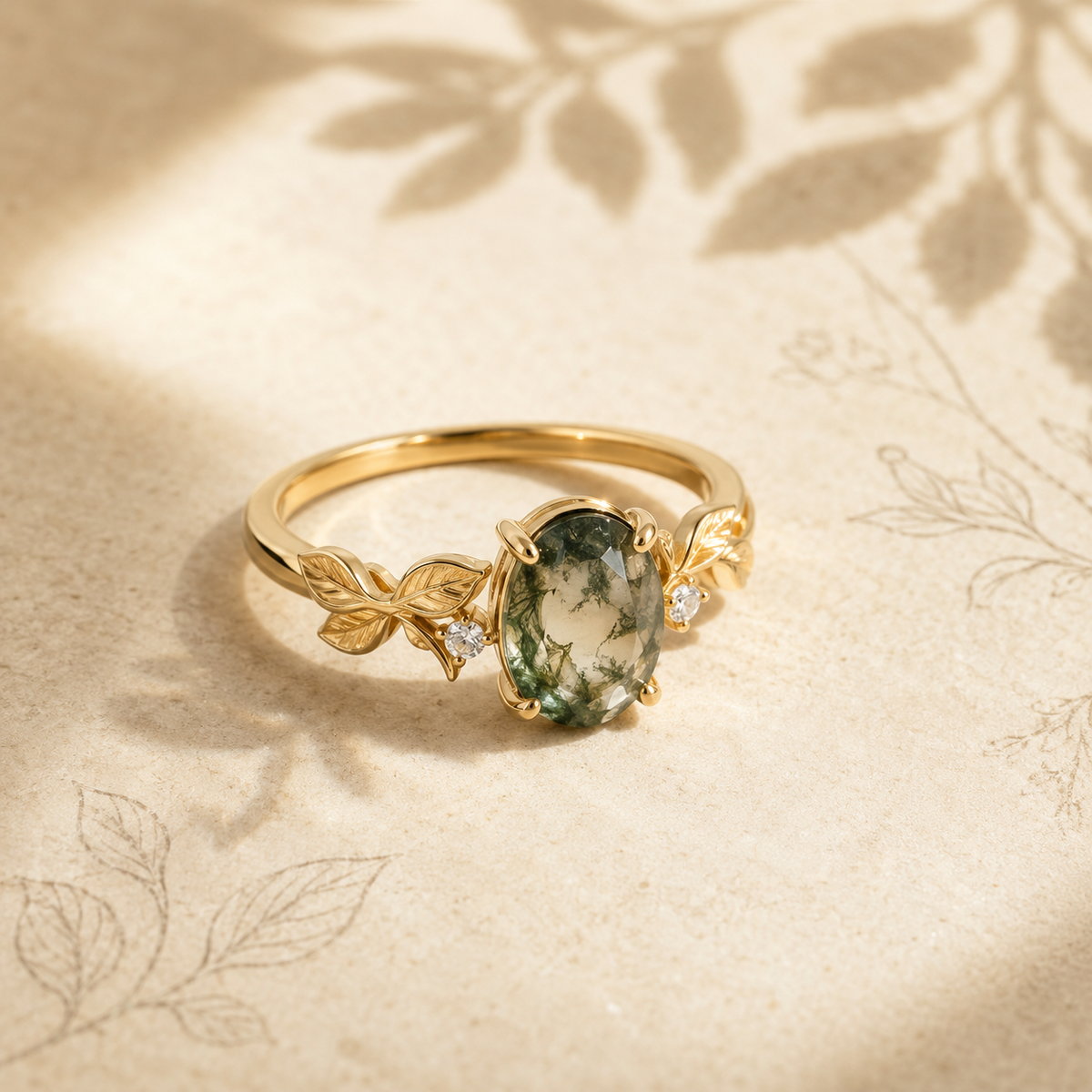
Nature-Inspired Engagement Rings: Leaf, Floral & Botanical Styles Explained
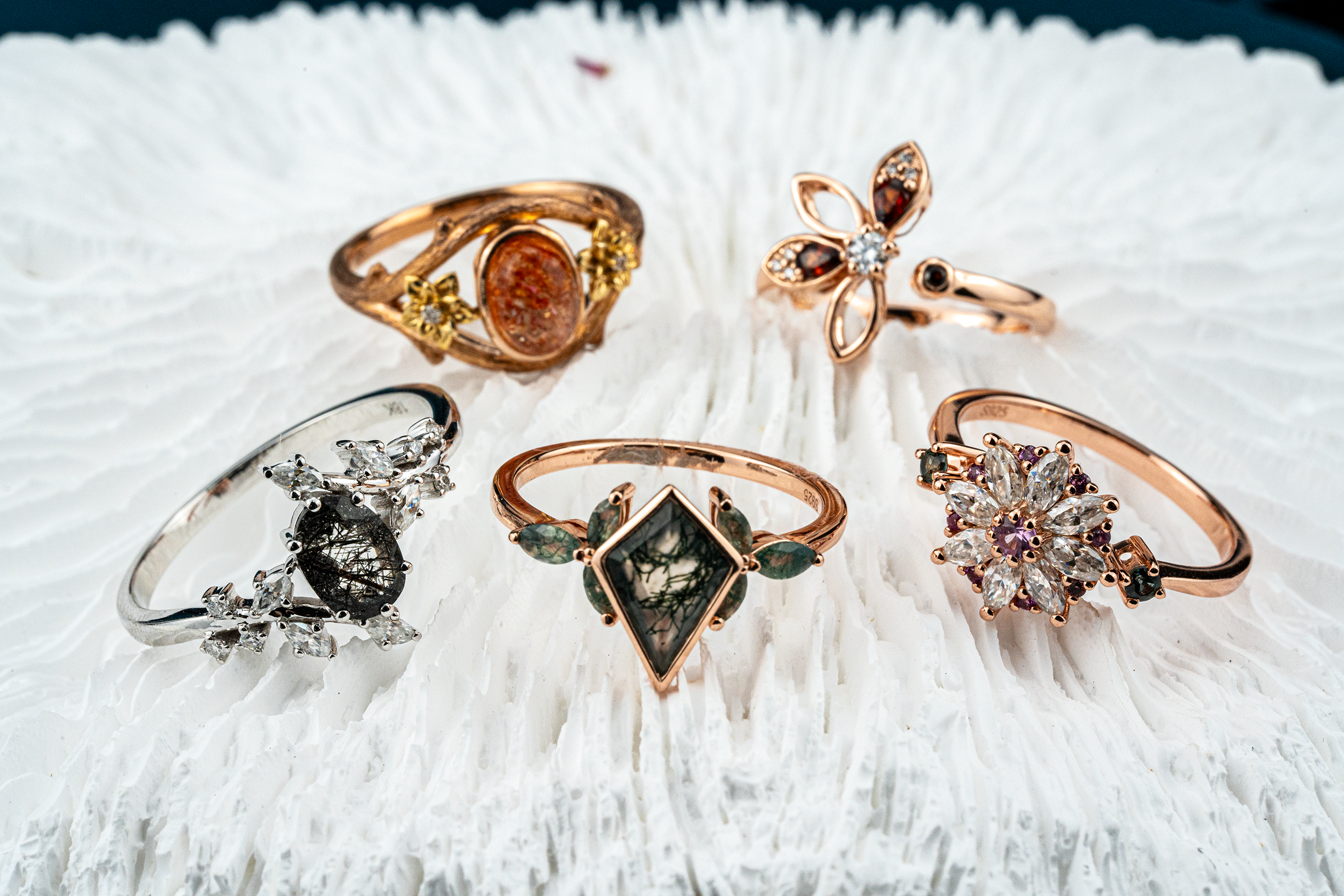
A nature-inspired engagement ring turns the forms of the natural world into wearable fine jewelry. Leaves may curve along the band, petals may frame the center stone, and slender vines may connect accent stones in a way that feels softer and more organic than a traditional straight setting.
The category is broad. Some botanical engagement rings are quiet and minimal, with one engraved leaf on each side of a solitaire. Others are intricate, combining a colorful gemstone with sculpted branches, floral halos or a fitted wedding band. What unites them is not one particular stone or motif, but a sense of movement, individuality and connection to nature.
For couples who want a ring with personal meaning, this design language offers more choices than a conventional style label might suggest. The right ring can feel romantic, woodland-inspired, modern, vintage or even slightly gothic depending on its gemstone, metal color and proportions.
This guide explains the principal nature-inspired ring styles, the gemstones and gold colors that work well with them, the practical details to examine before buying, and how to create a coordinated botanical bridal set.

What Is a Nature-Inspired Engagement Ring?
A nature-inspired engagement ring uses shapes, textures or compositions drawn from plants and landscapes. The reference may be obvious—such as a band formed from recognizable leaves—or subtle, such as an asymmetrical cluster that resembles naturally growing buds.
Common elements include:
-
Sculpted or engraved leaves
-
Petal-shaped halos and flower clusters
-
Twisting vine or branch-like bands
-
Marquise accent stones used as leaves
-
Organic textures rather than perfectly smooth metal
-
Asymmetrical arrangements inspired by natural growth
-
Gemstones with landscape-like inclusions or changing color
-
Curved wedding bands that echo stems, garlands or crowns
Nature-inspired does not have to mean rustic. Fine proportions, secure settings and polished real gold can make a botanical ring feel refined and timeless. A very detailed design may suit someone who loves romantic or vintage jewelry, while a clean solitaire with two small leaf shoulders can fit a more minimalist wardrobe.
Why Choose a Botanical Engagement Ring?
The strongest reason is personal expression. Botanical forms can represent growth, renewal, resilience, seasons, shared outdoor memories or simply an appreciation for natural beauty. These meanings are personal rather than fixed; a leaf ring can remind one wearer of a forest proposal and another of a family garden.
Nature-inspired designs are also especially compatible with colored gemstones. Traditional clear stones look beautiful in leaf and floral settings, but moss agate, alexandrite, moonstone, opal, sapphire and other colored centers can give the botanical metalwork a more distinctive character.
Another advantage is design flexibility. Organic lines can accommodate unusual stone shapes, create visual width with smaller accents and help a curved wedding band feel like part of one complete composition. The result can be highly individual without needing an excessively large center stone.
Leaf, Floral and Vine Rings: What Is the Difference?
These terms often overlap, but they describe different visual priorities.
Leaf Engagement Rings
Leaf engagement rings place foliage at the center of the design. The leaves may be sculpted in gold, engraved into the shoulders or represented by marquise-shaped accent stones. They tend to feel graceful and directional because the leaves guide the eye toward the center gemstone.
A symmetrical pair of leaves feels balanced and classic. An asymmetrical spray feels more organic and artistic. Leaf details work especially well with oval, pear, kite and marquise center stones because these elongated shapes repeat the pointed outline of a leaf.
Floral Engagement Rings
Floral engagement rings use petals, blossoms or flower-like clusters. A center stone can become the heart of the flower, surrounded by a petal halo, or small floral accents can sit along the band.
The mood depends on scale. Tiny petal details feel delicate and romantic; a full flower halo creates a stronger vintage or statement look. Floral designs are particularly well suited to round and oval centers, but an imaginative setting can turn almost any cut into a botanical composition.
Vine and Branch-Inspired Rings
Vine rings emphasize flowing lines. Their bands may twist, split or weave around accent stones instead of following one straight path. They often look lighter than a full floral ring and can feel either modern or whimsical.
Because twisting bands create more edges and junctions, craftsmanship matters. The design should look fluid without becoming thin at structural points, and small accents should be protected by secure prongs or surrounding metal.
Best Gemstones for Nature-Inspired Engagement Rings
The setting establishes the botanical structure, but the center stone determines much of the ring’s color, light and daily-wear character.
Moss Agate
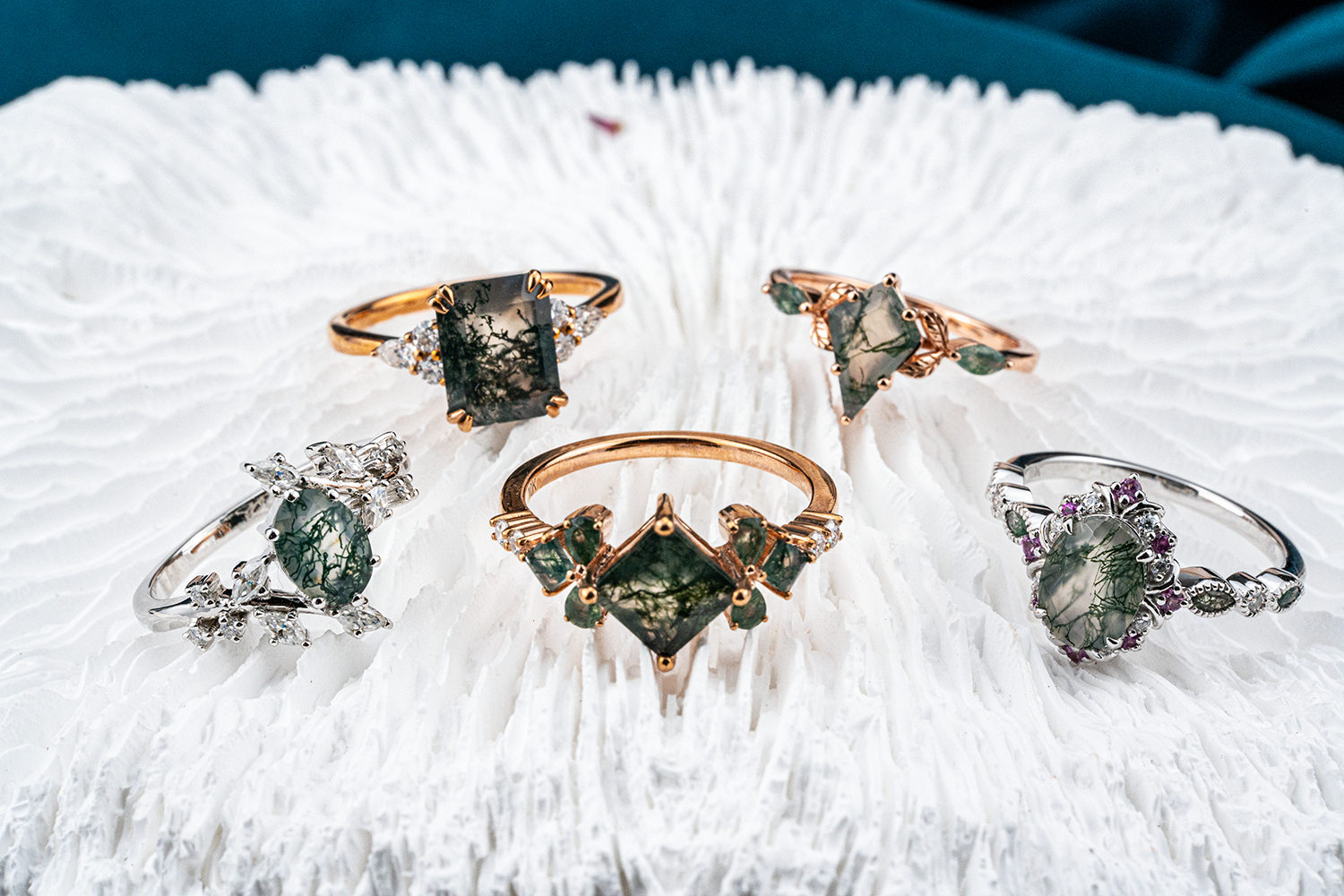
Moss agate is an intuitive match for nature-inspired jewelry. Its green inclusions can resemble moss, branches or miniature landscapes, and every pattern is different. It is especially effective in leaf settings and in kite, oval, pear or hexagonal cuts.
Its individuality is also the reason to review the stone carefully. One moss agate may be pale and airy; another may have dense, dark inclusions. Choose the pattern you actually want rather than expecting every stone to match one sample photograph exactly.
Moss agate requires more mindful care than harder bridal gemstones. A protective setting and good wear habits are important if it will be worn regularly.
Alexandrite
Alexandrite adds a more mysterious botanical mood. Its appearance can move between green, teal, blue, purple or red-purple depending on the material and lighting. In a leaf or floral ring, that changeability can evoke a garden shifting from daylight to evening.
Rose gold creates warmth around purple tones, while yellow gold can emphasize green and teal. White gold provides clean contrast. Because color-change appearance depends strongly on light, view product images from more than one lighting condition when possible.
Moonstone
Moonstone gives floral and vine rings a soft, luminous quality. Its gentle sheen suits petal halos, celestial-botanical motifs and romantic rose-gold settings. It is not a gemstone for careless wear, however, so a low profile and protective design are sensible choices.
Moissanite and Lab-Grown Diamond
Clear moissanite and lab-grown diamond are strong options when brilliance and frequent wear are priorities. Their crisp light return creates contrast against sculpted leaf or floral metalwork, allowing the botanical shape to remain visible rather than blending into a colored center.
They also work effectively as accent stones around moss agate, alexandrite and other colored gems. Small, well-proportioned accents can outline leaves or petals without competing with the center.
Opal, Sapphire and Other Colored Stones
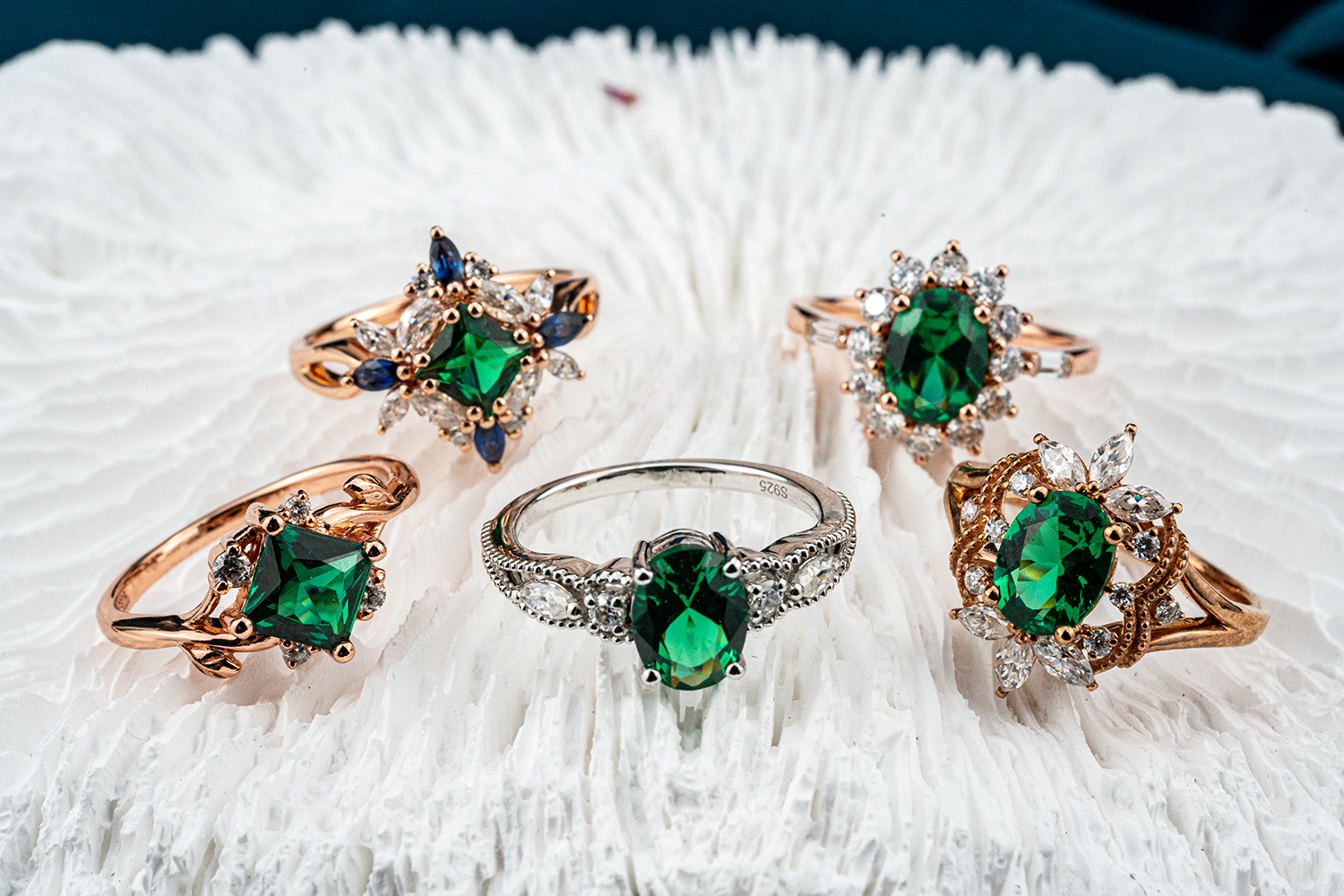
Opal can create an ethereal garden effect, while sapphire brings saturated color and strong everyday potential. Garnet, amethyst, emerald and tourmaline can support different seasonal palettes. Before choosing, consider the specific gemstone’s durability, treatment, cleaning requirements and compatibility with the intended setting.

How Center-Stone Shape Changes the Botanical Look
Shape is not only a matter of preference; it changes how the surrounding leaves and petals flow.
-
Oval: soft, balanced and versatile; easy to frame with symmetrical leaves or a curved band.
-
Pear: naturally resembles a leaf or drop; works well with directional vines and pointed contour bands.
-
Kite: architectural but still organic when paired with leaves; ideal for a modern alternative ring.
-
Marquise: echoes the shape of foliage and visually lengthens the finger; pointed tips need protection.
-
Round: classic and centered; particularly effective as the heart of a floral halo.
-
Hexagon: combines natural gemstone texture with clear geometry; useful for an organic-modern contrast.
Pay attention to how the prongs interact with the motif. A prong should secure the stone, not appear to be a decorative leaf while leaving a corner exposed. Pointed cuts should have protection at vulnerable tips.
Choosing Yellow, Rose, White or Black Gold
Metal color can move the same botanical design into a very different style.
Yellow Gold
Yellow gold feels warm and natural. It pairs especially well with green moss agate, emerald, warm sapphire, garnet and clear stones. Against ivory or green, polished yellow gold can feel like late-summer light without looking overly rustic.
Rose Gold
Rose gold softens leaf and floral details. It is a romantic partner for moonstone, alexandrite, opal, peach stones and purple gemstones. A low-saturation rose tone is especially refined when the metalwork is intricate.
White Gold
White gold gives botanical shapes a cooler, cleaner outline. It works well for moissanite, lab-grown diamond, blue sapphire and modern vine settings. The contrast can make detailed engraving easier to see without adding more color.
Black-Finished Gold
Black-finished gold turns leaves, thorns and branches into a darker romantic statement. It pairs strongly with alexandrite, black onyx, salt-and-pepper diamond, black rutilated quartz and bright moissanite accents. The underlying ring is still real gold, but the finish may require maintenance over time; customers should follow the jeweler’s care guidance for refinishing.
GemifySpace offers designs in real 10K, 14K and 18K gold. The best choice should consider not only color but also the design’s proportions, lifestyle and expected wear.
Are Nature-Inspired Rings Practical for Everyday Wear?
They can be, but visual complexity should be evaluated alongside comfort and durability.
Before buying, examine these details:
Profile Height
A high center setting allows more light and may provide room for a straight wedding band, but it is also more exposed to knocks. A lower profile can feel comfortable and protected, although it may require a curved band.
Snag Points
Leaves, branches and pointed accents should have smooth transitions and finished edges. Decorative tips that stand far away from the finger are more likely to catch on knitwear, hair or gloves. A photograph from the side can reveal details that are not obvious from the front.
Band Structure
A split or twisting vine band should remain substantial where its lines separate and rejoin. Delicate-looking does not need to mean structurally weak. Look for balanced construction around the center setting.
Stone Security
Decorative metal should not replace functional stone security. Check that the center and accents have appropriate prongs, bezels or protective edges. Have the setting inspected periodically, particularly after impact.
Lifestyle Match
Even a well-made ring benefits from being removed for heavy lifting, exercise, gardening, cleaning and activities involving chemicals or hard impact. Softer or more sensitive gemstones require additional care.

How to Match a Nature-Inspired Wedding Band
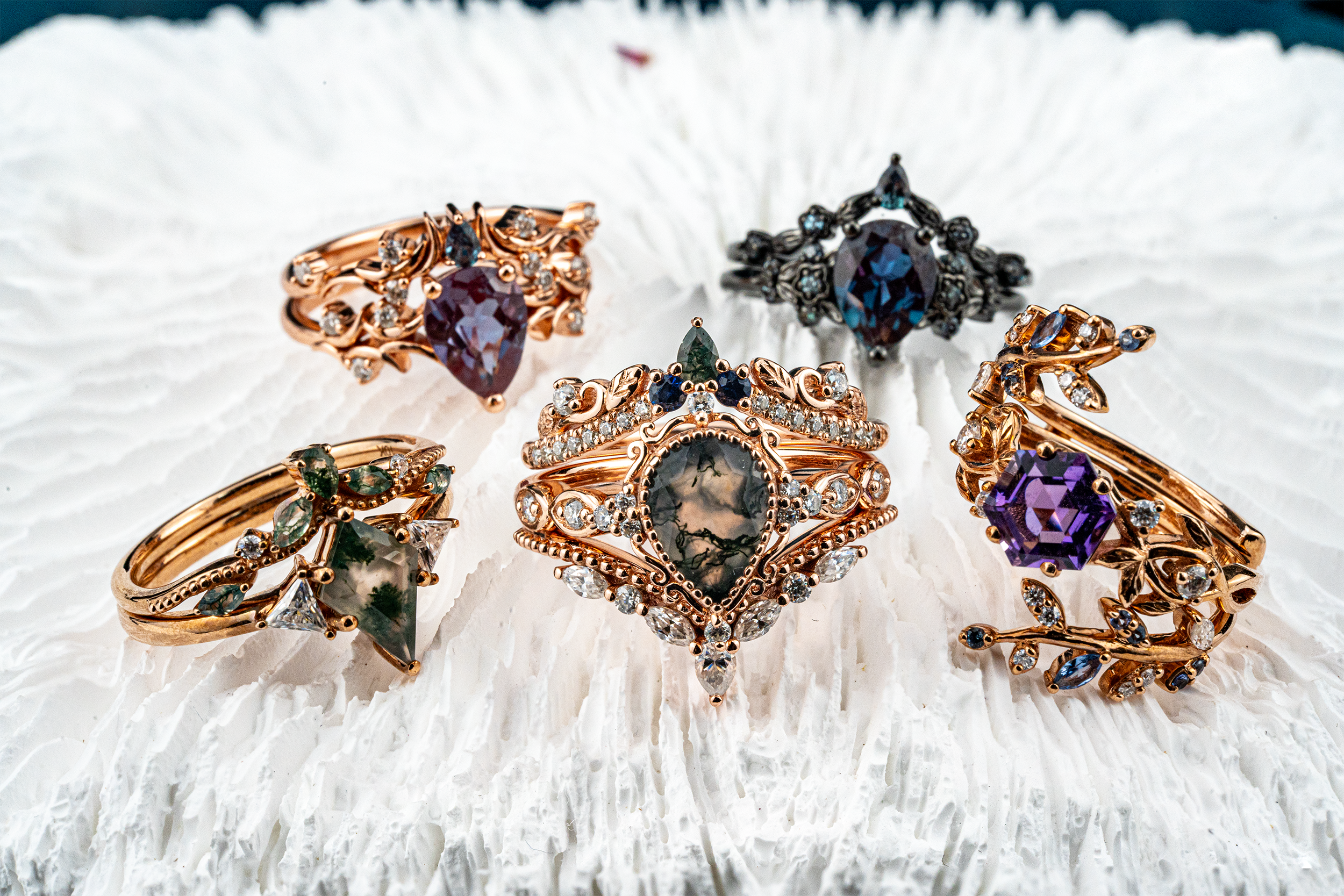
A botanical engagement ring often has a wider center setting or low basket, so a straight wedding band may leave a gap. That is not automatically a problem—some people enjoy visible space—but a curved or contour band can create a more connected silhouette.
Consider four approaches:
-
Fitted curved band: follows the center setting closely and is often the easiest way to create a seamless bridal set.
-
Leaf garland band: repeats the engagement ring’s foliage in a lighter form.
-
Simple polished band: balances an intricate engagement ring without adding visual competition.
-
Pointed or V-shaped band: complements pear, marquise and kite centers while adding directional structure.
Repeat one or two elements rather than every detail. Matching metal color plus one leaf motif may look more refined than duplicating the entire engagement ring. Also check height: accent stones on one ring should not rub against the prongs or gallery of the other.
Buying a coordinated ring set is useful when exact fit matters because the engagement ring and wedding band are designed together. If purchasing separately, compare measurements and side views rather than relying only on a top-down image.

How to Care for a Botanical Gold Ring
Detailed metalwork and small accent stones can collect lotion, soap and dust. Gentle, regular care keeps the design readable.
-
Remove the ring before cleaning, exercise, gardening, swimming and heavy manual work.
-
Put jewelry on after lotions, perfume, sunscreen and hairspray have dried.
-
For gemstones that tolerate water, use lukewarm water, mild soap and a very soft brush around the underside of the setting.
-
Rinse carefully and pat dry with a lint-free cloth.
-
Do not use an ultrasonic or steam cleaner unless a qualified jeweler confirms it is safe for the specific gemstone and setting.
-
Store the ring separately from harder jewelry to reduce scratches.
-
Inspect small leaf-set accents and center-stone prongs periodically.
-
Follow specific care instructions for black finishes, opal, pearl, moonstone and other sensitive materials.
Cleaning advice should always follow the least tolerant material in the ring. A gold setting may withstand a method that its gemstone cannot.
How to Choose the Right Nature-Inspired Ring
Use this short decision process:
Begin With Personal Style
Choose leaf details for graceful direction, floral motifs for romantic softness, or vines for fluid movement. Decide whether the wearer prefers symmetry or a more naturally irregular composition.
Match the Gemstone to Daily Life
Consider color and symbolism, but also how often the ring will be worn and how carefully it will be handled. A spectacular gemstone is only the right choice if its care needs fit the wearer.
Check More Than the Front View
Review side, three-quarter and on-hand photographs. Look at height, prong placement, band thickness, potential snag points and real scale on a finger.
Plan the Wedding Band Early
If a flush stack is important, choose a matching set or confirm the engagement ring’s dimensions before buying a separate band.
Keep the Meaning Personal
A nature-inspired ring does not need a universal symbolic explanation. The strongest choice is a motif, stone or color connected to the wearer’s own memories and style.
Explore Nature-Inspired Rings at GemifySpace
Nature-inspired engagement rings can be delicate or bold, colorful or clear, symmetrical or free-flowing. What makes them enduring is the relationship between beauty and intention: a leaf that directs the eye, a gemstone pattern that feels like a landscape, or a curved wedding band that completes the composition.
Explore the GemifySpace Nature-Inspired Rings collection to compare handcrafted leaf, floral and botanical designs in real 10K, 14K and 18K gold. For more focused styles, browse Floral Rings, Moss Agate Rings and Bridal Ring Sets.
Frequently Asked Questions
What is a nature-inspired engagement ring?
It is an engagement ring that uses natural forms such as leaves, petals, vines, branches or organic textures. The motif may be sculpted in gold, created with accent stones or expressed through the center gemstone itself.
Are leaf engagement rings suitable for everyday wear?
They can be when the setting is secure, edges are smoothly finished and the design suits the wearer’s lifestyle. Check profile height, exposed points, band construction and gemstone durability before purchasing.
Which gemstone looks best in a botanical ring?
There is no single best choice. Moss agate creates an earthy landscape effect, alexandrite adds changing color, moonstone feels soft and luminous, and moissanite or lab-grown diamond offers clear brilliance. Choose according to appearance, durability and care needs.
Do nature-inspired rings have to use green gemstones?
No. Clear, blue, purple, peach, black and multicolored gemstones all work with leaf and floral settings. Metal color and motif can create a botanical identity even with a colorless center.
What wedding band works with a leaf engagement ring?
A curved leaf band can follow a wide or low center setting, while a simple polished band can balance an intricate ring. Pear, kite and marquise centers may also pair well with pointed or V-shaped bands.
Are floral rings too trendy for an engagement ring?
Floral jewelry has a long design history, but individual motifs move in and out of fashion. A refined floral ring chosen for personal meaning can remain wearable beyond a seasonal trend. Proportion and craftsmanship matter more than novelty alone.
How do I clean a nature-inspired ring?
Follow the care needs of its most sensitive gemstone. For many rings, mild soap, lukewarm water and a soft brush are appropriate, but ultrasonic and steam cleaning may not be safe for every gem. Ask a jeweler when uncertain.
Can I customize the gemstone or gold color?
Many GemifySpace designs offer choices in gemstone and real 10K, 14K or 18K gold colors. Available options depend on the design, setting and stone, so review the individual product page before ordering.

