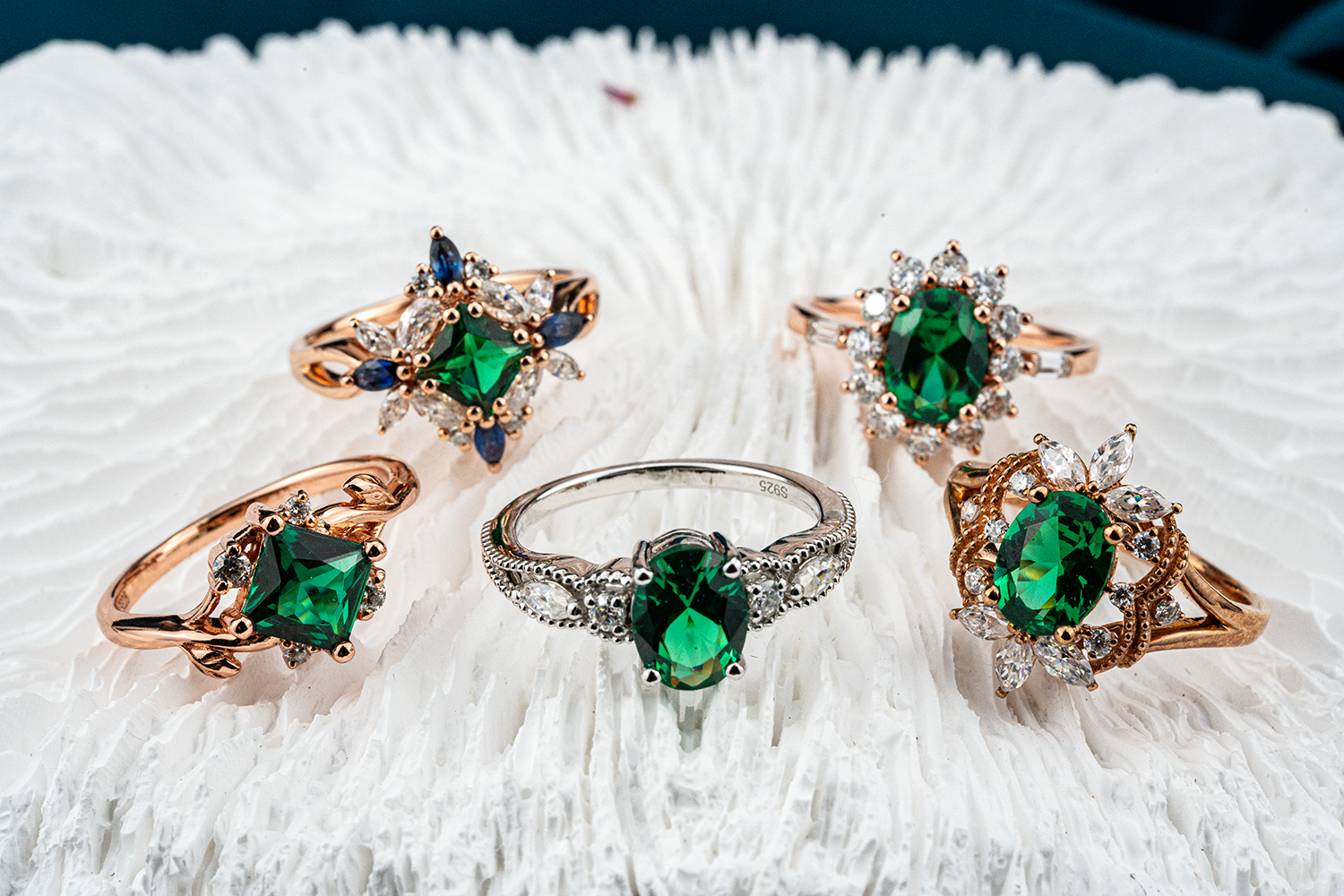
Article: Nature-Inspired Wedding Bands: Leaf, Vine and Woodland Designs
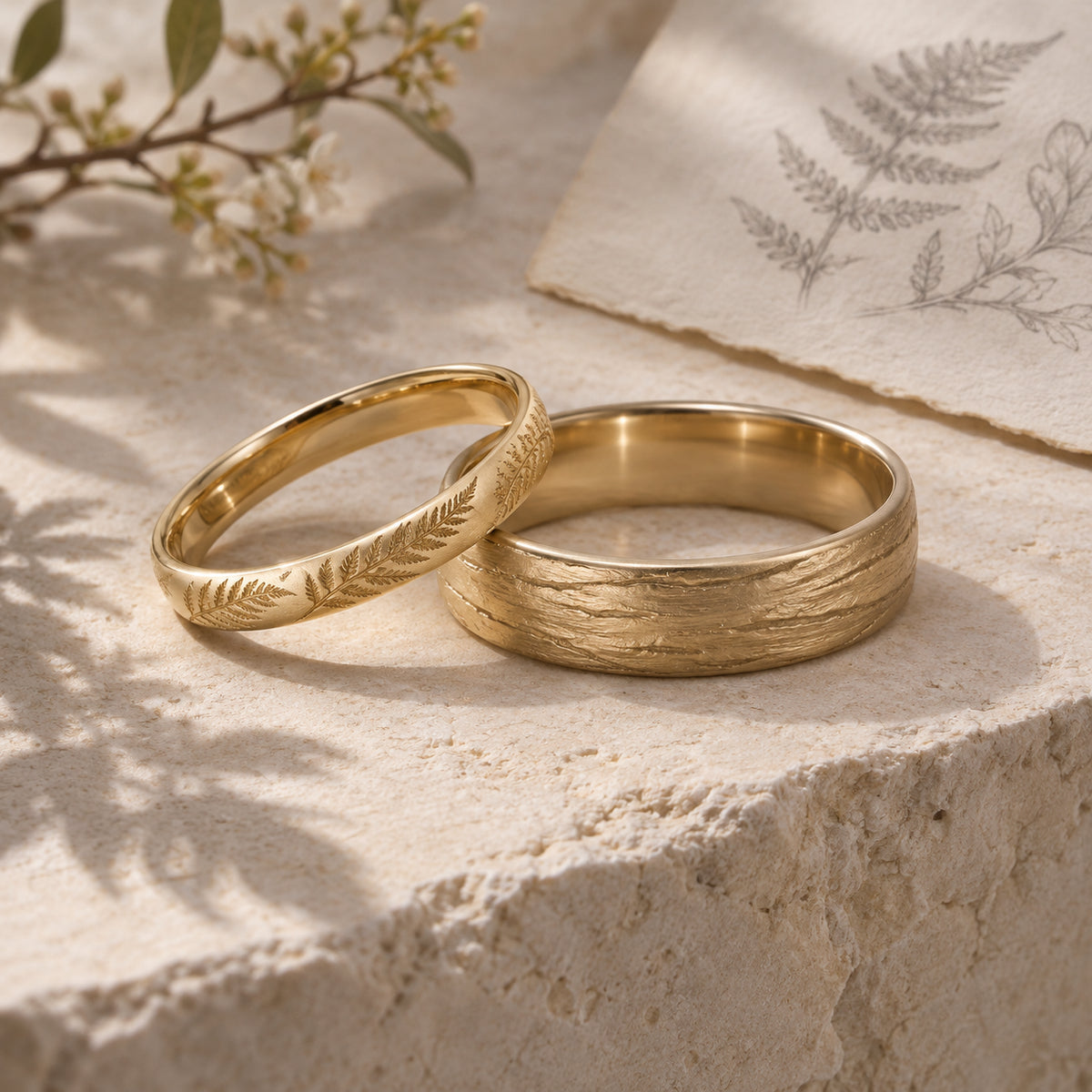
Nature-Inspired Wedding Bands: Leaf, Vine and Woodland Designs
A wedding band is often the ring you wear when everything else comes off. For someone who loves gardens, woodland walks or the quiet detail of a fern, a nature-inspired wedding band can hold that connection without needing a large center stone. The question is how much of the natural world you want to see in its shape: a fine engraved leaf, a winding vine, or a textured surface that suggests bark.
Start by looking at the band on its own. Then consider whether it will sit beside an engagement ring. Those two views can lead to different choices, particularly when leaves project beyond the edge or a curve has been designed around another setting.

Choose the motif before choosing the metal color
Nature-inspired wedding bands cover more than one style. A botanical pattern cut into a conventional band has a different outline from a ring built from raised leaves. Even when both are called a leaf wedding band, their appearance and feel can be quite different.
Engraved leaves: detail within a simple outline
In an engraved design, the pattern sits within the surface of the band. From a distance, you may first notice a simple gold ring; the leaves become clearer up close. This can work well if you want a recognizable plant motif without a strongly sculpted edge.
Ask where the engraving stops. A pattern across the top leaves a quieter underside, while a continuous design follows the ring around the finger. That distinction matters if the ring turns during wear, and it is worth discussing before any future resizing. Do not assume that a continuous pattern can be altered without affecting its arrangement.
Leaf and vine forms: movement in the silhouette
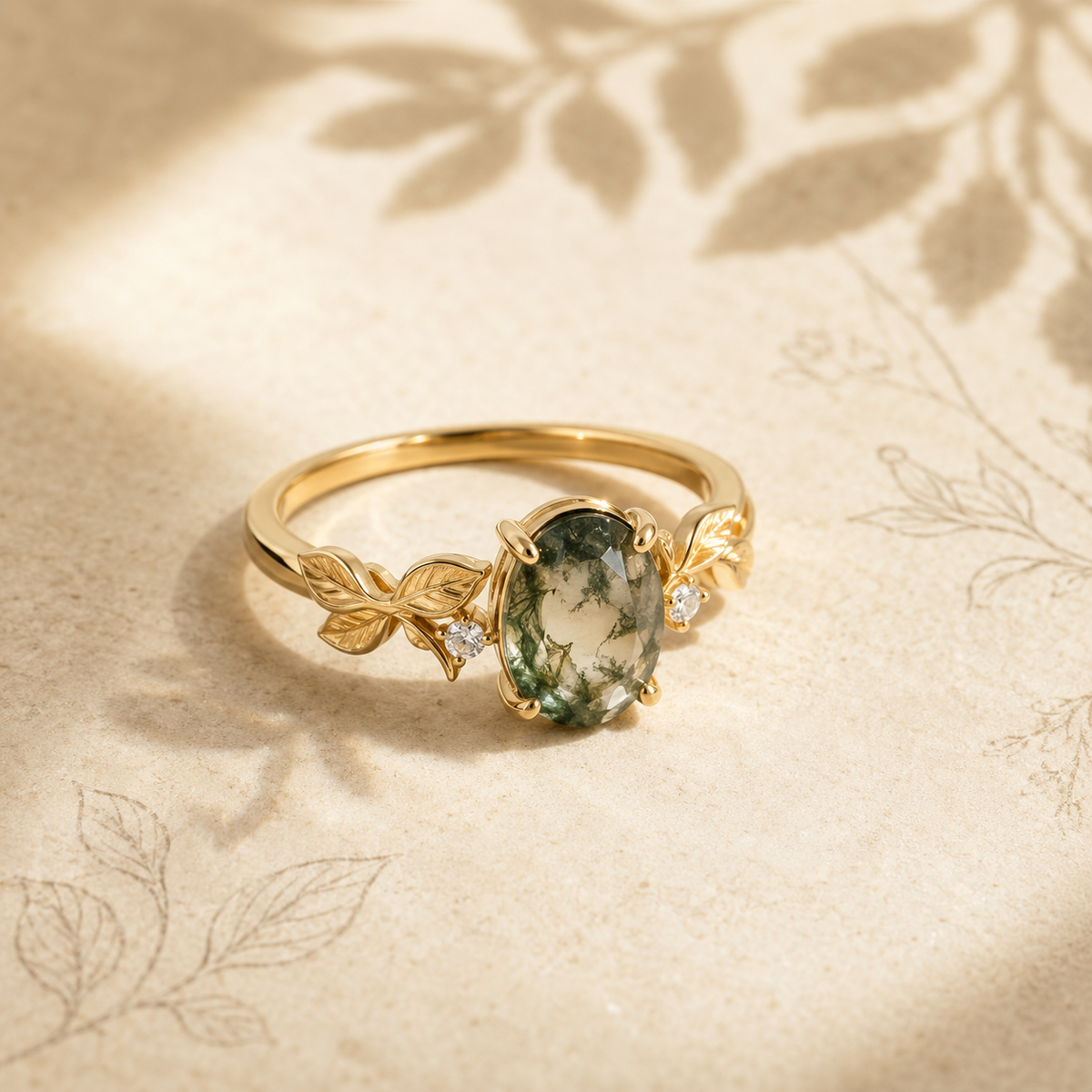
A sculpted leaf band carries the botanical idea into the outline itself. Individual leaves may overlap, while a vine wedding band may use a winding line rather than a straight shank. Look at the gaps, leaf tips and transitions between the decorative top and the underside.
For a restrained look, choose a feature you can identify without needing many competing details. One sweep of leaves can feel more deliberate than a combination of leaves, flowers, twists and a broad row of accents. A smooth-looking top photograph does not tell you how raised edges will feel against neighboring fingers, so request another angle.
Woodland textures: a less literal reference
Bark-like lines, branch textures and irregular satin surfaces can suggest nature without depicting a particular plant. These designs are useful when one partner likes botanical jewelry and the other prefers a broader, simpler band. The rings can share a texture or metal color while retaining different widths and outlines.

Will you wear the wedding band alone?
Picture an ordinary day when you leave the engagement ring at home. Does the wedding band still look complete to you? A straight engraved band often reads as a self-contained design. A deep contour may look more directional, with an opening that was intended to frame a center stone. Neither is wrong, but you should enjoy that outline when it is the only ring on your hand.
Check the widest point, not just the width of the underside. Leaves that spread across the top can occupy more room than the stated shank width suggests. Ask for both measurements if the listing gives only one. A narrow band can also have a tall decorative section; width and height are separate questions.
For fit, use the intended finger and the relevant sizing system. A broad band or a stack may feel different from a slim ring in the same nominal size. Ask for advice based on the actual design rather than automatically ordering a larger size.

Pair a leaf wedding band with an engagement ring
When pairing two rings, the botanical motif is only part of the match. First find where they would touch. A projecting center, low basket or leaf-shaped shoulder may prevent a straight band from sitting close. Forcing a snug-looking arrangement can put pressure on details that were not designed to support another ring.
Compare the pair from above and from the side. A curved band needs enough depth and width around the engagement ring, but its height matters too. If you already own the engagement ring, provide its measurements and clear side photographs when asking about a match. Our curved wedding band guide explains the fitting questions in more detail.
You do not need to repeat every feature. With an elaborate floral engagement ring, an engraved band may provide a quieter companion. With a plain solitaire, raised leaves can become the botanical focal point. A deliberate gap can also work better than an arrangement in which the rings press against each other.

Use gold color to connect the pieces
Yellow, rose and white gold create different visual relationships with a botanical pattern. Rather than choosing from a color label alone, compare photographs of the actual finish. A polished edge and a satin leaf can reflect light differently even when they are part of the same ring.
If you like a leaf wedding band in white gold, ask about the specific alloy and any surface finish. If you prefer black-finished gold, include maintenance and refinishing in the discussion. A dark surface can emphasize an engraved pattern, but it should not be treated as permanently immune to friction.
Gold karat and color are different decisions. Choose from the options confirmed for the exact design, and ask about alloy composition if a known metal sensitivity affects your choice. Appearance alone cannot establish the material.
Matching nature-inspired wedding rings need not be identical
Two people can share a design idea without wearing the same ring. One may prefer a slim fern engraving, the other a broader woodland texture. A repeated leaf shape, a similar finish or the same metal color can connect the pair while leaving room for different hands and preferences.
Assess each ring individually for width, profile and size. If one includes small stones, confirm their identity separately from the other ring's materials. Then check the order description: a photograph of two bands does not necessarily mean both are included in the displayed price.
Browse matching couple rings with one shared feature in mind. This makes it easier to compare pairs without assuming that matching means identical dimensions.
Check the small details before ordering
- Pattern placement: Is the decoration on the top only, or does it continue around the band?
- Dimensions: What are the widest point, underside width and height of any raised detail?
- Comfort: Are leaf tips, joins and side edges suitable for the way you use your hands?
- Pairing: Where will the wedding band touch the engagement ring, and is there adequate clearance?
- Materials: Which gold karat, finish and accent stones are included in your selected option?
- Future adjustments: Can the design be resized, and how might that affect a continuous pattern or engraving?
For ongoing care, follow instructions for the actual metal, finish and any stones. Remove the ring for heavy or abrasive work, and ask a jeweler to inspect a loose accent, bent detail or newly catching edge. GIA's jewelry care guidance provides a useful general reference; the maker's advice should address your particular piece.
Find the detail you want to keep looking at
Before choosing, compare your two favorites at normal hand distance. If you mostly notice a clean band and enjoy discovering the engraving up close, a surface pattern may be enough. If you would miss the movement of the leaves around the finger, look more closely at sculpted forms. If you want the reference to remain subtle, a woodland texture may suit you.
Explore GemifySpace wedding bands, then confirm the dimensions and materials of the design you prefer. The most useful choice is a ring whose botanical detail still appeals when it is worn alone, beside another ring, and in the light of an ordinary day.
The images in this article are AI-generated editorial illustrations of design ideas, not photographs of specific products for sale. Refer to individual product listings for available designs, materials and dimensions.