

Gemstone Shapes and Colors: How to Compare Rings
Gemstones offer more than a choice of colors. A clear faceted stone, a glowing moonstone and a patterned moss agate interact with light in different ways. Identifying which effect you enjoy makes it easier to compare rings without being distracted by a long list of gemstone names.


Start with the way the stone looks
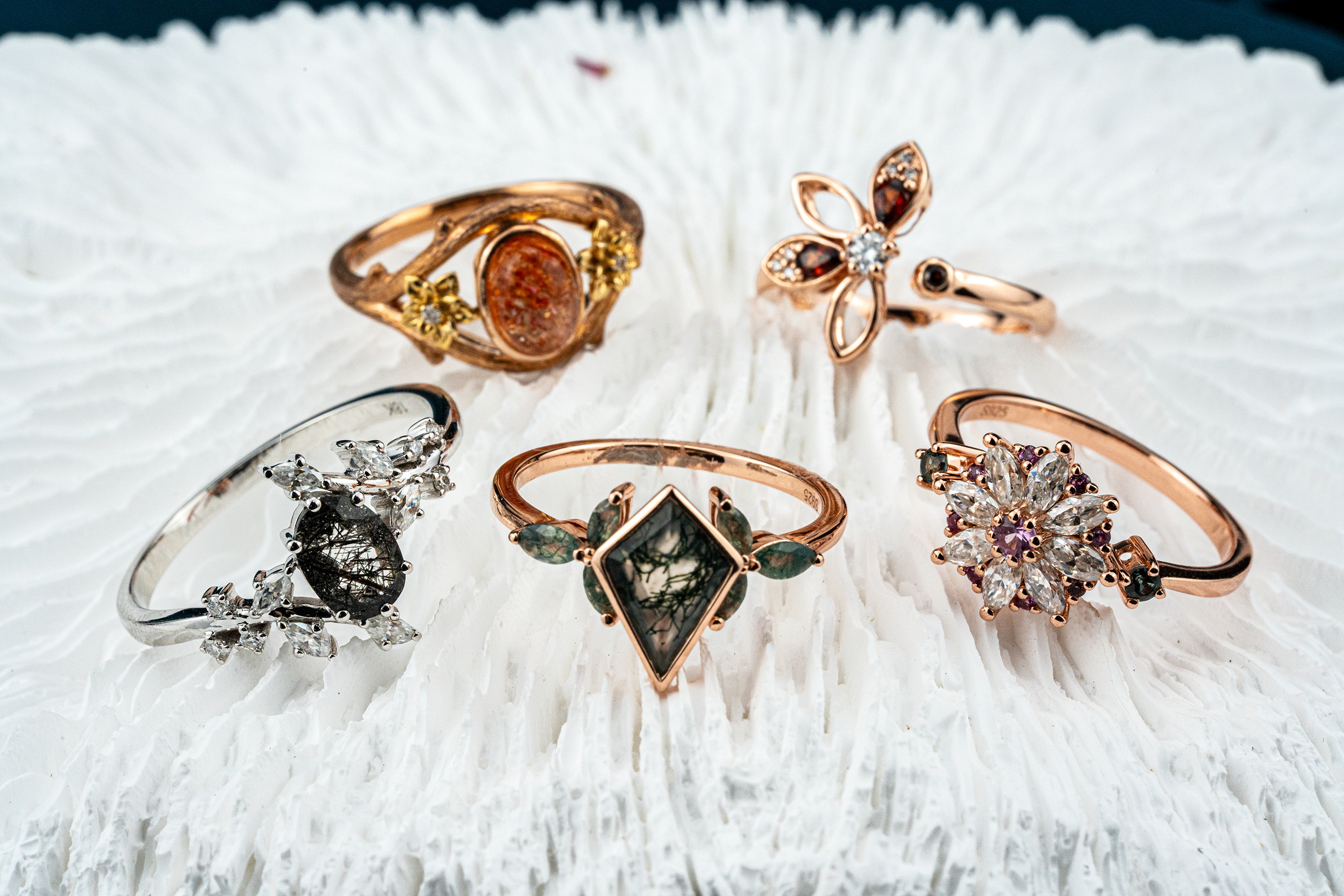
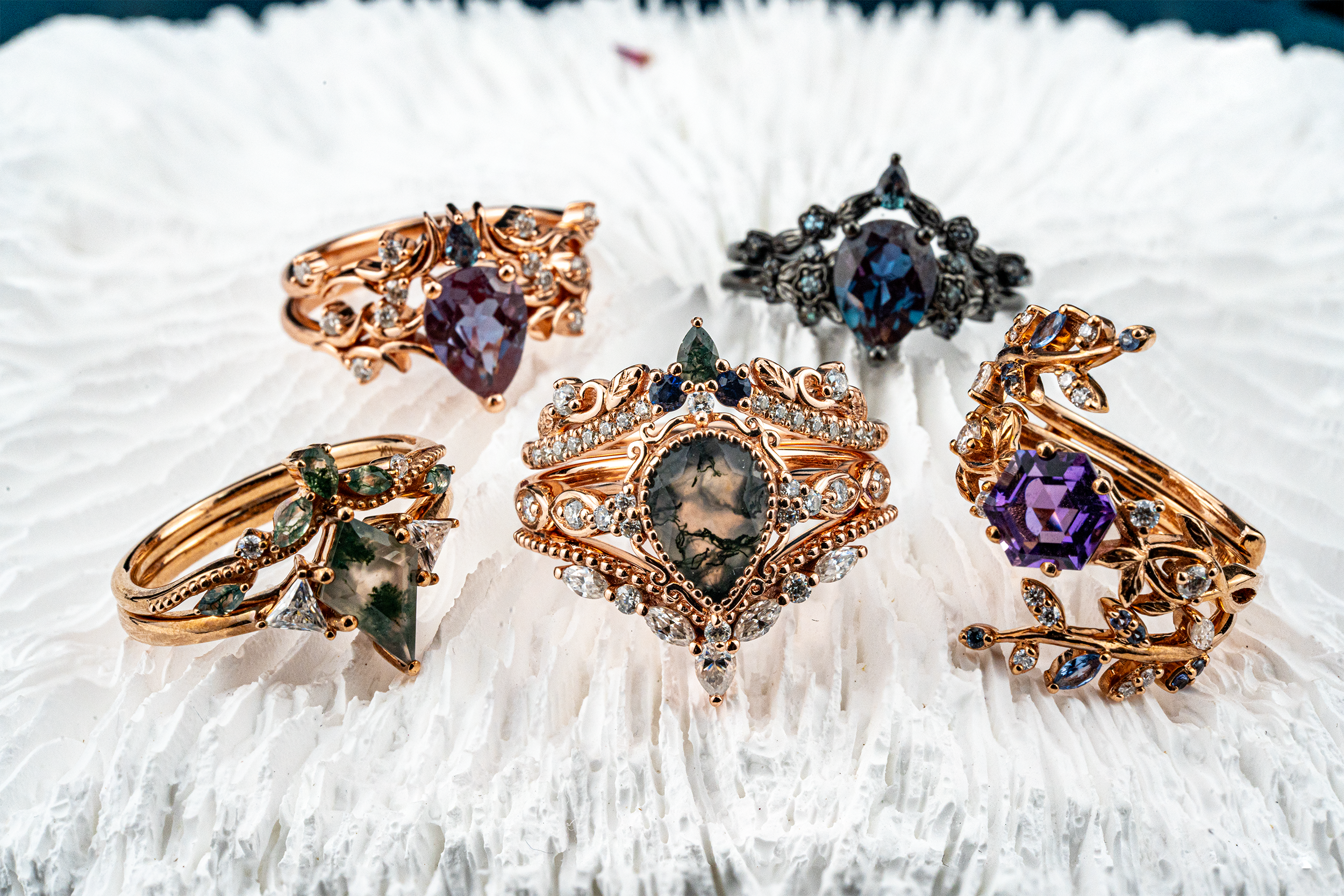
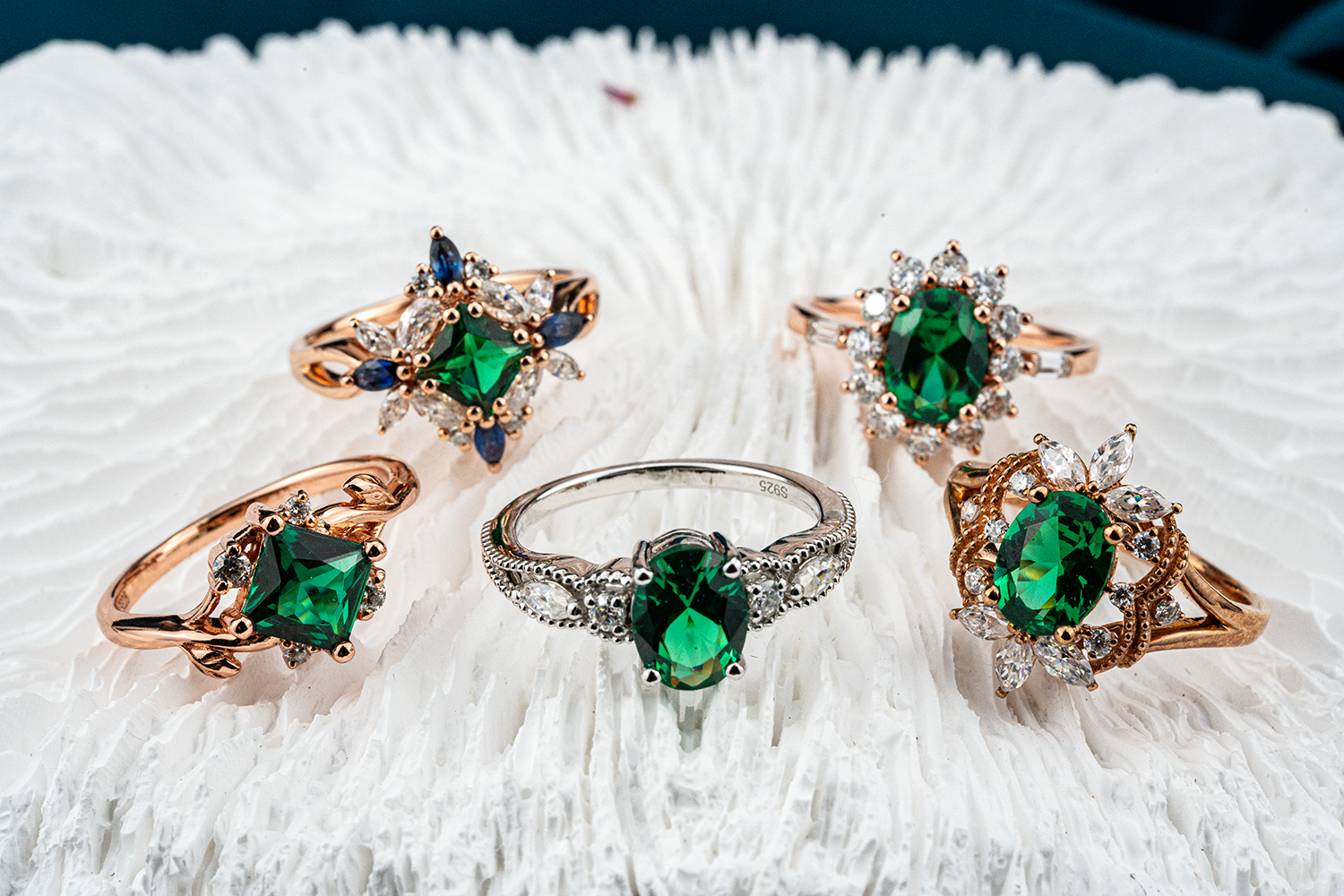
Diamond and moissanite are often chosen for brilliance, but they are different materials. Colored faceted stones such as sapphire, ruby and amethyst make hue an important part of the design. Pearl has a softer luster, while moonstone's moving sheen can change as you turn your hand.
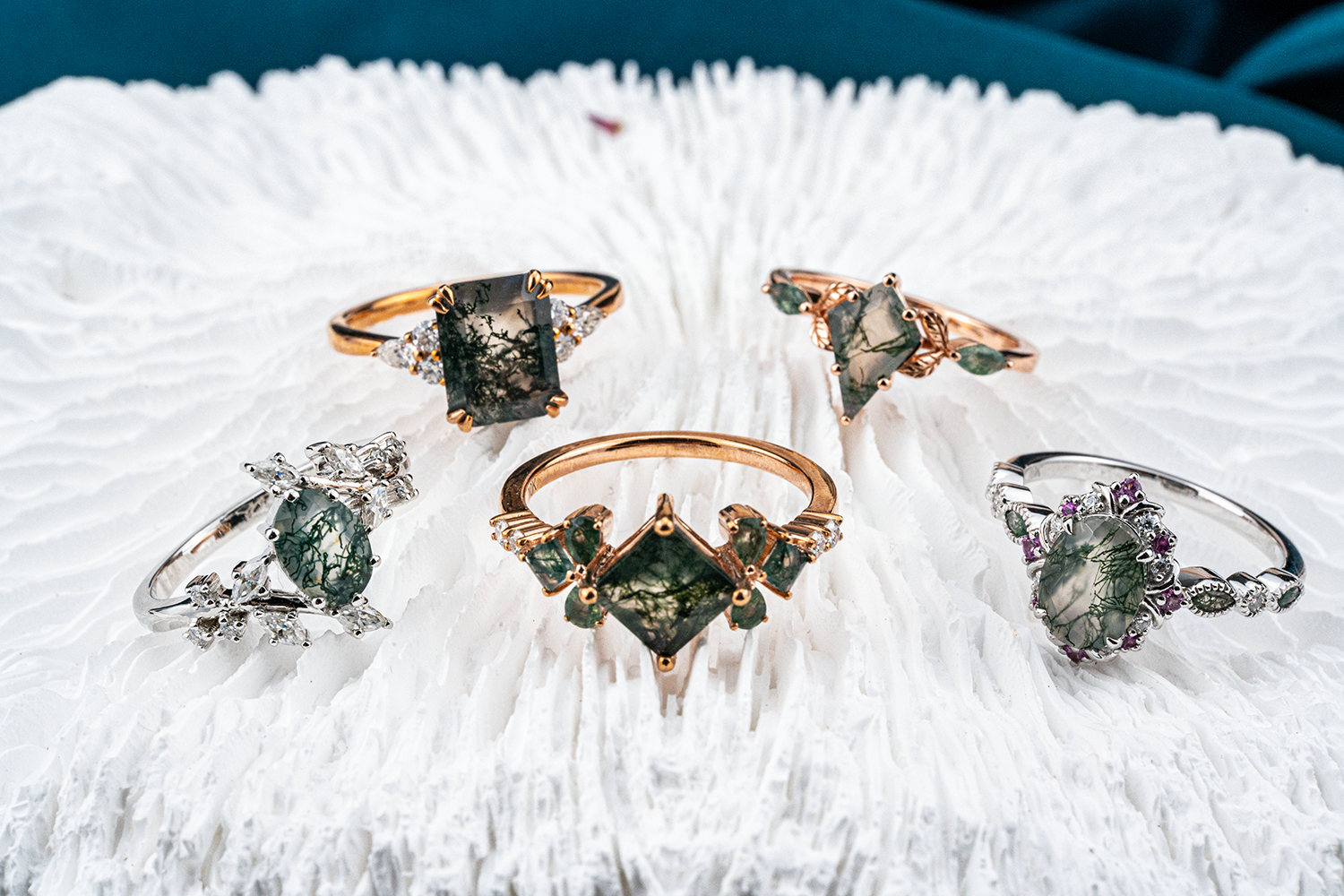
A patterned green gemstone ring offers another experience. In moss agate, the internal inclusions form part of the visual composition; comparing the actual stone can be more useful than expecting a uniform shade.

Gemstone shapes and cuts change the outline
A round stone creates a balanced focal point. Oval and marquise shapes extend along the finger, while a hexagon engagement ring has a more angular silhouette. Shape describes the outline; the arrangement and quality of the facets also influence how a stone looks.
Read the dimensions in millimeters and compare side-view photographs. A close-up can make a small stone appear much larger than it will on the hand.


Consider care before choosing a favorite
Some gemstones are easier to wear frequently than others. Hardness measures resistance to scratching, not immunity to chips, cracks or loose settings. The complete ring—stone, metalwork and fit—must suit your routine.
Ask about the stone's identity, origin and treatments where relevant. Natural and lab-grown descriptions should be explicit, and a decorative photo should not replace the specifications of the ring you are purchasing.

Make a short, useful comparison
Choose two or three rings and compare color, dimensions, setting height, ring size and care needs. A gemstone that fits your habits and keeps your attention in everyday light is a better starting point than a claim that one stone is universally the most beautiful.
Compare the outline at actual size
Sketch the listed length and width on paper and place that outline on your finger. Repeat with the second ring instead of comparing enlarged product photographs. Include the halo or side stones if they extend beyond the center. For pointed designs, the hexagon vs. kite ring comparison shows how the outline changes coverage. If you are choosing between two bright, clear centers, start with lab-grown diamond vs. moissanite so the appearance comparison does not obscure the difference in materials.


